IN Brief:
- DP World has received two more than 2,000-tonne quay cranes at Southampton.
- A second pair is due later in 2026, taking the terminal’s crane fleet to 16.
- The new equipment can serve 24,000 TEU megaships and perform tandem 40ft container lifts.
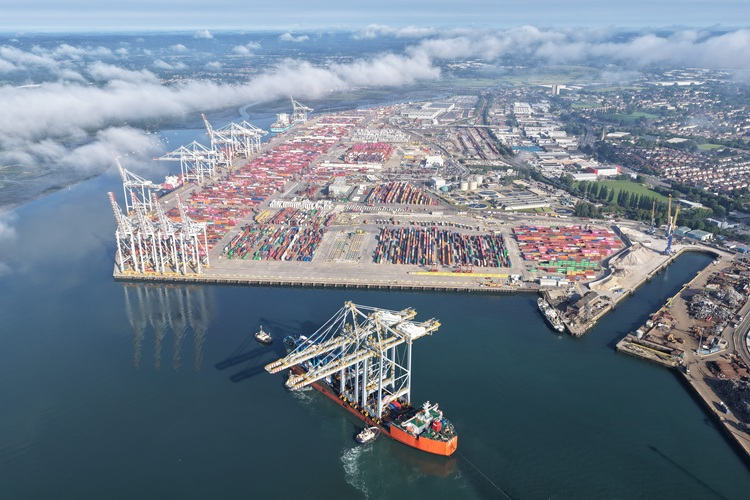
DP World has received two of Europe’s largest quay cranes at Southampton, advancing a £60m investment programme designed to increase container handling capability at one of the UK’s main deep-sea gateways.
The cranes each weigh more than 2,000 tonnes and stand close to 150 metres high. They arrived fully constructed by sea and are due to be offloaded directly onto the Southampton container terminal quayside. A second pair is scheduled to arrive later in 2026, bringing the terminal’s crane fleet to 16.
The new equipment can handle 24,000 TEU megaships and is capable of tandem lifting two 40ft containers at once. That combination supports higher quay productivity, faster vessel turnaround, and greater flexibility during large vessel calls, where a single ship can release significant container volumes into the terminal and inland network over a short period.
Southampton handled more than two million TEU in 2025, while DP World’s UK operations handled more than five million TEU across a national container market exceeding nine million TEU. The investment therefore lands inside a port system where efficiency at the quay has direct consequences for inland transport, warehousing, manufacturing supply, and export reliability.
Larger vessels can reduce unit shipping costs, but they also concentrate operational pressure. When more boxes arrive on fewer calls, ports need the crane capacity, yard systems, labour planning, road access, rail links, and inland distribution capability to prevent congestion from building at the first point of entry. A bigger crane fleet improves one essential part of that equation, but terminal productivity still depends on how consistently boxes move beyond the quayside.
European ports are making similar investments as vessel size, alliance structures, and schedule volatility reshape container networks. Thessaloniki’s Pier 6 expansion, which is increasing berth depth and container handling capability in south-east Europe, reflects the same infrastructure race; the Pier 6 programme shows how ports are using capacity projects to compete for larger calls and improve regional distribution options.
Southampton’s position gives the investment added weight for UK importers and exporters. The port serves retail, automotive, manufacturing, food, and consumer goods flows into southern and central England, with road and rail connectivity shaping how quickly cargo leaves the terminal. When maritime disruption, missed schedules, or vessel bunching push boxes into the yard, the quality of onward movement becomes as important as the speed of unloading.
The new cranes also strengthen the port’s competitive position with carriers. Shipping lines are increasingly selective about gateway calls, particularly where larger vessels require reliable berth windows, high crane intensity, and predictable landside clearance. Terminals that can handle megaships safely and consistently are better placed to retain services as alliances adjust rotations and as carriers manage capacity around disruption elsewhere.
The investment sits against a wider UK infrastructure backdrop in which port capacity, rail freight, customs processes, and warehouse availability are all part of the same logistics equation. Container gateways do not operate in isolation; delays at berth can move into haulier availability, delivery appointments, empty container returns, and warehouse intake planning. The value of the Southampton cranes will therefore be judged by end-to-end flow, not only headline lifting capacity.
Port automation and digital control will also shape the return on the equipment. High-performance cranes need to be matched by terminal operating systems, yard planning, maintenance regimes, and accurate demand forecasting. The ability to sequence moves, manage peaks, and coordinate with inland carriers will determine whether the cranes translate into smoother flows across the port community.
DP World’s Southampton investment gives the UK gateway greater headroom for larger ships and higher-intensity operations. The arrival of the first pair of cranes is a visible sign of capacity growth; the commercial test will come when the terminal integrates four new cranes into daily operations and keeps containers moving through a port network that has little tolerance for avoidable delay.