IN Brief:
- APM Terminals Elizabeth has ordered 34 battery-electric Konecranes RTGs, with an option for six more.
- The cranes will be deployed across the terminal yard to increase handling capacity, reliability, and operational flexibility.
- Delivery is due by the end of 2028 alongside a wider electrification programme that also includes electric terminal tractors.
APM Terminals Elizabeth has ordered 34 battery-electric rubber-tyred gantry cranes from Konecranes as part of a wider modernisation programme at its container terminal in the Port of New York and New Jersey.
The agreement includes an option for six additional E-RTGs. The order was booked during the second quarter of 2026, with deliveries scheduled for completion by the end of 2028 as the terminal phases new handling equipment into its existing yard operation.
Each crane will use an onboard battery pack rather than the conventional diesel powertrain commonly associated with rubber-tyred gantries. The units will be positioned across the terminal yard to support container stacking and transfers between storage blocks and the equipment moving boxes through the facility.
The size of the order makes the project more significant than an electrification trial. A fleet of 34 cranes creates enough common equipment for charging, maintenance, operator training, spare-parts management, and work allocation to become part of the terminal’s standard operating model rather than a separate pilot process.
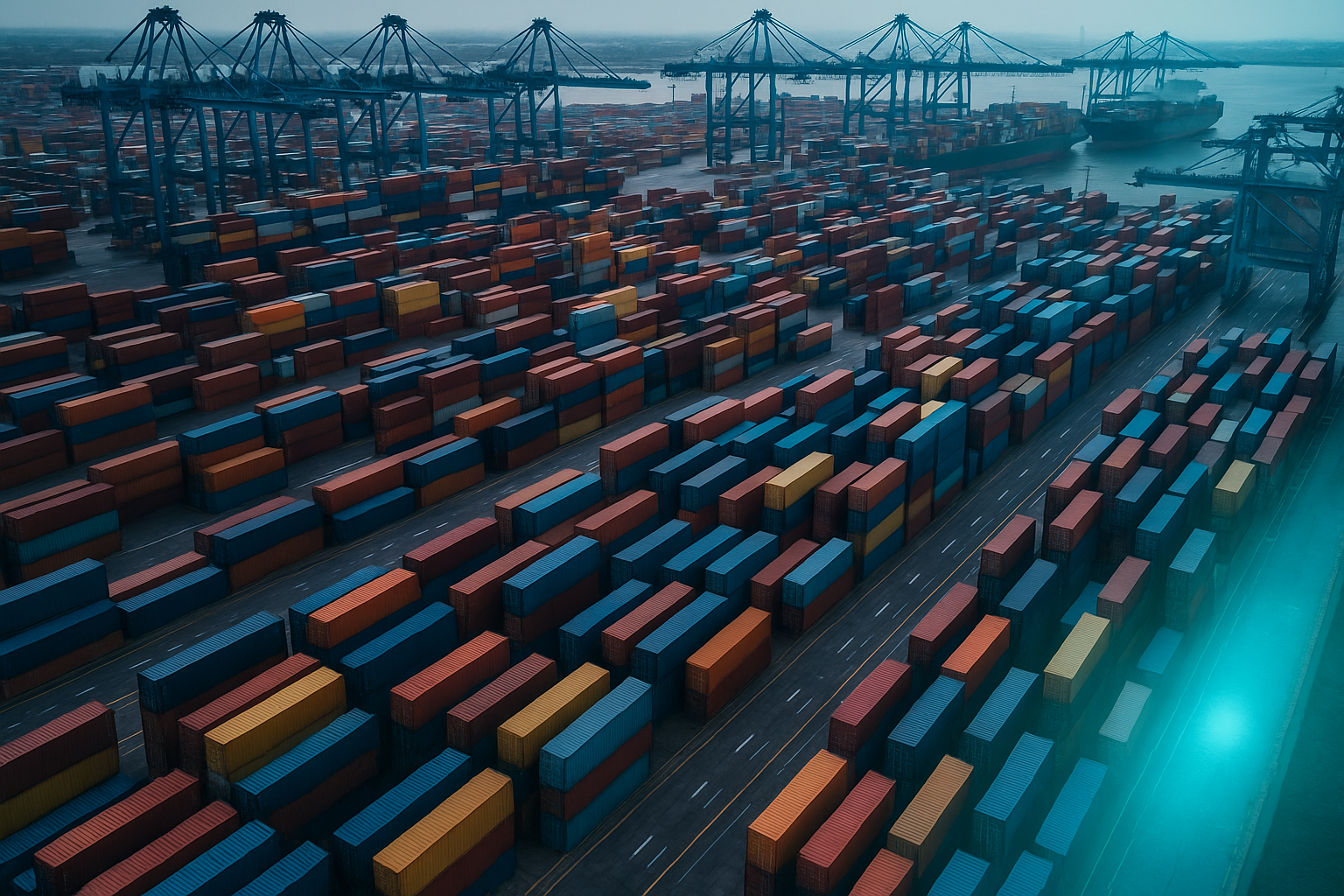
RTGs perform one of the most repetitive and capacity-sensitive tasks inside a container terminal. They lift boxes into and out of stacks, supporting the movement between vessel operations, temporary storage, road vehicles, and other transfer equipment.
Their availability therefore affects more than yard productivity. A crane failure or poorly positioned stack can delay a truck collection, interfere with export preparation, or leave containers in the wrong place when a vessel exchange creates a sudden surge in demand.
APM Terminals is positioning the new fleet around capacity, safety, reliability, and readiness for future growth. Electrification changes the energy source behind those movements but does not reduce the need to maintain high equipment availability during peak vessel and gate activity.
Battery operation also introduces a different infrastructure requirement. Diesel equipment can be refuelled comparatively quickly, while a large electric fleet has to be integrated with charging capacity, grid connections, energy management, and work schedules that ensure enough cranes remain available while others are charging.
Thirty-four RTGs make that energy-planning question substantial. The terminal has to consider when units draw power, how battery condition changes with age and duty cycle, and whether charging demand coincides with other major electrical loads across the site.
APM Terminals Elizabeth is electrifying other handling equipment as part of the same wider programme. Its current terminal information records agreements covering 96 electric terminal tractors alongside the 34 E-RTGs, extending the transition from vertical container stacking into horizontal yard movement.
That combination is operationally important because terminal tractors and RTGs work as part of the same handling chain. Electrifying only one equipment class reduces emissions from that activity but leaves another substantial source of diesel operation running alongside it.
A larger common electric fleet can also change maintenance requirements. Electric drivetrains remove some engine-related servicing, but batteries, charging systems, power electronics, control software, and electrical distribution become more critical to daily availability.
The emissions benefit is clearest inside the terminal itself. Replacing diesel engines reduces local exhaust emissions around employees and neighbouring areas, while the overall carbon reduction depends on the electricity used to charge the equipment and the lifecycle performance of the battery systems.
The phased delivery programme running through 2028 gives APM Terminals time to integrate those changes gradually. Operators can introduce charging routines, train maintenance teams, compare actual energy use with planning assumptions, and adjust yard deployment before all 34 units are simultaneously dependent on the new infrastructure.
Konecranes and APM Terminals Elizabeth have worked together for more than two decades, with some earlier cranes supplied by the manufacturer still operating at the facility. That installed-base experience should reduce part of the technical transition, although battery-electric operation introduces systems that older machines did not require.
The eventual measure of the investment will be ordinary terminal performance rather than the novelty of electrification. The cranes need to increase or protect yard capacity, remain available during busy exchanges, and move boxes at the required rate while delivering the expected reduction in diesel consumption and local emissions.