IN Brief:
- Pallet-Track has moved all 150 forklifts at its operation from conventional LPG onto Calor's BioLPG tariff.
- The company forecasts an 84% reduction against its previous LPG fuel arrangement, equivalent to 1,376 tonnes of CO₂.
- The drop-in fuel allows existing LPG equipment to remain in service while Pallet-Track works towards its 2028 emissions targets.
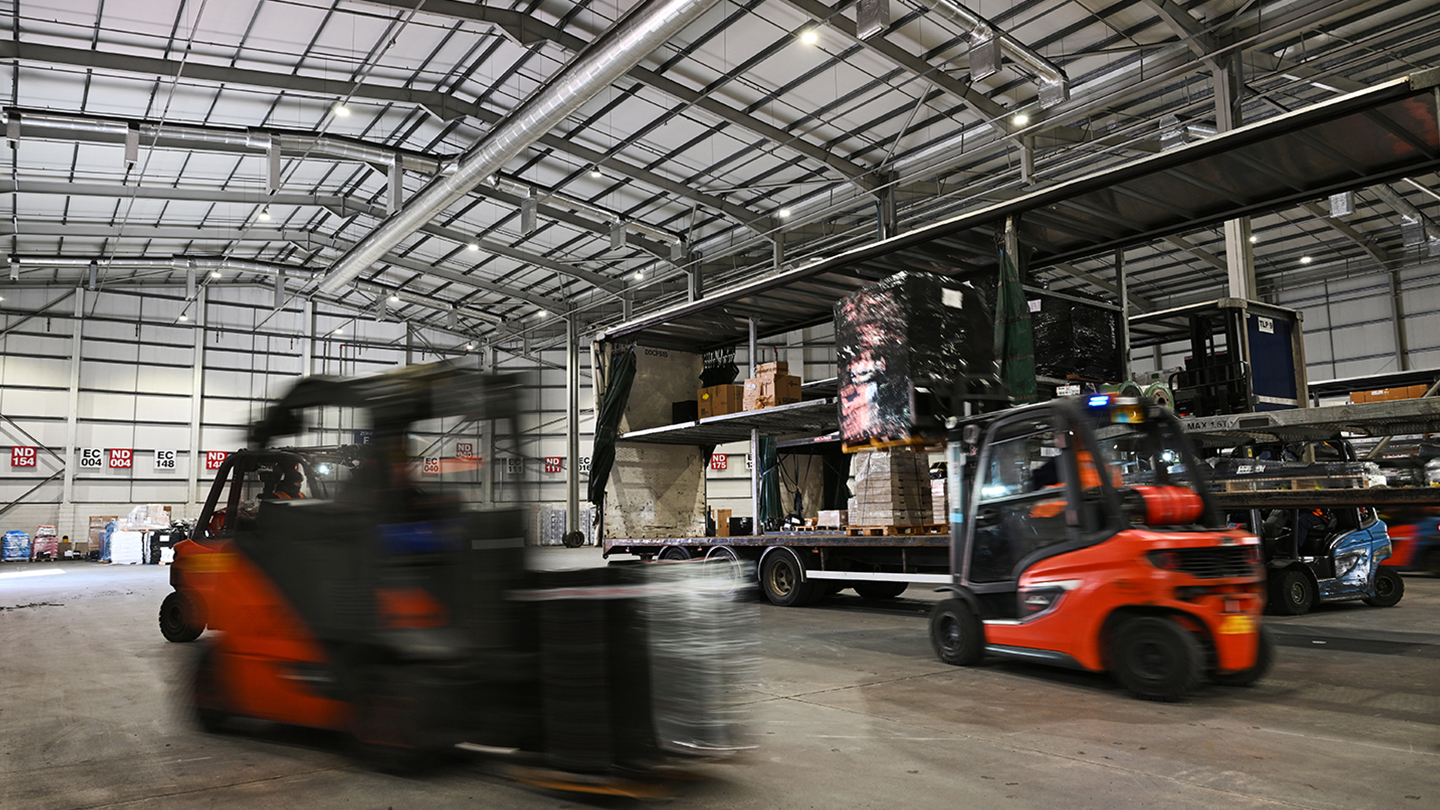
Pallet-Track has switched all 150 forklift trucks in its operation from conventional LPG to BioLPG, using a drop-in fuel change to reduce emissions without replacing its existing handling equipment.
The project at Pallet-Track has been delivered with Calor and forms the first major operational measure under the pallet network’s new environmental, social, and governance strategy.
Pallet-Track forecasts that changing the fuel used by the 150-strong fleet will reduce associated carbon emissions by 84% compared with its previous standard LPG arrangement. On the company’s calculations, that equates to 1,376 tonnes of CO₂ and reduces its current overall operational carbon footprint by 15.25%.
The percentages are Pallet-Track’s project-specific forecast rather than a universal performance figure for BioLPG. Calor’s published carbon claims vary according to the conventional fuel being displaced and the BioLPG supply basis, so emissions comparisons need to be made against the relevant operational baseline rather than applied indiscriminately across forklift fleets.
The practical attraction for Pallet-Track is compatibility. Calor describes BioLPG as chemically identical to conventional LPG for equipment purposes and able to operate as a drop-in fuel, allowing existing LPG-powered forklifts and supply infrastructure to remain in use without a large conversion programme.
That distinction shaped Pallet-Track’s choice against an immediate fleet-wide move to battery-electric trucks. Electrification can provide substantial operational emissions reductions where charging capacity, electricity supply, duty cycles, and vehicle availability line up, but it also requires operators to consider the infrastructure around the truck rather than the machine alone.
A 150-vehicle electric conversion could require chargers, electrical upgrades, new equipment, altered refuelling routines, and enough battery or vehicle capacity to maintain handling output across busy shifts. Those requirements can be straightforward in a newly designed warehouse and considerably less convenient in an existing high-throughput operation built around LPG equipment.
Stuart Godman, CEO of Pallet-Track, said the company wanted its ESG programme to deliver direct reductions rather than depend principally on compensatory schemes. “With the switch of the FLT fleet to BioLPG, we are genuinely aiming to reduce emissions rather than just offsetting them,” he said.
The approach is particularly relevant to materials handling because forklifts often work intensive, repetitive duty cycles. A fuel or charging system has to support operational availability through peaks as well as meet an emissions objective on paper. Downtime introduced during refuelling or charging ultimately affects trailers, sortation, loading, and warehouse throughput.
BioLPG allows Pallet-Track to change the energy source without changing that basic operating model. Cylinders and existing LPG equipment can continue to be used, reducing the amount of site work required before the emissions project begins producing a measurable result.
That does not make the fuel a permanent answer for every site. At the next forklift replacement cycle, electric equipment, batteries, charging technology, electricity prices, and grid connections may offer a different commercial calculation. Pallet-Track’s current decision is better understood as an immediate emissions intervention applied to an installed fleet with useful operating life remaining.
The project also sits within broader 2028 targets. Pallet-Track plans to reduce absolute Scope 1 and Scope 2 greenhouse-gas emissions by 35% and reduce or offset Scope 3 transport emissions by 20%, with fleet changes and alternative fuels contributing to those commitments.
Forklifts address a comparatively controllable part of that footprint. Pallet-Track can specify the fuel used by equipment at its own operation, whereas Scope 3 transport emissions extend through hauliers and wider network activity that may involve independently operated vehicles and investment decisions.
That makes the handling fleet a logical early target because the equipment and purchasing decision sit directly within the operator’s control. Converting the entire fleet at once also creates a clearer before-and-after baseline than replacing a small number of machines each year.
The wider Pallet-Track network already illustrates that there is no single route towards lower-emission handling. Member Joda Freight has invested in electric forklifts and solar generation, while the central Pallet-Track operation has selected BioLPG for its existing fleet. Different buildings, shift patterns, electrical infrastructure, and replacement cycles can produce different answers to the same decarbonisation question.
For logistics operators, that is the useful part of the project. The transition debate is often framed around which propulsion technology is inherently superior, when the more difficult question is which option can reduce emissions without compromising the flow of goods through an existing operation.
Pallet-Track’s solution leaves the 150 forklifts themselves largely unchanged while replacing the fuel behind them. Whether that remains the preferred approach at the next fleet renewal is a separate decision; for the present operation, the company expects the change to remove more than a thousand tonnes of carbon from its annual footprint without rebuilding the warehouse around a new energy system.