IN Brief:
- The first automation phase is valued at €45 million and is scheduled to enter operation by the end of 2028.
- TGW will combine miniload storage, high-bay automation, Quba AMRs, conveyors, and automated palletising.
- Planned capacity reaches 21,000 packages per day and 93,000 pallet positions.
Kave has selected TGW Logistics to automate its new distribution hub at Tordera, near Barcelona, in a first-phase project valued at €45 million and scheduled to enter operation by the end of 2028.
The design combines miniload storage, automated high-bay warehouses, Quba autonomous mobile robots, conveyors, ergonomic picking stations, and automated palletising and depalletising. Kave intends to use the facility for e-commerce, retail, and B2B distribution from one logistics platform.
The handling range extends from packages measuring 400 × 300mm to bulky items of 2,400 × 1,200mm. Furniture and home-furnishing logistics therefore cannot depend on one storage technology without compromising either density or handling efficiency.
TGW’s design divides products between appropriate storage areas and consolidates them later in the process. Goods from the miniload system, pallet warehouse, and double-pallet warehouse will feed a common palletising zone, allowing different physical flows to converge before despatch.
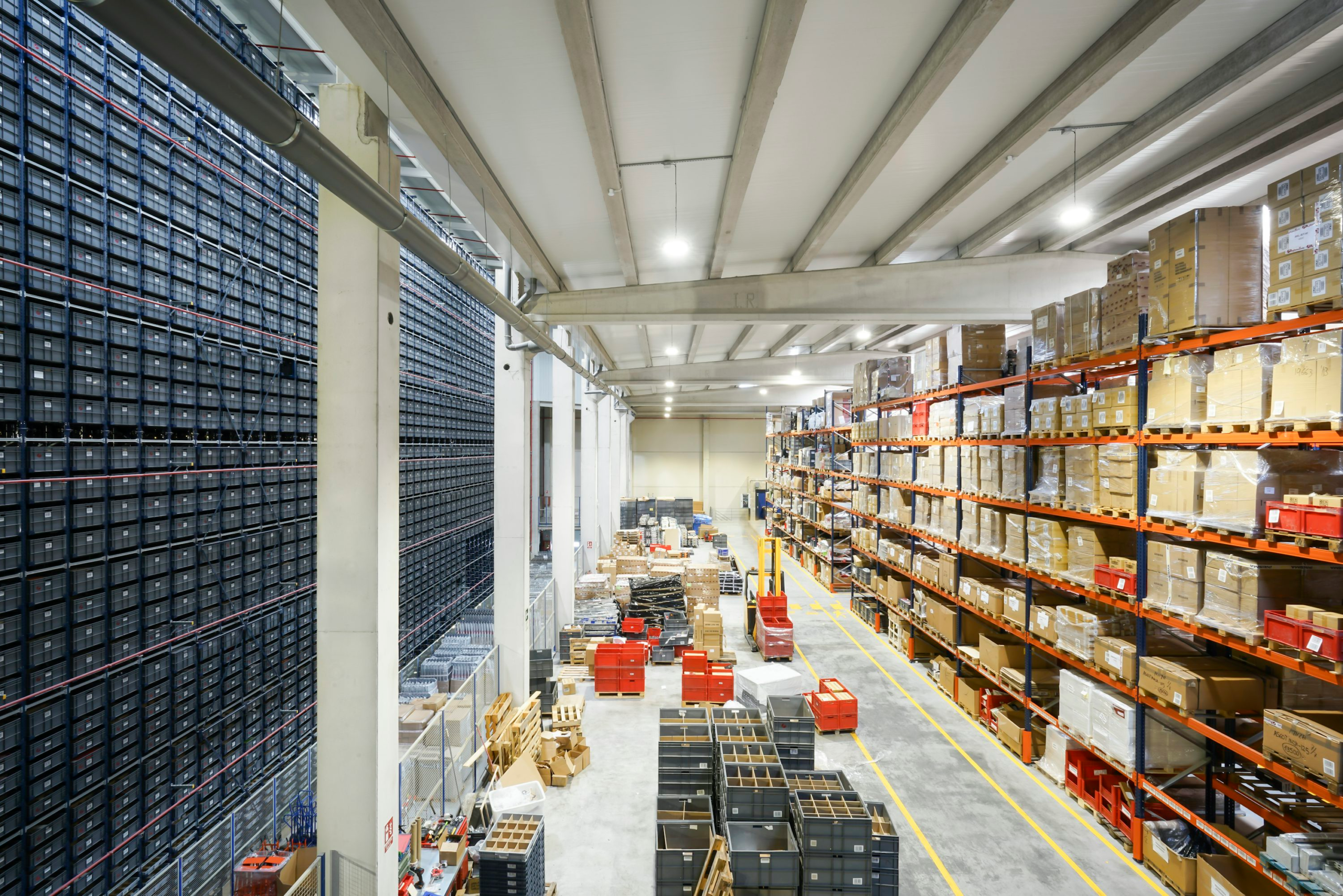
The equipment package includes mobile Quba robots for pallets and roll cages, Cartesian palletising and depalletising robots, conveyor technology, automated warehouses up to 25 metres high, and picking stations feeding automatic wrapping and pallet-handling processes.
Kave expects the finished system to process up to 21,000 packages per day and provide 93,000 pallet positions, more than doubling its current storage capacity. Those figures place the project well beyond a local automation retrofit and into the scale of a central distribution platform supporting several sales channels.
The mix of fixed and mobile automation gives the design different levels of flexibility. High-bay storage makes intensive use of the building volume and supports stable pallet flows, while AMRs can move pallets and roll cages between areas without fixing every transport route permanently into the floor layout.
Furniture distribution also consumes warehouse and vehicle capacity differently from small-item fulfilment. An operation may process fewer order lines while still handling considerable physical volume because individual products are large, awkward, and vulnerable to damage.
The wide dimensional range at Tordera has to be carried through picking and consolidation as well as storage. An order can contain products that have travelled through different automated areas, requiring the control system to bring them together in the correct sequence before palletising, wrapping, and despatch.
The omnichannel requirement adds another layer. Professional customers, retail stores, and individual e-commerce buyers generate different order sizes, delivery windows, packaging requirements, and carrier arrangements, despite drawing from the same underlying inventory.
A common automation platform avoids creating separate stock pools for each channel, but the software and controls have to recognise those different fulfilment rules. Capacity is useful only when the warehouse can direct it towards whichever channel requires it without losing order accuracy or delaying other flows.
The 21,000-package daily target therefore sits alongside several less visible measures: picking accuracy, inventory availability, damage rates, pallet-build quality, labour productivity, and the ability to complete orders before transport cut-offs.
The project has a lengthy implementation period before its planned 2028 go-live. The building, storage systems, robots, conveyors, controls, and warehouse software have to be coordinated before installation and then tested as one operation rather than accepted as separate pieces of equipment.
Inventory migration and operational ramp-up will follow the engineering work. Automated warehouses can achieve their design rates in testing yet still struggle after launch if master data, replenishment rules, packaging information, or staff procedures have not been prepared with the same discipline as the machinery.
Kave is building the system ahead of the expected increase in volume rather than retrofitting individual machines into an already saturated warehouse. That gives the project team more scope to design transport routes, storage zones, workstations, and software around the intended operating model.
TGW’s role consequently extends beyond supplying individual robots. It is responsible for integrating several storage and handling technologies into a sequence in which goods enter the building, reach the appropriate storage area, are picked, consolidated, palletised, wrapped, and released towards the correct sales channel.
The €45 million first phase establishes the scale of that integration effort, while the end-of-2028 timetable leaves more than two years for engineering, manufacture, installation, and commissioning. Once live, the stronger test will be whether the mixed automation architecture can maintain its planned capacity as Kave’s product mix and channel demand change around it.