IN Brief:
- The four-storey Dobromierz facility exceeds 200,000 square metres and is Amazon's twelfth fulfilment centre in Poland.
- More than 5,000 robotics units support material movement and sorting, alongside more than 1,000 permanent jobs expected during 2026.
- The building combines automated right-size packaging, more than 9,000 solar panels, electric handling equipment, and 48 EV charging spaces.
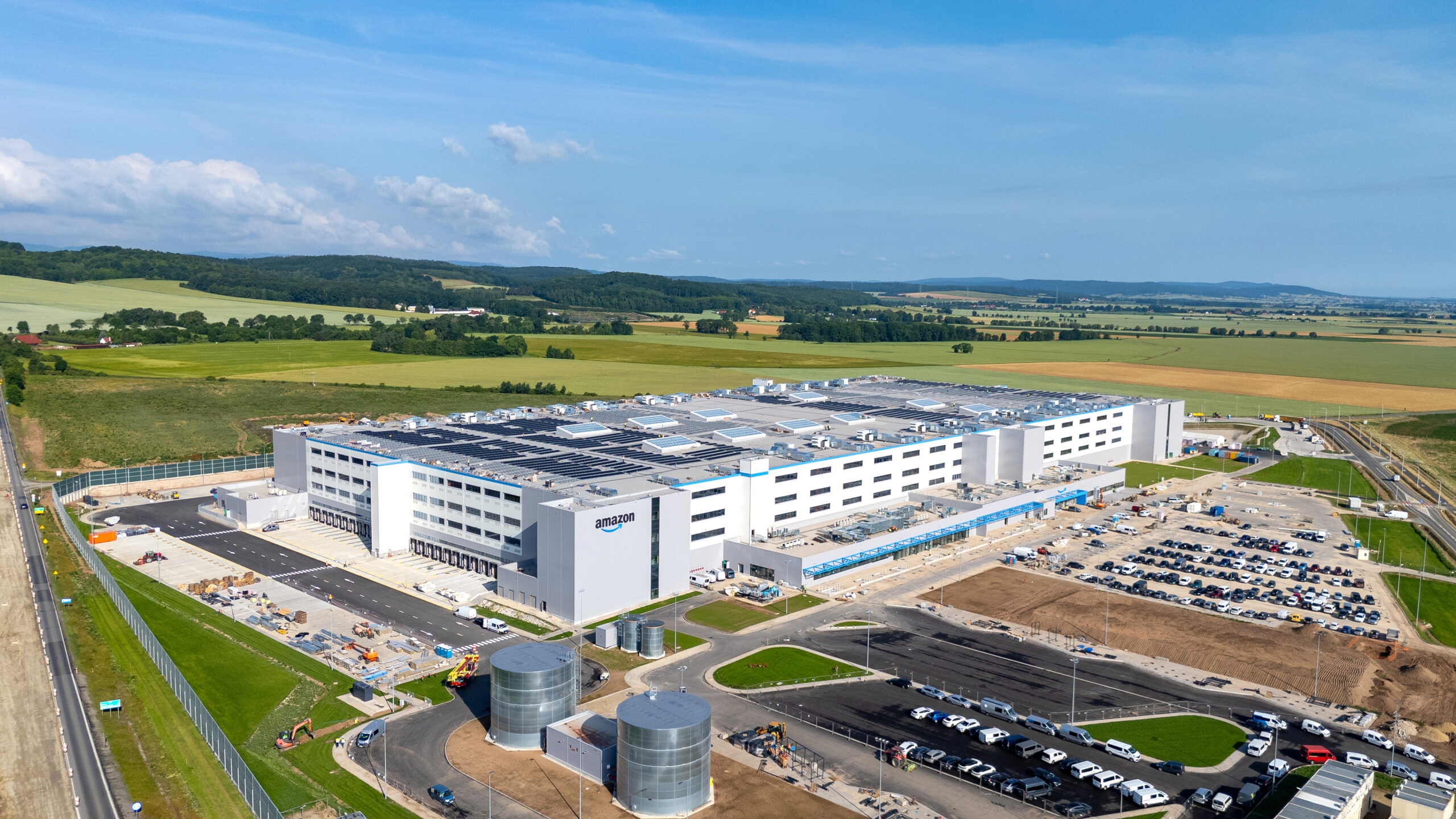
Amazon has opened a 200,000-plus-square-metre fulfilment centre in Dobromierz, Lower Silesia, adding its twelfth logistics facility in Poland and its fourth Polish site built around large-scale robotics.
The four-storey building uses more than 5,000 Amazon Robotics units to move shelving and support product sorting, while more than 1,000 permanent jobs are expected during 2026. Operators, maintenance technicians, engineers, operations managers, and support staff will work alongside the automated systems as the site moves towards full throughput.
The robots operate across core material flows rather than as isolated equipment. Mobile systems move shelving through the fulfilment process, reducing manual travel for picking and replenishment, while automated sorting supports the movement of orders towards packing and dispatch. Labour demand consequently shifts towards workstation operation, maintenance, systems monitoring, and engineering as automated throughput increases.
Dobromierz also introduces automated right-size packaging to Amazon’s Polish fulfilment network. Machines can select paper bags or cartons and adjust pack dimensions to individual products in real time. The system is intended to reduce unused parcel volume and cut packaging material while keeping packing speed aligned with the rest of the automated operation.
Smaller packages can improve transport utilisation as well as reduce consumables. When cartons more closely match the product, trailers and line-haul vehicles can carry more orders within the same cubic capacity. The gain will vary with product mix, but packaging decisions inside the warehouse increasingly affect vehicle fill and downstream transport demand.
The building uses electric materials-handling equipment throughout the operation. More than 9,000 solar panels have been installed on the roof, with estimated output equivalent to the electricity demand of around 1,500 households. The car park includes 48 electric vehicle charging spaces, and the building has been prepared for BREEAM certification.
Construction took 17 months, creating Amazon’s first robotic fulfilment centre in Lower Silesia. The location places the operation in a region with established logistics, manufacturing, and cross-border road infrastructure, adding another large node in Central Europe rather than concentrating further capacity around Poland’s largest consumer centres.
Amazon has already committed to further investment in the country. Earlier this year, the company said it planned to invest more than €5 billion in Poland between 2026 and 2028, after spending more than €10 billion between 2012 and 2025. Dobromierz forms part of that programme and brings the Polish fulfilment network to 12 centres.
The facility combines several automation layers within one operation: mobile robotics, automated sorting, right-size packaging, electric handling equipment, and building-energy systems. Performance depends on how well inventory, picking, packing, dispatch, maintenance, and labour are synchronised around the same throughput plan rather than on the headline robot count alone.
That integration creates its own dependencies. A highly automated fulfilment centre needs preventive maintenance, spare-parts availability, reliable software, network resilience, and technicians capable of recovering equipment quickly when faults occur. Automation removes repetitive travel and manual handling from some processes, but it transfers more operational risk into controls, engineering support, and systems availability.
The workforce profile reflects that shift. Amazon is recruiting warehouse operators alongside technicians and engineers responsible for robots and IT systems. The immediate model is therefore one of people and automation sharing material flows, with specialist support roles becoming more important as equipment density rises.
Seasonal peaks will provide a sterner operating test than launch conditions. High order volumes force picking, packing, sortation, maintenance, and transport planning to work at the same time, while automated packaging has to maintain accuracy without constraining dispatch. Stable performance during those periods will show whether the different systems can deliver their expected gains as one facility rather than as separate technologies.
The density of equipment also makes data quality central to physical performance. Inventory location, order priority, equipment status, and labour availability have to remain consistent across systems if more than 5,000 robots are to support rather than complicate fulfilment. Errors that might once have affected a single manual task can propagate quickly through automated flows, making exception handling and recovery procedures as important as nominal system speed.
Dobromierz adds both floor space and a denser automation stack to Amazon’s Polish network. The site will now have to move from commissioning into sustained operation while maintaining availability across more than 5,000 robotic units and keeping its packaging, labour, and transport processes aligned with rising throughput.