IN Brief:
- CLdN has selected two Everllence 8S50ME-GI Mk10.7 engines, one for each of two 6,700-lane-metre RoRo newbuildings.
- The methane dual-fuel two-stroke engines incorporate high-pressure gas injection and EcoEGR exhaust gas recirculation for Tier III compliance.
- Hyundai EMD is due to test the engines in July 2028 before delivery to HD Hyundai Heavy Industries in September for installation.
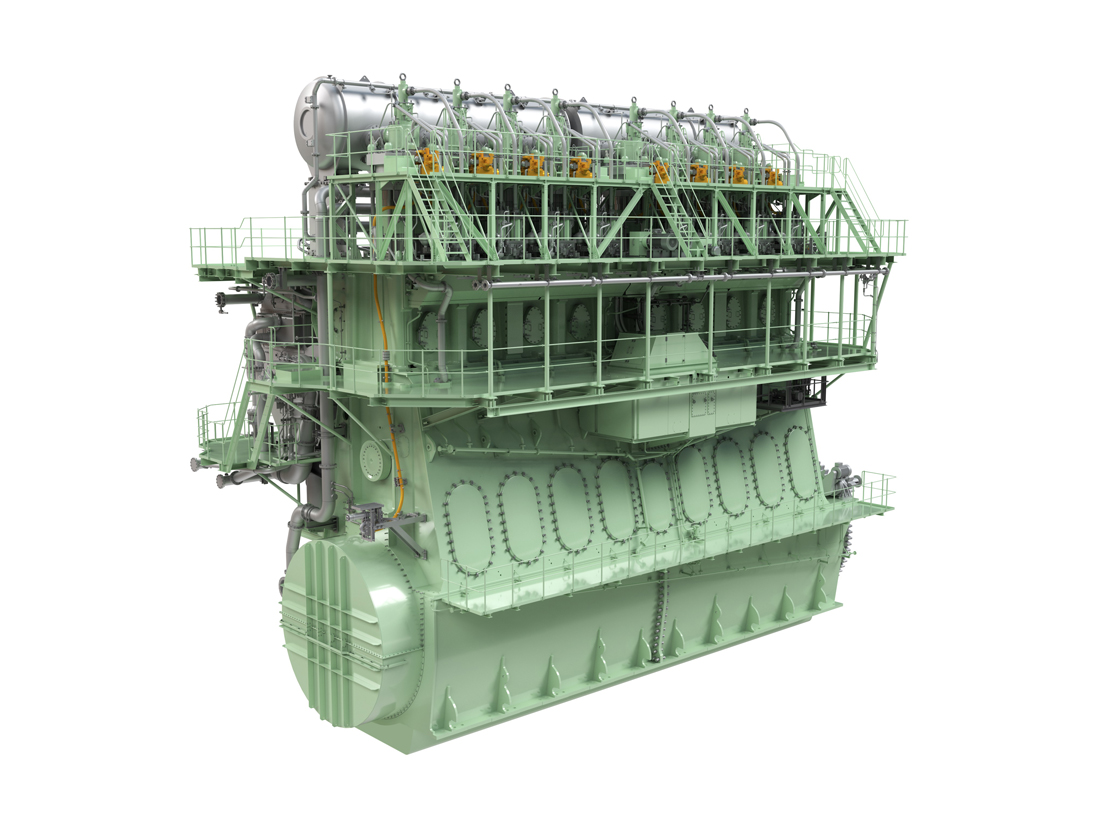
Everllence has received its first order for the 8S50ME-GI Mk10.7 marine engine configuration, selected for two roll-on, roll-off vessels being built for European shipping and multimodal logistics operator CLdN. Each new ship is designed for 6,700 lane metres of wheeled freight and will use a single methane dual-fuel, two-stroke main engine. Both ships remain under construction, with engine testing and delivery scheduled for 2028.
Hyundai EMD is scheduled to build the engines and run them on its testbed in July 2028. Delivery to the HD Hyundai Heavy Industries shipyard is planned for September of the same year, when the engines are due to be installed. Those are machinery milestones rather than confirmed entry-into-service dates for either vessel. The shipbuilding timetable and commissioning checks will ultimately determine when the new capacity becomes available to CLdN’s freight customers.
The selected eight-cylinder, 50-bore model extends the Mk10.7 family into another engine size and fuel configuration. Other members of that platform had already attracted orders, so the first-order designation applies specifically to the 8S50ME-GI Mk10.7. Its technical specification must still be demonstrated during the manufacturer’s test programme before the machinery is installed and commissioned aboard the two ships.
Roll-on, roll-off ships carry wheeled freight, including trailers and other vehicles, through ramp access rather than relying on containers lifted by quay cranes. The lane-metre measure describes the linear length of freight lanes available within the cargo decks; it is not equivalent to the number of vehicles the ship will carry on every voyage. Trailer length, deck clearances, load weights, and the mix of accompanied and unaccompanied units all determine the capacity actually used.
The selected ME-GI technology uses high-pressure methane injection in a two-stroke engine operating on the diesel combustion principle. It is designed to run on methane fuel or conventional liquid fuel, allowing operators to switch according to availability and operational requirements. Everllence says the combustion approach provides high efficiency and very low methane slip. The announcement does not provide independent, ship-specific test results or a quantified greenhouse gas reduction for the two CLdN vessels.
Unburnt methane released from an engine contributes to its greenhouse gas footprint. Everllence’s high-pressure injection approach is designed to keep methane slip low during combustion, although total voyage emissions also reflect fuel production, handling and the energy used to move each cargo load. The two-fuel capability gives CLdN flexibility in procurement; actual environmental performance will depend on which fuel is burned in service and how the vessels are operated.
Both engines will incorporate Everllence’s EcoEGR exhaust gas recirculation system. The specified package includes one recirculation string, water-handling equipment, and a high-speed blower, with the equipment designed to support compliance with IMO Tier III nitrogen oxide requirements. Exhaust gas recirculation changes the combustion environment by returning a controlled proportion of exhaust to the intake process, reducing conditions that promote nitrogen oxide formation. Its installation also introduces auxiliaries and maintenance requirements that must be accommodated in the machinery space.
The propulsion arrangement is configured for a single main engine driving a controllable-pitch propeller. Unlike a fixed-pitch propeller, its blade angle can be adjusted as operating conditions change, allowing propulsive load to be managed without relying only on changes in engine speed. That characteristic can be useful during manoeuvring and variable-speed service, although actual fuel consumption also depends on hull resistance, loading, weather, and voyage planning.
CLdN’s short-sea RoRo operations depend on predictable port rotations, because trailers connect with road haulage, manufacturing dispatch and warehouse receiving schedules. Machinery reliability and repair support consequently sit alongside engine efficiency in fleet planning. Fuel availability, crew procedures and the ability to maintain departures during variable loads and weather will influence the benefit of the new propulsion package once the vessels enter service.
CLdN has positioned efficiency and fuel flexibility among the objectives of its newbuilding programme, although the engine order does not change a specified existing route. Neither the shipowner nor Everllence has published a measured fuel consumption figure per lane metre or a life-cycle emissions comparison for the two vessels. Those figures will depend on cargo loading, actual fuel use, weather and service patterns after entry into operation.
Installation will also require the machinery control, gas handling, exhaust treatment, and ship safety systems to operate as an integrated package. Engine testing before delivery can validate the machinery against its design specification, while shipboard commissioning must account for the interfaces that do not exist in the factory test environment. The planned July and September 2028 milestones create a defined sequence for that work without fixing a commercial start date.
Hyundai EMD is due to test the engines in July 2028 and deliver them to HD Hyundai Heavy Industries in September. Installation, shipboard systems testing and sea trials will follow according to the shipbuilding programme. The order provides Everllence with a first reference for this engine configuration, while the actual fuel consumption and emissions of CLdN’s new ships will be established only after commissioning.