IN Brief:
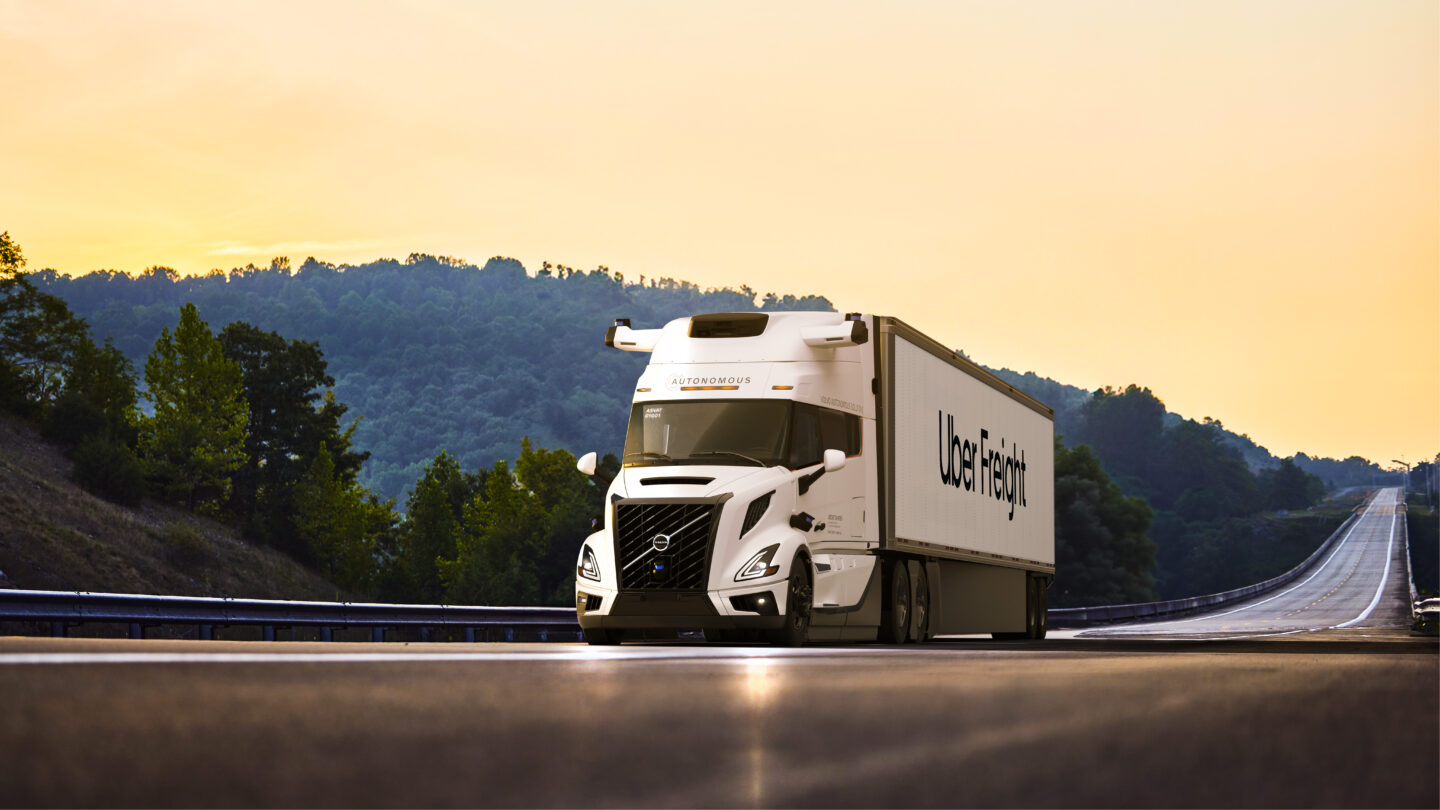
- Volvo VNL Autonomous trucks powered by the Waabi Driver are carrying Warp customer freight between Dallas and Houston.
- The operation covers both less than truckload and full truckload movements, including deliveries directly to third party facilities.
- An observer remains in the driver’s seat during the current operating phase as Volvo and Waabi build experience for wider deployment.
Volvo Autonomous Solutions and Waabi have begun carrying Warp customer freight between Dallas and Houston, moving their autonomous trucking partnership from development work into live logistics operations.
The deployment uses the Volvo VNL Autonomous powered by the Waabi Driver and covers both less than truckload and full truckload freight. Loads can move directly to third party facilities, giving the programme exposure to customer sites and operating conditions beyond a closed test environment or fixed terminal shuttle.
An observer remains in the driver’s seat during the current phase, so the operation has not yet moved to unattended driving. Even with that supervision, carrying commercial freight introduces a different set of demands from testing because vehicle availability, departure times, customer access and load changes all influence whether the service works as part of a wider transport network.
Volvo’s Autona / freight model brings together the VNL Autonomous, autonomous driving technology, fleet management, operating support and vehicle uptime services. The truck was designed with redundant systems across six safety critical functions and to accept autonomous driving systems from technology partners including Waabi.
Warp adds another part of the operating model by coordinating freight around the available transport capacity. Its network handles LTL and FTL movements, so the autonomous truck can encounter a broader mix of loads and schedules than a vehicle assigned permanently to one repetitive movement.
LTL freight places particular pressure on timing because one trailer can contain consignments from several customers. A delay on a trunk movement can therefore affect several onward deliveries, while changes in collection volume can alter how efficiently capacity is used. The autonomous vehicle still has to fit those commercial constraints even when the driving task itself is increasingly automated.
Direct delivery to third party facilities can reduce some of the additional handling associated with autonomous models built around dedicated transfer hubs. Freight does not necessarily have to be handed between a conventional truck and an autonomous truck at an intermediate site, although customer yards and access procedures must still fall within the validated operating conditions of the system.
The Dallas–Houston corridor has become an important location for autonomous heavy truck development because it combines substantial freight volumes with a dense concentration of logistics facilities. Several autonomous trucking companies are using Texas routes as they move from technology trials towards commercial freight services.
Similar programmes are developing elsewhere in the US. Kodiak and DTL recently began supervised autonomous freight operations in California, while other projects are combining automated driving with electric trucks, yard automation and software-led freight planning.
As those deployments mature, the operating question extends beyond whether a truck can follow a route autonomously. Freight customers require predictable collections and deliveries, equipment has to remain available through planned and unplanned maintenance, and exceptions still need to be handled when a facility, load or route does not behave as expected.
Vehicle utilisation will influence the commercial case. Autonomous trucking can potentially reduce the limits imposed by driver hours on long distance vehicle operation, but longer theoretical availability only creates value when freight, loading facilities and support systems can keep the truck productive.
Warp’s network adds another variable because sufficient compatible freight has to be available to use that capacity. A truck capable of operating for longer periods does not improve economics if it spends those periods waiting for a suitable load, which keeps consolidation and transport planning closely connected with the vehicle technology.
Running into customer facilities should also produce operating evidence that controlled trials cannot reproduce fully. Loading delays, yard congestion, appointment windows and changes in freight mix can all influence the journey even when the motorway section proceeds as planned.
Volvo and Waabi intend to use experience from the programme as they prepare for additional routes and broader deployment. Scaling will require each new lane to be assessed against road conditions, customer facilities, support coverage and freight demand rather than assuming that performance on one Texas corridor transfers automatically to another.
The division of responsibilities across the partnership also shows how autonomous freight is developing as a logistics system rather than a standalone vehicle technology. Waabi provides the driving system, Volvo supplies the purpose built truck and supporting operating environment, while Warp places customer freight into the network and coordinates its movement.
Commercial performance will ultimately be measured through familiar freight metrics rather than autonomous mileage alone. Loads must leave when promised, equipment has to remain available, customer sites must be served reliably and the total operating model has to compete with conventional capacity.
The Dallas–Houston programme gives Volvo, Waabi and Warp a live environment in which those requirements now intersect. Autonomous driving remains the enabling technology, but the more demanding test is whether it can be absorbed into everyday LTL and FTL operations without creating new friction elsewhere in the supply chain.