IN Brief:
- The port reported 86,389 vehicles delivered during March–December 2025 and 81,180 during January–September 2026.
- Used vehicles accounted for 55,580 of the 2025 deliveries and 56,162 of the 2026 deliveries.
- Demurrage concessions and a storage-cost cap were introduced for different disruption circumstances affecting importers.
Hambantota International Port Group (HIPG) has reported the delivery of 167,569 vehicles over two separate periods between March 2025 and September 2026, alongside operational and charging measures introduced to support Sri Lankan vehicle importers. The combined total comprises 86,389 vehicles from March to December 2025 and a further 81,180 during January to September 2026. It is a cumulative figure covering an unequal sequence of months, rather than a calendar-year throughput record.
In the first period, the port reported 30,809 new vehicles and 55,580 used vehicles. Its January–September 2026 figures comprise 25,018 new vehicles and 56,162 used vehicles. The figures add to 55,827 new and 111,742 used vehicles across both periods. The reported 2026 used-vehicle volume is already higher than the ten-month 2025 figure, but the different time windows, import conditions and shipment schedules prevent a like-for-like conclusion about annual growth.
HIPG provided demurrage waivers and other concessions for vehicle importers whose cargo remained at the port during Sri Lankan import restrictions. The terminal worked with the Vehicle Importers’ Association of Lanka (VIAL) to identify customers affected by delayed clearance and prolonged storage. Those concessions were intended to facilitate vehicle release and reduce charges accumulating while import restrictions kept goods at the terminal. No aggregate monetary value or number of beneficiaries has been published.
A more recent measure concerns shipments affected by disruption to vehicle transhipment through the Gulf region. HIPG introduced a cap on storage charges for affected vehicles, seeking to make their costs more predictable when onward movements cannot follow the expected timetable. The port has not published the cap’s financial level, the number of vehicles covered or the total value of concessions in the material reviewed, so the programme cannot be assigned a verified aggregate saving.
The earlier demurrage waivers applied while vehicles were held during Sri Lankan import restrictions. The more recent storage cap concerns vehicles affected by disruption to international transhipment routes through the Gulf. Both measures address the cost of cargo occupying port space while release or onward transport is delayed, but the causes, periods and commercial arrangements are different. HIPG has not said that the earlier waivers continue to apply to the newer disruption.
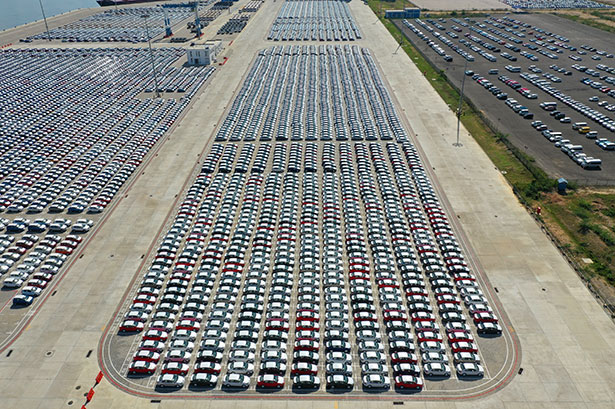
Vehicle logistics differs from container handling in the way capacity is occupied. Roll-on/roll-off cargo normally moves on and off suitable vessels using vehicle ramps, rather than being lifted in containers by quay cranes. After discharge, vehicles require allocated storage areas and subsequent processing before delivery or onward shipment. Each vehicle occupies a discrete yard position, so delayed clearance can reduce the space available for incoming cargo even where the quay is able to keep handling vessels.
The speed of cargo clearance determines how quickly occupied yard positions become available for another delivery. A ship may finish discharging while the terminal remains congested with vehicles waiting for documentation, release or collection. Storage charges and demurrage normally provide commercial incentives to avoid prolonged occupation, but unexpected restrictions and shipping interruptions can shift costs to importers without giving them control of the delay. HIPG’s charge adjustments address part of that exposure; they do not, by themselves, restore disrupted vessel schedules.
VIAL, which represents more than 450 members ranging from larger importers to micro, small and medium-sized businesses, has provided a channel for identifying those operational difficulties. Its work involves engagement with Sri Lanka Customs, the Sri Lanka Ports Authority, the Department of Motor Traffic, police and other public bodies. Resolving a vehicle movement may therefore require decisions by several organisations, not solely additional physical handling at the port.
HIPG chief executive Wilson Qu said that meeting demand depends on understanding customers’ operating needs as well as providing terminal capacity. Bindu Ranasinghe, the group’s general manager for commercial and marketing, described the concessions and cap as responses to specific circumstances affecting vehicle importers. The company’s report does not establish that all members of the association benefited equally, or that the same charge treatment will apply to future periods.
Used vehicles account for roughly two-thirds of the cumulative reported deliveries, based on HIPG’s breakdown. That proportion should not be interpreted as a market-share measure: the company has not provided vehicle values, countries of origin, onward destinations or consistent definitions for all possible categories of vehicle movement. Nor do the figures distinguish every type of domestic import from onward vehicle logistics. The breakdown therefore documents the cargo handled during the stated periods without establishing wider national automotive market performance.
Further assessment of the port’s response would require the numbers of vehicles receiving waivers or storage caps, together with changes in storage occupancy, dwell times and clearance rates. HIPG has not disclosed those measures. Its reported deliveries nevertheless establish the scale of vehicle movements across March–December 2025 and January–September 2026, while the two separate charge arrangements record how the operator responded to differing causes of delay.