IN Brief:
- The £15m ZETEC programme will use Belfast Harbour as a live setting for integrated transport and energy-system trials.
- Artemis Technologies leads a partnership spanning electric vessels, marine charging, autonomy, energy and cyber-security expertise.
- Funding comes from UKRI’s Local Innovation Partnerships Fund; the announcement does not confirm commissioned infrastructure or measured emissions savings.
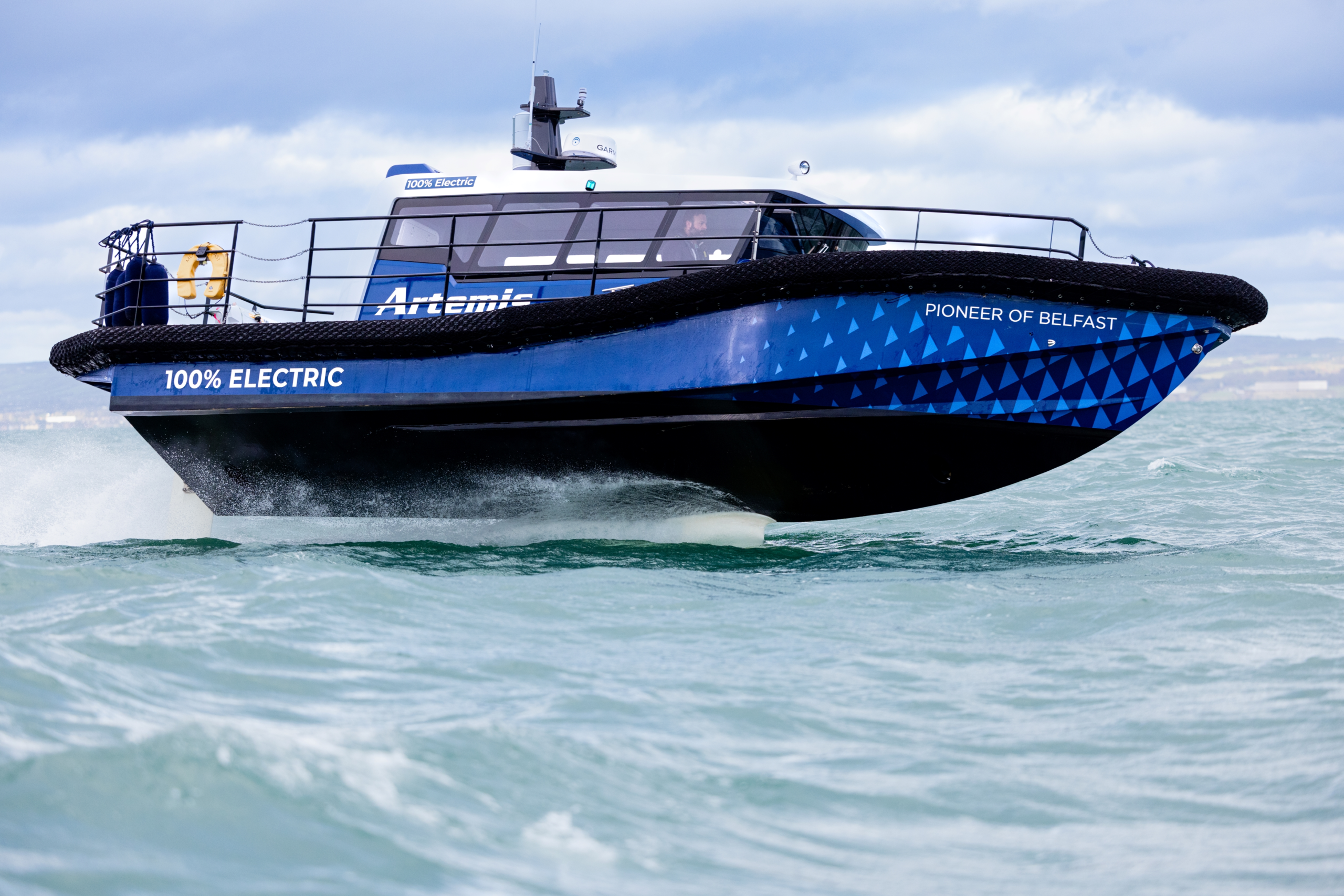
Artemis Technologies will lead a £15 million programme using Belfast Harbour to test how electric vessels, high-power charging, autonomous transport and port energy systems operate together. The Zero Emissions Transport and Energy Cluster, known as ZETEC, was announced on 15 October by Northern Ireland Economy Minister Dr Caoimhe Archibald. It is a funded programme of practical trials in a working port, not confirmation that a new integrated zero-emission transport network has already entered service.
The funding comes through UK Research and Innovation’s Local Innovation Partnerships Fund and is the second project announced within a £30 million allocation to the Belfast–Derry Innovation Corridor. Belfast Harbour will provide an operating environment in which technical teams can study connections between vessels, charging points, autonomous movements and wider energy systems. Vessel timetables, berth occupation, electrical demand and safe access to working areas influence one another, so a trial of isolated equipment would reveal less about how the components behave together.
High-power marine charging illustrates the system-level problem. An electric vessel can have adequate battery capacity for an individual trip while the quay still needs sufficient electrical supply, charging access and turnaround time to replenish that energy. Several vessels seeking a charging connection during busy operating periods could create demand that competes with other port equipment. ZETEC is intended to investigate such interactions rather than treat the vessel, the charger and the local energy network as independent products.
Autonomous transport adds a further scheduling and integration dimension. Vehicle movements around terminals are constrained by loading points, work areas, pedestrians and other road users, while vessel operations are influenced by berth availability and waterside safety requirements. Bringing the systems into one test programme should allow participants to examine the interfaces between transport modes and infrastructure. The announcement does not state which autonomous vehicles will be deployed, how many trials will run or what operational permissions have been obtained.
The project will use a secure digital twin to connect transport and energy systems during testing. A digital twin can represent equipment and operating conditions in software, with data used to assess interactions and compare potential operating changes. Neither the company nor the department has published ZETEC’s full software architecture, real-time data interfaces or a cyber-security certification. The announced role of the technology is integration and testing, not evidence that every participating transport system is already operating under a single live controller.
Artemis Technologies is leading a group that includes Belfast Harbour, Digital Catapult and its UK Digital Twin Centre, Energia Group, the Advanced Manufacturing Innovation Centre, the Centre for Secure Information Technologies and Energy Systems Catapult. The partners bring vessel design, port operations, energy, manufacturing, digital engineering and security expertise to the project. Work on a charging system, for example, will involve the electrical network and operating schedule as well as the marine hardware. The announcements do not allocate a specific construction contract or completed demonstration to each partner.
A working port introduces constraints absent from a laboratory demonstration. Charging arrangements have to coexist with vessel turnaround and berth schedules, while autonomous equipment must operate safely around people, conventional vehicles and active cargo movements. Energy management systems must also accommodate equipment demand within the available electrical supply. The partners intend to investigate these interactions, but have not published a number of cargo movements to be tested, projected electricity consumption or measured carbon savings.
Belfast Harbour has separately published a longer-term £1.3 billion port investment programme. That earlier programme is not the source of a newly commissioned terminal under ZETEC, and the £15 million funding should not be represented as a separate completed port-capacity expansion. The newly announced award supports collaborative transport and energy testing within existing port operations. Its potential value for later commercial procurement will depend on what those trials establish.
UKRI’s Local Innovation Partnerships Fund supports collaborations intended to develop new technologies and reduce barriers to commercial adoption. At Belfast, the immediate programme concerns integration tests, not the replacement of the harbour’s fleet or a guarantee of zero-emission operations across the site. Neither source specifies named trial vessels, a timetable for commissioning charging assets or a programme-wide completion date. Those milestones remain to be confirmed as individual test activities are defined.
Evidence from the trials will depend on measurements made under working-port conditions, potentially including charging availability, vessel turnaround, electricity flows and the safe coordination of automated movements. No results have yet been reported for ZETEC’s integrated system. The confirmed development is the £15 million funding commitment and establishment of a partnership to undertake that work, with the scope and timing of individual demonstrations still to be detailed.