IN Brief:
- Seven 1,400 TEU vessels have been ordered from Huanghai Shipbuilding for delivery between 2029 and 2030.
- The design includes customised hull dimensions, propulsion efficiency devices, and enhanced firefighting systems.
- Methanol-ready specifications will preserve options for future alternative fuel adoption as infrastructure develops.
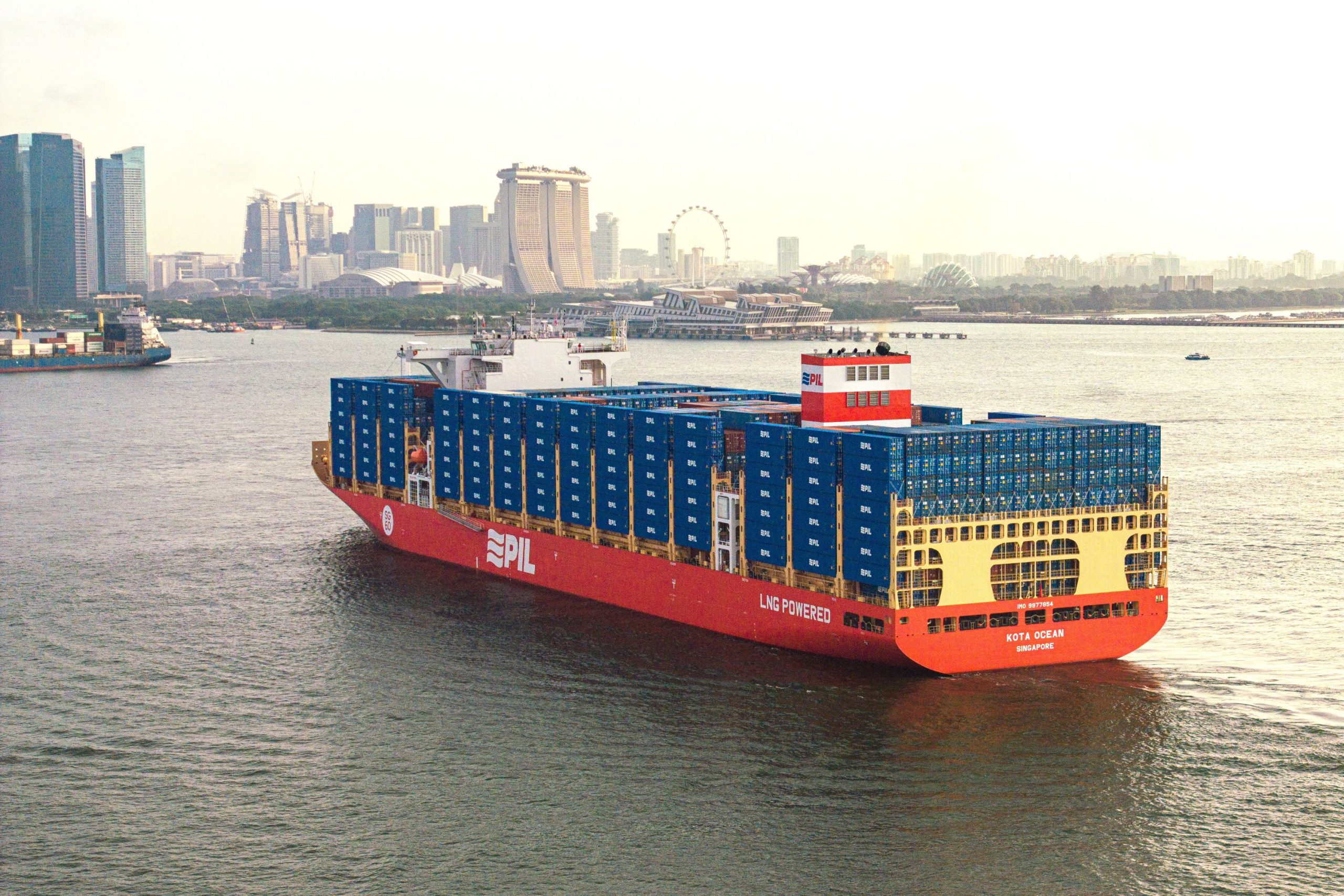
Pacific International Lines (PIL) has ordered seven 1,400 TEU methanol-ready container vessels from China’s Huanghai Shipbuilding, strengthening its fleet renewal programme for regional shipping operations. The vessels will be delivered between 2029 and 2030 and are intended particularly for the carrier’s intra-Asia and Pacific Islands network, where smaller ships provide connections between regional ports and international transhipment hubs.
The Singapore-headquartered shipping company has specified vessels measuring 172 metres long and 25 metres wide, with dimensions customised for the ports and services it intends to operate. Each ship will offer nominal capacity for 1,400 twenty-foot equivalent units (TEU), giving the seven-vessel order a combined nominal capacity of 9,800 TEU. The company has not disclosed the contract value or identified the existing vessels that may eventually be replaced.
Regional container networks require a different balance of vessel size and port accessibility from long-distance shipping services. Large container ships concentrate cargo movements through major gateways, while feeder services connect those terminals with smaller ports that may have restrictions on berth length, water depth, or available handling infrastructure. PIL’s selected dimensions are intended to accommodate these operating conditions without sacrificing more cargo capacity than necessary.
The relationship between a vessel’s dimensions and its nominal capacity is not straightforward. Hull length and beam influence the number of container positions available, but actual loading also depends on vessel draught, cargo weight, container distribution, and stability requirements. The size of the vessel must also remain compatible with the manoeuvring space and navigational restrictions at ports included in its rotation.
PIL’s regional network serves markets where container volumes may be distributed across several smaller ports rather than concentrated at one major terminal. Freight moving through these services can require a transfer between a regional vessel and a larger international service. The timing of that connection determines how long cargo remains in the transhipment terminal and whether containers can continue on their intended onward sailing.
Propulsion efficiency is a further element of the newbuild specification. PIL will incorporate pre-swirl vanes and propeller boss cap fins, both intended to reduce energy losses around the propeller. Pre-swirl vanes influence the flow of water entering the propeller, while fins fitted to the propeller boss can reduce losses associated with the rotating flow behind the hub.
These devices are designed to improve the conversion of engine power into propulsion rather than increase the carrying capacity of the ship. Their performance depends on the interaction between hull shape, propeller design, operating speed, and loading conditions. PIL expects the equipment to reduce fuel consumption, although it has not published a percentage efficiency improvement for the seven vessels.
The ships will also incorporate modern digital capabilities for monitoring vessel operations and performance. Such systems can provide operating data for assessing engine and propulsion behaviour over successive voyages. The company has not specified individual software products, sensor configurations, or performance targets, so the extent of any additional automated functions remains unconfirmed.
Methanol readiness provides another element of the design strategy. The vessels are being prepared for potential future adoption of lower-emission fuels as suitable fuel supplies and supporting infrastructure become available. PIL has not established that the ships will enter service burning methanol, and the announcement does not confirm that dual-fuel engines will be installed when they are delivered.
Using methanol as a marine fuel can require changes to fuel storage, delivery systems, engine arrangements, and onboard safety procedures. The availability of bunkering infrastructure along the intended routes is another consideration, particularly for regional services operating between ports with differing fuel supply capabilities. The environmental performance of methanol also depends on its production pathway, meaning fuel type alone does not establish lifecycle greenhouse gas savings.
PIL is pursuing a net-zero emissions target for 2050, with vessel investment and operational efficiency forming part of its longer-term programme. The methanol-ready specification preserves a potential route towards future fuel changes without determining when those changes will take place. That approach allows the company to introduce ships designed for present operating requirements while retaining some flexibility over their future fuel arrangements.
Cargo safety equipment has received particular attention. The vessels will incorporate fixed fire water monitors and cargo hold water spray systems to strengthen onboard firefighting capabilities. Container ship fires present difficulties because cargo is densely stowed, access to affected containers can be restricted, and heat or smoke may develop in spaces where direct intervention is difficult.
Fixed firefighting equipment provides established means of directing water towards designated areas, while spray systems can support the management of heat and fire conditions within cargo spaces. Their effectiveness depends on the installation design, the nature and location of the fire, and the procedures followed by the crew. PIL has not disclosed the precise coverage or performance specification of the new systems.
Lars Kastrup, chief executive officer of PIL, identified regional network capacity, operating efficiency, and fleet renewal among the objectives of the investment. The company selected Huanghai Shipbuilding for its technical capabilities, experience, and ability to meet the required quality and delivery conditions.
The order follows PIL’s broader investment in modernising its fleet, with the seven newbuildings intended to support future regional service requirements. Their deployment will be determined closer to delivery, when cargo demand, existing vessel commitments, and port capabilities can be assessed against the available fleet.
Although the contract provides for 9,800 TEU of nominal newbuilding capacity, it does not establish an equivalent net increase in PIL’s operating fleet. That figure will depend on retirements, vessel transfers, and service changes undertaken as the ships arrive. The confirmed development is a seven-vessel investment with deliveries scheduled across 2029 and 2030, incorporating efficiency and safety equipment selected for the carrier’s regional operations.