IN Brief:
- The Maritime Office in Szczecin and the Szczecin–Świnoujście Seaports Authority have launched a joint marine construction tender.
- The estimated PLN2.5bn programme includes 186 hectares of reclaimed land, protective breakwaters, a container pier, dredging, and navigation infrastructure.
- A contractor is expected to be selected in the third quarter of 2027, with the future terminal designed for up to two million TEU annually.
Poland has launched procurement for the principal marine works at the planned Przylądek Pomerania deepwater container terminal in Świnoujście, with an estimated contract value of PLN2.5bn. The project will create approximately 186 hectares of reclaimed land alongside new breakwaters, navigation infrastructure, a container pier, and a port basin. Once completed, the terminal is intended to accommodate the largest container vessels able to enter the Baltic Sea.
The Maritime Office in Szczecin and the Szczecin–Świnoujście Seaports Authority announced the joint procurement procedure on 3 November 2026. The contracting authorities intend to appoint a single contractor to design and build the marine infrastructure, using a competitive dialogue process. Contractor selection is planned for the third quarter of 2027, while the PLN2.5bn figure remains an estimate rather than an awarded contract value.
The procurement divides the works into two complementary areas of responsibility. The Maritime Office will oversee the protective breakwaters and infrastructure required for vessels to approach and manoeuvre within the new port. The Seaports Authority will be responsible for the container pier, port basin, associated structures, and access infrastructure forming the cargo handling area. Although each organisation will manage its own scope, the authorities intend to conclude one joint construction agreement with the selected contractor.
The Maritime Office’s scope includes a protective breakwater approximately 3,350 metres long, integrated with the area designated for land reclamation. A second eastern breakwater, measuring approximately 1,580 metres, will protect the new container pier. The structures will help establish sheltered operating conditions for ships entering and manoeuvring within the outer port.
Breakwaters protect a port basin by limiting the effects of waves on the areas where ships approach, berth, and handle cargo. Their alignment and construction must account for local seabed conditions, water levels, and the loads imposed by the marine environment. The new structures will form part of a wider system combining protected navigation areas with the reclaimed land required for terminal operations.
The development will also require an approach channel, turning basin, navigational markings, and dredging works. These elements provide the navigable connection between the existing maritime approaches and the planned terminal berths. Vessel access depends on sufficient water depth, channel dimensions, and manoeuvring space, while the configuration of the turning basin must accommodate the characteristics of ships expected to use the port.
Material excavated during dredging will be used in land reclamation where it meets the required engineering parameters. This creates a connection between the excavation of the marine areas and construction of the new peninsula. Suitable material can contribute to forming the terminal’s land area, while its placement and subsequent preparation must satisfy the structural requirements of the infrastructure to be built upon it.
The Seaports Authority’s portion of the project includes a container pier approximately 1,300 metres long and 530 metres wide. The works also cover the port basin, landward protection structures, access infrastructure, and an auxiliary quay approximately 120 metres long. Together with the wider marine development, the completed port is expected to provide approximately three kilometres of quay infrastructure.
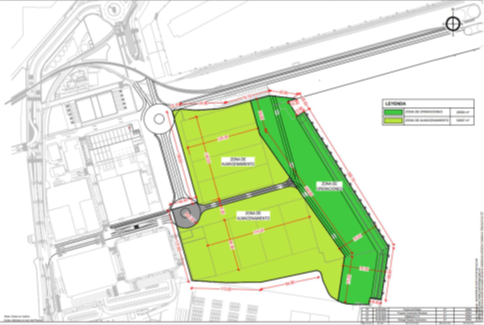
The reclaimed land will create space for terminal equipment, container storage, cargo movements, and the transport infrastructure needed to connect maritime activity with inland logistics networks. The published procurement announcement establishes the dimensions of the principal civil engineering works, but does not provide a final specification for container cranes, automated handling equipment, or the operational systems to be installed at the terminal.
The relationship between berthing capacity and landside infrastructure will be important to the eventual operation. Containers discharged from a vessel must be moved from the quay to storage or onward transport, while export containers follow the reverse sequence. Available crane capacity, yard space, equipment, and road or rail connections influence how quickly those movements can be completed.
Polish authorities have set a target handling capacity of up to two million twenty-foot equivalent units (TEU) annually. This represents the intended capability of the completed development rather than existing throughput or traffic already committed by shipping companies. Achieving the target will require the installation of suitable handling equipment and the establishment of shipping services generating sufficient container volumes.
The new terminal is intended to strengthen direct maritime connections between Poland and international markets. Świnoujście currently forms part of a port network serving regional and European freight, while the development is designed to accommodate larger ocean-going container vessels. Direct calls could reduce the need for some cargo to pass through intermediate transshipment ports, where commercial demand and vessel schedules support the change.
Shipping lines determine their vessel rotations according to cargo demand, operating costs, port access, and the availability of connecting services. A deepwater berth provides the physical ability to receive a large vessel, but regular calls also depend on the volume of freight available for loading and discharge. The authorities have not confirmed individual shipping lines, service frequencies, or cargo commitments for the future terminal.
Inland access will consequently be essential to the development’s role in international supply chains. Import containers must be transferred from the terminal towards distribution centres, factories, or inland freight facilities, while exports require reliable connections in the opposite direction. Road and rail capacity will influence whether additional maritime throughput can be accommodated without creating new constraints outside the port.
The current procurement concerns a defined part of the wider port investment programme. Preparatory activities have already been undertaken separately, including work associated with site access and marine preparation. The launch of the principal marine construction tender should therefore be distinguished from both the earlier preparatory programme and the eventual commencement of works under the new contract.
Under the competitive dialogue procedure, qualified bidders will participate in discussions with the contracting authorities before submitting final proposals. The approach is intended to establish suitable technical and contractual arrangements for a complex design and construction programme. The project combines dredging, coastal engineering, reclamation, quay construction, and navigation infrastructure, with significant dependencies between the different activities.
For example, the development of reclaimed land must be coordinated with the protective marine structures and the preparation of areas intended to support the container pier. Dredging and the movement of suitable excavated material will also need to be managed alongside construction activities. The eventual sequence will be determined through the contracted design and construction programme.
The Maritime Office confirmed that the procurement notice had been submitted for publication in the Official Journal of the European Union, with tender documentation to be made available through the relevant procurement platform. Those documents will establish the detailed requirements against which bidders prepare their proposals and the conditions governing the subsequent construction agreement.
Poland’s Ministry of Infrastructure regards the project as a substantial expansion of the Szczecin–Świnoujście port complex. The government expects the development to increase the country’s capacity to handle international container traffic and compete with established European gateways. The extent of that commercial effect will depend on subsequent investment, shipping services, and the development of efficient inland freight connections.
The next contractual milestone is the selection of the marine works contractor in the third quarter of 2027. Following that appointment, detailed design and construction will determine the delivery of the new port infrastructure. The procurement establishes the scale and principal components of the proposed terminal, while its eventual cargo volumes will depend on the completed facilities and the shipping networks established to use them.