IN Brief:
- Emirates SkyCargo transported more than 700 tonnes of AI infrastructure across its network in July 2026.
- AI Tech provides specialist handling, priority loading, and airport-to-airport shipment visibility.
- A planned fleet of 23 dedicated freighters by March 2027 will provide additional main-deck capacity for oversized equipment.
Emirates SkyCargo has introduced a specialist air freight product for artificial intelligence infrastructure, combining priority loading, dedicated handling procedures, and shipment monitoring for sensitive computing equipment. Known as AI Tech, the service accommodates cargo including server racks, semiconductors, graphics processing units, and manufacturing equipment used in computing and data centre installations.
The Dubai-based carrier developed the product following increased activity in transporting equipment associated with AI infrastructure. During July 2026, Emirates SkyCargo carried more than 700 tonnes of AI-related hardware across its international network. The company has not provided a breakdown by equipment type or destination, but identifies growing demand for shipments moving between manufacturing centres and markets undertaking major computing infrastructure investments.
Large computing installations involve equipment with differing transport requirements. Semiconductor components can require protective packaging and controlled handling, while assembled server racks may present challenges because of their dimensions, concentrated weight, and sensitivity to movement. Manufacturing machinery can introduce further constraints where individual units exceed conventional cargo dimensions or require specialist lifting arrangements.
AI Tech establishes handling procedures intended to accommodate these differences across the airline’s network. The service includes measures to maintain the required orientation of equipment throughout the transport process, reducing the risk associated with inappropriate positioning or movement during handling. The precise procedures depend on the shipment involved, and Emirates has not disclosed separate handling specifications for every equipment category.
The carrier also provides priority loading and scheduling for cargo associated with time-sensitive deployments. Computing infrastructure projects can require several categories of equipment to arrive within defined installation periods, with individual deliveries coordinated against construction, electrical installation, and commissioning activities. A delay to one shipment can affect those arrangements when other work depends on the equipment becoming available.
Priority handling establishes an operational preference within the airline’s cargo processes, but it does not remove aircraft loading restrictions or airport capacity limits. Individual consignments remain subject to available space, weight and dimensional restrictions, security requirements, and the handling capabilities of the participating airports. The airline has not published a guaranteed transit-time reduction associated with the new product.
Shipments receive airport-to-airport milestone tracking, with monitoring coordinated through Emirates SkyCargo’s command centre in Dubai. The service includes proactive communication intended to keep customers informed of cargo movements and operational changes. Milestone information provides a record of progress through the air transport process, allowing subsequent handling and delivery arrangements to be coordinated around the reported shipment status.
The published tracking provision covers movements between airports. Goods travelling to a data centre or manufacturing facility may subsequently require customs clearance, temporary storage, specialist road transport, and controlled unloading. These activities are separate from the airport-to-airport monitoring described in the AI Tech specification, although their scheduling can depend on the information supplied during the air freight movement.
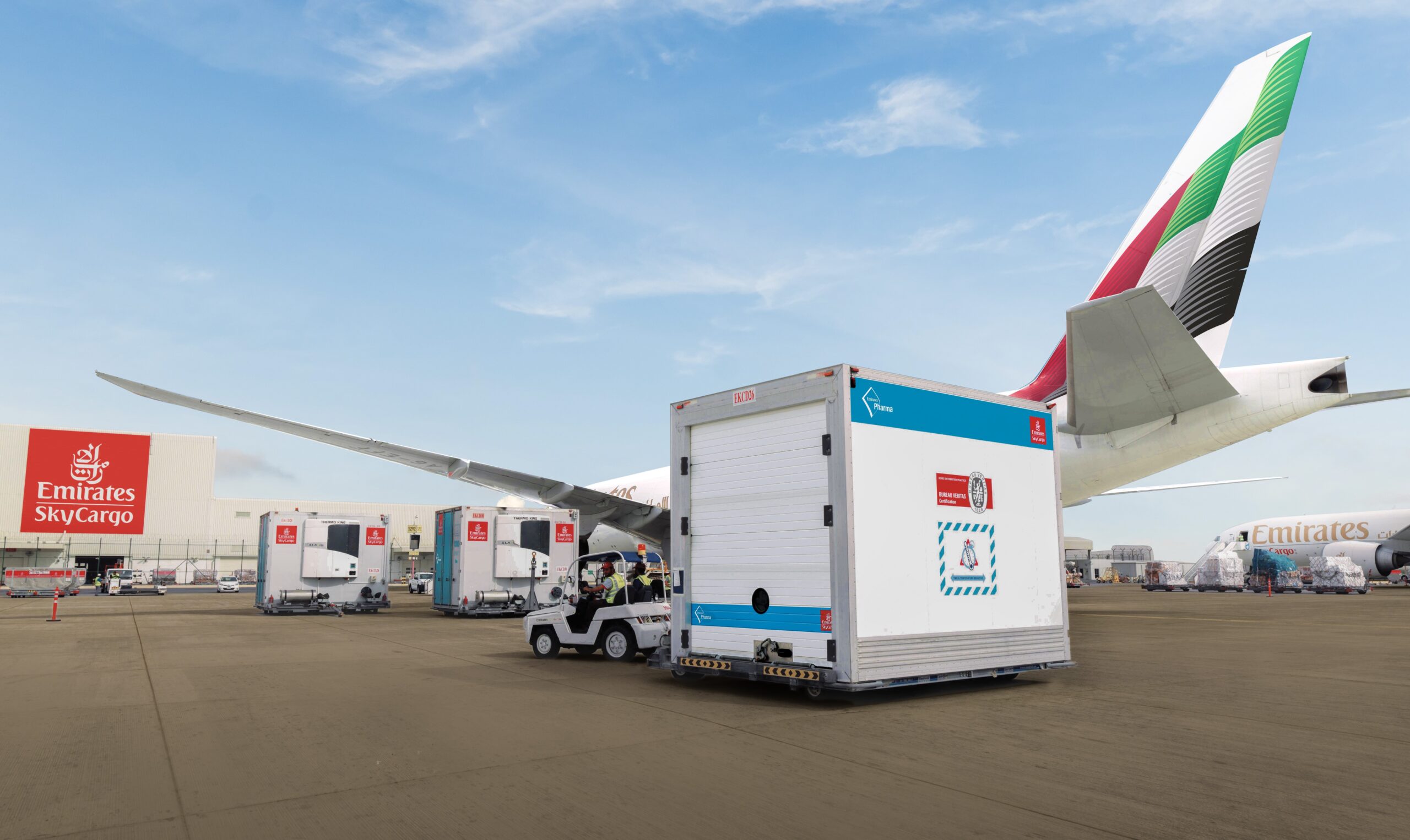
Specialist project cargo support forms another part of the service. Emirates reports handling tall, densely configured server racks that can weigh more than 3.5 tonnes. Such cargo can require dedicated freighter aircraft because of the available loading arrangements and main-deck capacity. Whether a particular unit can be transported depends on its dimensions, weight distribution, packaging, and the aircraft selected.
Air freight loading restrictions extend beyond an aircraft’s total payload capacity. Cargo must be compatible with the dimensions of the loading door, the available compartment space, the floor loading limits, and the equipment used to move it aboard. The distribution of weight also affects how a shipment can be positioned and secured. An aircraft capable of carrying several tonnes of freight may therefore be unsuitable for a particular large item if its dimensions or loading configuration exceed the permitted limits.
Emirates intends to operate 23 dedicated freighters by March 2027, strengthening the main-deck capacity available for heavy and oversized cargo. That is a planned fleet figure rather than confirmation of the number of aircraft currently operating. The airline also transports freight in the lower-deck holds of widebody passenger aircraft, providing additional capacity for shipments compatible with those compartments.
AI Tech is available across the airline’s global network for most equipment associated with AI infrastructure. Highly specialised manufacturing machinery is subject to an advance assessment of the airport stations involved. These checks establish whether the necessary handling arrangements can be provided before the carrier accepts the shipment under the proposed routing.
Station capabilities can differ because airports operate with different cargo handling equipment, warehouse facilities, and loading arrangements. A shipment accepted at one gateway may require additional planning at another location, particularly where an oversized item needs specialised machinery for unloading or transfer. Advance assessment allows those requirements to be considered before the equipment enters the transport network.
The service builds on Emirates SkyCargo’s existing experience in transporting high-value technology products. Its standardised procedures are intended to provide a more consistent approach across the network, while individual shipments retain requirements determined by their contents, dimensions, handling conditions, and destination.
Badr Abbas, divisional senior vice president at Emirates SkyCargo, identified the coordination of sensitive equipment movements and deployment schedules as central objectives of the new product. The company intends to use its expanded freighter fleet and existing international network to accommodate further growth in AI infrastructure transport.
Emirates has not published a separate rate structure, a guaranteed damage reduction, or a numerical performance target for AI Tech. The confirmed development is the introduction of a dedicated handling and monitoring product, supported by current aircraft capacity and a planned increase in dedicated freighters. Shipment suitability will continue to depend on the equipment involved and the handling capabilities available along each route.