IN Brief:
- The Panama Canal Authority expects to identify pre-qualified terminal bidders by the end of 2026.
- Two proposed terminals represent approximately $2.6bn of planned investment within a wider infrastructure strategy.
- Concessions could be awarded in mid-2027, with terminal operations potentially beginning in 2030 or 2031.
The Panama Canal Authority expects to identify pre-qualified bidders for two proposed container terminals before the end of 2026, advancing its programme to increase port capacity around the interoceanic waterway. Initial submissions have been evaluated, and companies selected for the shortlist will be invited to participate in the next stage of a competitive concession process.
Canal administrator Ilya Espino outlined the updated timetable at the Houston International Maritime Conference on 4 November. The authority is seeking private-sector investment and operating expertise for terminals on the Atlantic and Pacific sides of the Canal, with the developments intended to strengthen Panama’s container transhipment and international logistics activities.
Investment associated with the two terminals is estimated at approximately $2.6bn. They form part of a wider infrastructure expansion strategy valued at around $8.5bn, covering maritime logistics and energy transport projects. These are planned investments rather than construction expenditure already committed under signed terminal concessions.
The authority began engagement with international terminal operators and shipping companies in 2025, seeking information about potential project structures and commercial participation. Formal pre-qualification opened in January 2026, allowing interested organisations to provide details of their experience, financial capabilities, and suitability to participate in the development process.
Pre-qualification establishes which companies meet the requirements to compete for a concession. It does not award construction work or operating rights. Applicants progressing beyond the initial assessment will receive requests for proposals, allowing them to develop submissions addressing the commercial, technical, and operational arrangements required by the authority.
The Panama Canal expects to identify the shortlisted companies before year-end. Under the current timetable, concessions could be awarded around the middle of 2027. Terminal operations could then begin in 2030 or 2031, although the dates remain dependent on procurement decisions, construction arrangements, and the subsequent development and commissioning programme.
Major international shipping and terminal groups have participated in earlier engagement concerning Panama’s infrastructure plans. Maersk and MSC have been identified as possible bidders, but neither has been confirmed as a pre-qualified participant or concession winner. The identities of the companies selected for the next stage remain subject to the authority’s formal decision.
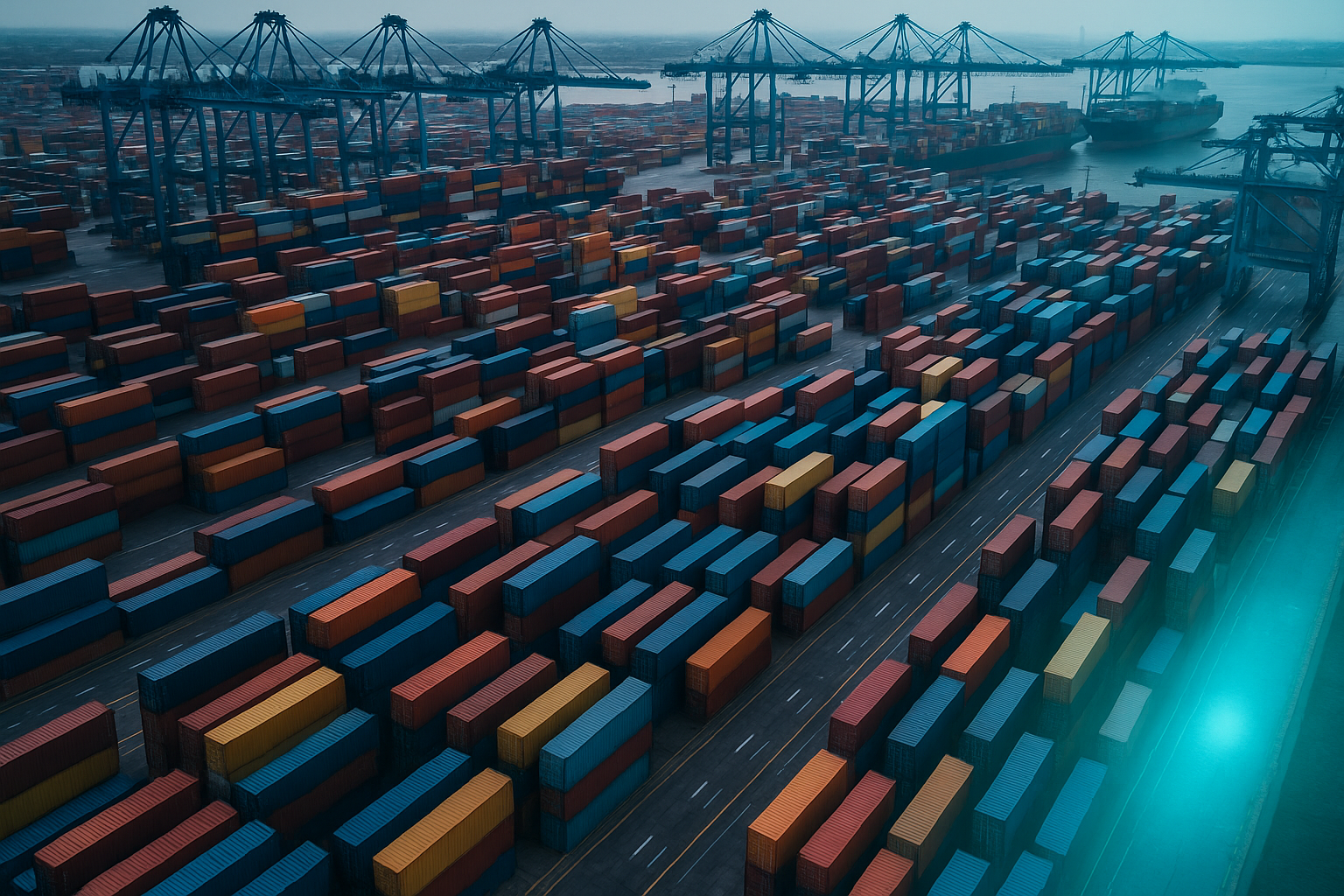
The proposed terminals are intended to increase capacity at a maritime location where established container facilities are approaching their operating limits. Panama already handles substantial transhipment activity, connecting long-distance shipping routes with regional services serving markets across the Americas and beyond.
Transhipment involves transferring containers between vessels at an intermediate port rather than transporting all cargo directly between its original loading port and final discharge destination. The process allows shipping lines to concentrate long-distance services at major gateways while connecting smaller markets through feeder networks. Its efficiency depends on the coordination of vessel calls and terminal handling operations.
A container transferred between ships must be discharged, positioned within the terminal, and subsequently loaded onto another vessel. The time required depends on the availability of berths, cranes, internal transport equipment, storage positions, and the scheduled arrival of the onward service. Congestion in one part of that process can delay connections even when additional berth capacity is available elsewhere.
Terminal design must therefore balance quayside and yard capacity. Additional container cranes may increase the number of movements possible alongside a vessel, but their output can be restricted if the terminal lacks sufficient space to receive containers or move them to storage positions. Yard equipment, transport routes, and the duration for which containers remain in storage influence the overall handling capacity.
The Canal Authority has previously identified an objective of adding approximately five million TEU of annual container transhipment capacity through the two-terminal programme. That figure represents a planning ambition rather than existing capacity or a guaranteed outcome of the concessions. The final capacity will depend on terminal design, investment commitments, equipment choices, and the operating arrangements established by the successful bidders.
Container terminals also perform a different function from the Canal’s locks and navigation channels. Vessels may pass through the waterway without loading or discharging freight at a Panamanian terminal, while containers can be transferred between ships at nearby ports without following the same route through the locks. Expanding terminal capacity can increase cargo handling opportunities, but it does not directly increase the number of vessels permitted to transit the Canal.
Water availability remains a separate operating constraint. The Canal depends on freshwater resources for lock operations and adjusts certain transit arrangements according to reservoir levels and expected conditions. The authority has continued to manage vessel booking capacity and maximum permitted draught in response to changing hydrological conditions.
The current limit is 33 vessel transits per day, with the administrator indicating an intention to maintain at least 32 daily slots during the approaching dry season where conditions permit. Actual restrictions will depend on rainfall and available water resources. These measures concern navigation through the Canal rather than the procurement of new cargo terminal facilities.
The broader infrastructure programme also includes a proposed liquefied petroleum gas pipeline, with investment estimates ranging from $4bn to $8bn. That project addresses energy transport rather than container handling and remains separate from the two-terminal concession process. The differing investment estimates should not be added together as though all elements have reached final approval.
The Canal Authority is also beginning to consider a third container terminal. That proposal is at an earlier planning stage and should not be included in the current two-terminal procurement or the associated $2.6bn investment estimate. Its eventual development will depend on further assessment of demand, available infrastructure, and commercial participation.
The immediate milestone is the identification of companies qualified to submit detailed proposals. Once the shortlist is established, the authority can progress negotiations and concession selection for the two terminals. The resulting agreements will determine which organisations assume responsibility for financing, constructing, equipping, and operating the additional port capacity, with the current development timetable remaining provisional until those decisions are completed.