IN Brief:
- CO3 has acquired 100% of Norwegian freight intelligence specialist Kinver, with financial terms undisclosed.
- The combined platform connects information from more than 350,000 assets with over 600 third-party integrations.
- Operational events can be compared with freight contracts, invoices, and service-level commitments to identify discrepancies.
CO3 Technologies has acquired Norwegian freight intelligence specialist Kinver, bringing real-time vehicle information together with transport contract management, invoice auditing, and emissions calculations. The Berlin-based company has purchased 100% of Kinver AS, whose software examines freight expenditure against agreed rates and service commitments. The acquisition extends CO3’s existing transport visibility platform into the commercial management of road freight operations.
The financial terms have not been disclosed. Kinver’s products and employees will join the CO3 platform, while founder and chief executive Lars Fredrik Eriksen becomes vice president, commercial, at CO3. The transaction is the company’s first acquisition since becoming independent following its separation from digital freight forwarder sennder in 2025.
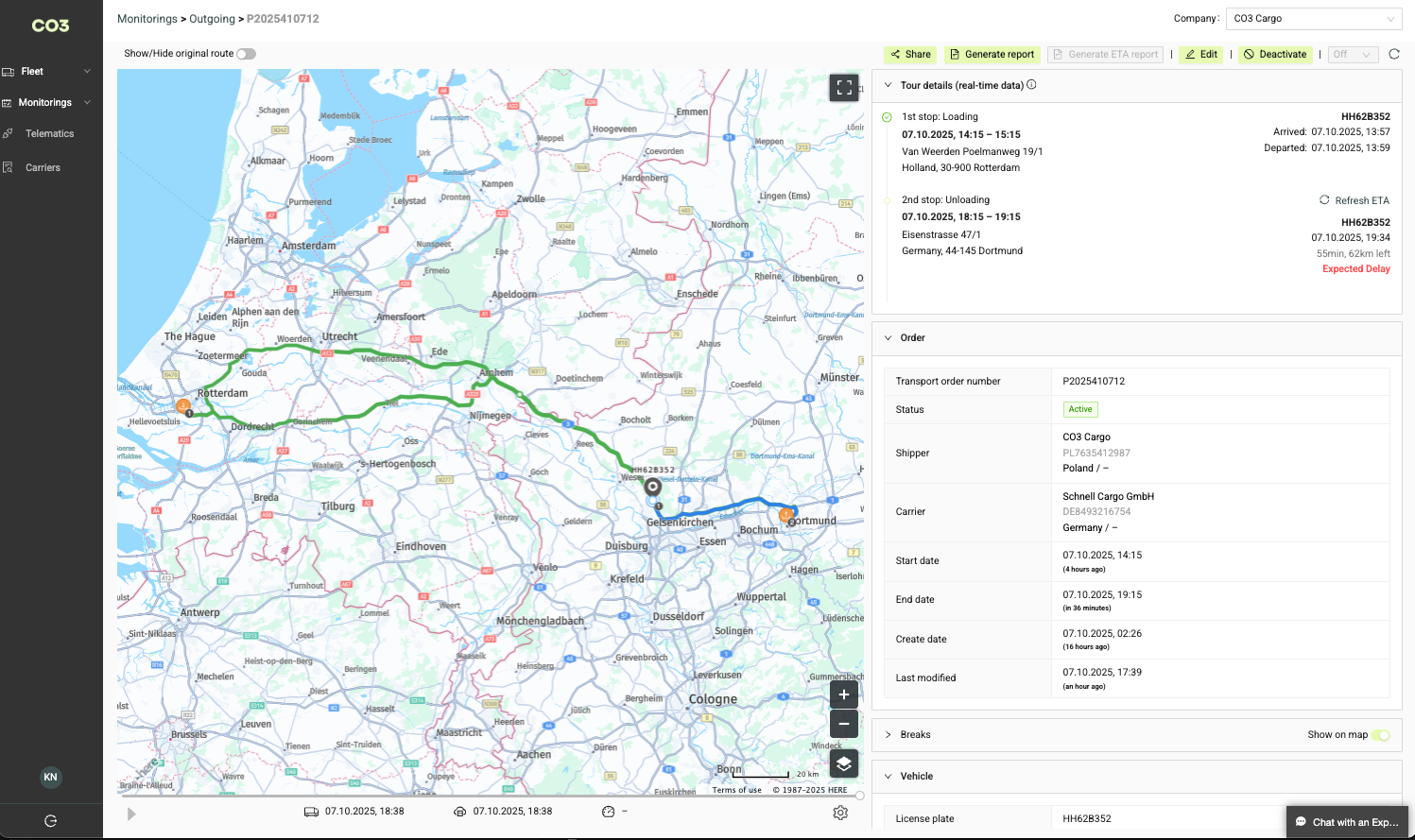
CO3 provides a data platform connecting more than 350,000 trucks, trailers, telematics devices, and refrigeration units across 35 countries. Its application programming interface (API) standardises information received from different equipment and technology providers, processing more than 215 million unique data points daily. The system connects with 550 third-party telematics providers and 12 original equipment manufacturer partners.
The operational information includes vehicle position, estimated arrival times, driver availability, trailer temperatures, and equipment status. Those records allow logistics companies to establish where freight is moving and identify deviations from planned operations. Their availability can also provide evidence of events that affect transport costs, although the commercial consequences depend on the contractual conditions governing each movement.
Kinver supplies the financial information needed to examine those consequences. Its software audits freight expenditure against contracted rates, service levels, and other agreed charging conditions. The company has developed 57 integrations with transport management and enterprise resource planning systems, providing access to information concerning transport orders, invoices, and contractual arrangements.
Bringing the two datasets together creates a means of comparing actual operating events with the terms under which a shipment was purchased. Transport charges may include an agreed base rate alongside additional amounts associated with waiting time, handling requirements, or other conditions. Determining whether those charges are correct can require both an understanding of the contract and a reliable record of what occurred during the movement.
Vehicle arrival and departure records provide one example. A transport contract may specify the amount of waiting time included within the agreed price and the rate charged when a vehicle remains beyond that allowance. Telematics data can help establish the period during which a truck was present at a location, allowing the resulting charge to be assessed against the relevant contractual threshold.
However, a vehicle location record does not necessarily establish every event required to determine liability for a delay. The point at which a truck enters a site may differ from the time at which it arrives at an assigned loading bay, while documentation checks and loading instructions can affect when the contractual waiting period begins. Automated assessments must therefore account for the definitions and conditions contained in the underlying agreement.
CO3 intends to connect Kinver’s commercial information with its existing vehicle data so that transport events can be assessed against service-level agreements, freight invoices, and surcharge claims. That process can identify potential discrepancies for review using information drawn from the relevant operational and financial systems.
The company has not published a quantified reduction in invoice errors or administrative costs resulting from the acquisition. The practical effect will depend on the quality of the source data, the availability of contractual information, and the extent to which customers integrate the combined platform into their existing workflows.
Following the transaction, CO3 describes its combined connectivity as covering more than 600 third-party integrations across 35 countries. These connections include different categories of technology providers and enterprise systems. The total should not be interpreted as the number of individual freight operators using the platform or the number of transport management systems supported.
Kinver was founded in Oslo in April 2020 and serves more than 60 enterprise accounts. Its Kinver Engine product is designed to examine freight spending, contracted rates, and service performance. The combination with CO3 provides access to a wider range of transport event data that may be used alongside those commercial records.
The acquisition also brings Kinver’s TerraTwin service into the group. TerraTwin provides an API for shipment-level transport emissions calculations and is described by Kinver as holding relevant ISO and Smart Freight Centre accreditation. The service adds emissions accounting to the wider platform’s transport data and financial control capabilities.
Emissions calculations require information concerning the transport activity and the methodology used to allocate emissions to individual shipments. Depending on the available records and calculation framework, inputs can include vehicle characteristics, fuel or energy consumption, distance, load information, and the transport services involved.
The presence of live vehicle data can provide additional operating information, but the acquisition does not establish that every emissions calculation will immediately use measured fuel consumption or other direct telemetry. The applicable methodology and data available for each shipment will continue to determine how the results are produced.
CO3 also intends to develop software agents capable of using operational and commercial records to support decisions about claims, disputed invoices, cost recovery, and transport operations. These functions form part of its longer-term development strategy rather than a confirmed deployment of autonomous financial processes across its complete customer network.
The acquisition combines systems that previously addressed different stages of transport management. CO3 provides information about physical freight movements, while Kinver connects that activity with the commercial agreements and charges associated with it. Further product integration will determine how those records are presented and used within customer systems.
No timetable has been published for completing the integration of Kinver’s products into CO3, and the company has not disclosed an expected revenue contribution from the transaction. The immediate development is the transfer of Kinver’s products, staff, and commercial capabilities into CO3, expanding the information available for managing transport performance and expenditure.