IN Brief:
- The completed modernisation adds 1,550 sq m of warehouse space and 913 sq m of technical and office accommodation.
- New equipment includes four trailer docks, a platform for 14 air cargo loading units, and storage capacity for 5,700 pieces.
- Automated sorting, security screening, and customs facilities support international and Canary Islands freight flows.
FedEx has completed the modernisation of its second airside cargo facility at Adolfo Suárez Madrid-Barajas Airport, expanding warehouse capacity and introducing equipment intended to improve the movement of freight between aircraft and road transport. The redevelopment adds 1,550 sq m of operational warehouse space and 913 sq m for technical and administrative offices, strengthening the company’s handling infrastructure ahead of the seasonal shipping peak.
Together with its existing installation, the upgraded facility gives FedEx more than 4,500 sq m of airside operational space at Madrid-Barajas. The investment includes dedicated trailer docks, equipment for manoeuvring aircraft cargo containers, automated sorting, and customs facilities. The company has not disclosed the capital cost of the redevelopment or a numerical target for additional hourly throughput.
Four trailer loading docks have been installed to support transfers between the warehouse and road transport vehicles. These positions provide designated areas for loading and unloading freight, allowing road movements to be coordinated with cargo arriving from or departing on aircraft. The docks form part of the physical connection between the airside operation and the wider distribution network.
The warehouse also incorporates a castor deck roller platform capable of accommodating and manoeuvring up to 14 unit load devices (ULDs). These standardised containers and pallets are used to consolidate freight for carriage on aircraft. The platform allows loaded units to move across a system of rollers or castors during transfer and positioning operations.
ULD handling requires equipment compatible with the dimensions and weight of the particular load. Cargo units arriving from aircraft may need to be transferred into warehouse positions before their contents can be processed, while outbound units must be prepared and positioned for collection by aircraft loading equipment. Providing additional handling positions can help organise these movements within a busy cargo facility.
The platform’s stated capacity of 14 units describes the number it can accommodate, not the volume of containers it can process during an hour. Throughput also depends on loading sequences, the availability of compatible handling equipment, and the rate at which cargo can enter and leave the surrounding areas. FedEx has not provided an hourly handling rate for the new installation.
A high-density storage area provides secure capacity for 5,700 individual pieces. This measure refers to the number of items that can be stored under the facility’s specified arrangements rather than the number of complete air cargo containers. Actual storage requirements vary according to shipment dimensions, packaging, handling restrictions, and the time goods remain in the warehouse.
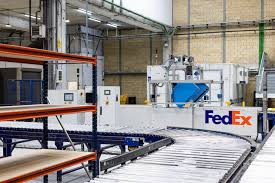
Automated sorting equipment has been introduced alongside systems for weighing and measuring freight. The facility includes Check-Weight-Cube equipment, allowing the operator to capture shipment weight and dimensions during processing. These measurements support cargo records, handling decisions, and the allocation of freight to suitable transport equipment.
Accurate dimensions and weight are important because shipments must remain within the limitations of aircraft compartments, loading units, and ground handling systems. Information recorded during warehouse processing can also help identify discrepancies between the physical consignment and the documentation provided for transport. The automated equipment does not remove the need for appropriate shipment acceptance and safety procedures.
X-ray screening equipment supports aviation security controls. Cargo must meet the applicable screening and secure handling requirements before being accepted for carriage, with procedures determined by the shipment and its regulatory status. Incorporating screening facilities into the handling operation provides a location for completing those checks before freight is prepared for departure.
The redevelopment includes an authorised temporary customs storage facility, known in Spain as an Almacén de Depósito Temporal. It allows international goods to remain under the relevant customs arrangements while their clearance procedures are completed. Such facilities provide controlled storage rather than permission to release goods before the required formalities have been satisfied.
FedEx intends the upgraded operation to help centralise Express and Economy freight movements to and from the Canary Islands. These flows can involve customs and indirect tax requirements that differ from those applicable to movements solely within mainland Spain. Coordinating handling and documentation within the same facility provides an operating framework for managing the associated transfers.
The expanded warehouse will also support the consolidation of Economy shipments moving from the European Union towards Latin America and the United States. Consolidation brings separate consignments together for onward transport, with the timing of movements determined by available aircraft capacity, loading arrangements, and the commercial service selected.
Madrid-Barajas serves as an important connection between FedEx’s Spanish road operations and its international air freight network. Cargo arriving by road must be accepted, sorted, and prepared for the correct flight, while inbound air shipments require unloading, processing, and allocation to onward transport services. The redesigned facility provides additional space and equipment for coordinating those activities.
The project also included improvements to electrical infrastructure, LED lighting, fire protection systems, and physical security. These changes support the operation of the building alongside the new freight handling equipment. FedEx has not supplied measured energy savings or a quantified reduction in cargo processing time attributable to the work.
Warehouse capacity, sorting capacity, and aircraft freight capacity are separate operating measures. Expanding the available building space can provide additional room for processing and storage, but the maximum volume handled will still depend on labour, equipment, customs procedures, flight schedules, and onward road transport. The company has not announced new aircraft services directly resulting from the redevelopment.
The facility is operational ahead of the seasonal peak, when changing shipment volumes can place additional pressure on acceptance, processing, and dispatch activities. FedEx’s completed investment provides additional cargo handling infrastructure at Madrid-Barajas, with the practical increase in throughput to be determined by the interaction of the warehouse equipment, scheduled freight movements, and available transport capacity.