IN Brief:
- Freightos launched the latest Freightos for Forwarders platform on 10 November for international air and ocean logistics.
- It combines rate management, quotations, booking and market data, linking more than 75 carrier connections and the 7LFreight trucking network.
- Embedded AI handles unstructured enquiries within customer-defined commercial rules, while forwarding teams retain responsibility for their quotes and bookings.
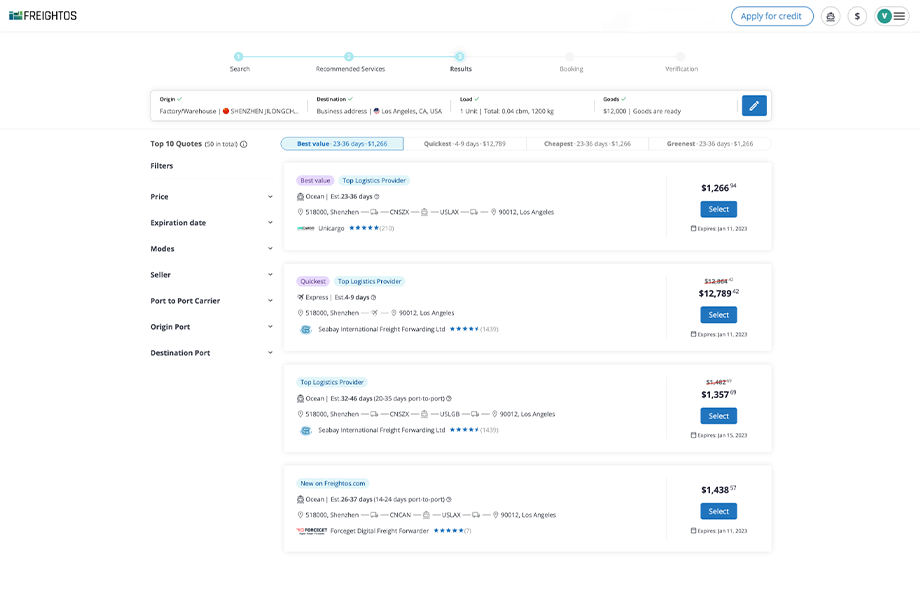
Freightos has launched an upgraded Freightos for Forwarders platform that connects carrier rates, customer enquiries, price quotations and booking for international air and ocean freight. Introduced on 10 November, the system adds AI-assisted processing to an existing network of digital carrier connections and market data. It is designed to move a freight enquiry through commercial approval and towards a confirmed booking without repeatedly entering the same shipment details into separate systems.
Freightos says its platform is connected directly to more than 75 air and ocean carriers, with trucking information available through its 7LFreight network. The same environment can draw on Freightos Terminal freight benchmarks. Forwarders can retain their own contract rates, promotional tariffs, surcharges and customer-specific pricing rules alongside the carrier information, instead of rebuilding each quotation from separate records.
The first calculation in a freight quotation establishes what a service will cost to buy. For an air consignment, available rates may depend on chargeable weight, route, handling arrangements and capacity. For an ocean shipment, equipment type, origin, destination, rate validity and the relevant carrier charges may apply. A forwarder then adds its own customer terms and commercial margin before committing to a selling price.
Disjointed pricing systems require staff to transfer details between emails, spreadsheets, carrier portals and internal booking tools. Re-entering the origin, destination, commodity or dimensions at each stage creates opportunities for discrepancies. Freightos’s integrated process is intended to carry the request into quotation and booking using the same data, with changes recorded against the commercial workflow.
Embedded AI can interpret unstructured customer messages and use the requested shipment details to generate a proposed quotation. A forwarder can apply its standard operating procedures, customer-specific agreements and margins before the offer is released. The system’s value therefore depends on both correctly extracting the request and applying the right tariff and approval rules to the resulting price.
Different rates can coexist for the same route. A contracted allocation may have a different expiry date from a promotional tariff, and a spot offer can change as capacity is booked. Freightos has built the new workflows around those distinctions, allowing teams to compare carrier choices against the service requirements and commercial terms attached to a particular customer.
A quotation is not automatically an accepted booking. Dangerous goods, temperature control, size restrictions, documentation and cut-off times can determine whether a carrier will take the consignment. Freightos’s connections can present capacity and booking functions, but exceptions still require the forwarder to check the applicable carrier conditions and confirm that the shipment has been accepted.
The new release links those stages through what Freightos calls a freight orchestration network. Incoming enquiries can be interpreted, matched to pricing inputs and passed to the booking workflow while preserving an audit trail of commercial decisions. Existing rate management and eBooking capabilities form the basis of the system; the November change is the addition and integration of AI-assisted actions, not the creation of every component from scratch.
Rate accuracy remains dependent on the source. Freightos’s published terms identify direct carrier feeds, uploads managed by its data services team, third-party data and customer-uploaded rates as possible inputs. A stale surcharge or incorrectly entered selling margin can propagate into a generated quotation, so the forwarder must continue to validate the pricing information and rules used by the platform.
The product provides application programming interfaces through which a forwarder can connect pricing, bookings and carrier information to its existing transport management or enterprise resource planning systems. The extent of those integrations depends on the subscribed services and implementation choices. In a connected workflow, a confirmed booking can be associated with customer and shipment records without having to recreate the transaction in every application.
The 7LFreight network adds domestic transport information to the company’s air and ocean connectivity. It can support a quotation involving a road collection or delivery leg, although the actual trucking movement remains subject to available service, loading conditions and the customer’s delivery requirements. A single pricing view does not remove the physical handoffs involved in multimodal transport.
Freightos Terminal benchmarks provide a further comparison against wider market movements. That information can support the decision on whether a proposed rate is commercially competitive, while the forwarder’s own contracts establish the transport service it can purchase at the moment of booking. Market averages and a shipment-specific carrier offer therefore serve different purposes inside the same quotation process.
Freightos has been consolidating its software branding and existing carrier-facing capabilities under Freightos for Forwarders. The November introduction builds on rate management and booking functions already supplied to the market, bringing customer enquiries and AI-assisted processing into the same environment. Existing integrations will influence how quickly individual forwarders can put the new functions into routine use.
Pablo Pinillos, chief executive of Freightos, said: “AI is only as powerful as the data, connectivity, and workflows behind it.” The company says the new system can generate quotations more quickly and reduce manual administration, but has not published independently evaluated customer time savings or booking accuracy results for the complete November release. Its claims about performance remain prospective for individual implementations.
The upgraded platform is available globally for international air and ocean forwarders. Its operating results will be determined by the currency of carrier data, the quality of instructions supplied by customers and the ability to move an accepted quote into a valid booking. Freightos has connected those processes technologically; live deployments will show how reliably they work across different freight services and customer systems.