IN Brief:
- Santos Brasil submitted a proposed R$3.5bn integrated investment programme for Tecon Santos and the adjacent vehicle terminal on 9 November.
- The proposal would lift container design capacity to four million TEU per year and vehicle capacity to 360,000 units, with provision for project cargo.
- Implementation depends on potential early renewal of the vehicle terminal concession and approvals from the port authority, Antaq and TCU.
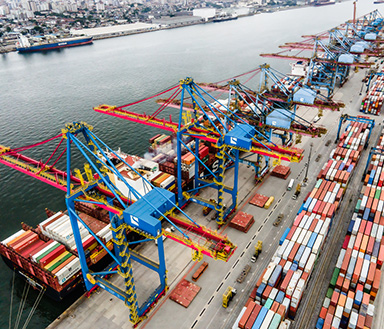
Santos Brasil has presented a proposed R$3.5bn investment programme to the Santos Port Authority, covering its container and vehicle terminals on the left bank of the Port of Santos. The submission would increase Tecon Santos’ annual container design capacity by one million twenty-foot equivalent units (TEU), expand the vehicle terminal and establish dedicated capacity for general and industrial project cargo.
Published on 9 November, the proposal envisages four million TEU of annual capacity at Tecon Santos, a 33% increase against the programme’s stated baseline. Its neighbouring vehicle terminal, TEV, would reach 360,000 vehicles a year, 16% above the current figure used in the proposal. An associated area would provide capacity for 239,000 tonnes of general and project cargo each year. None of those additional capacities has yet been commissioned.
Implementation hinges on a possible early renewal of TEV’s concession and scrutiny by three authorities: the Santos Port Authority (APS), the National Waterway Transportation Agency (Antaq) and the Federal Court of Accounts (TCU). Santos Brasil has put forward an investment plan rather than an approved works programme or signed construction contract. The amount is the company’s estimated proposed expenditure, not money already spent on new facilities.
Container terminals measure handling capacity in TEU, an equivalent based on a standard 20-foot container. This differs from the actual number of boxes moved because a 40-foot container counts as two TEU. Design capacity also differs from realised annual throughput: the number of containers handled depends on vessel schedules, yard occupancy, equipment availability, road access and other operating constraints.
The proposed Tecon Santos works include approximately 400 metres of additional quay and 200,000 sq m of container yard. Santos Brasil lists both figures in its original proposal. A longer quay would give the operator more room to arrange vessel berths, while additional yard space would support the staging, stacking and onward release of boxes; neither improvement alone establishes how many containers the terminal will actually handle in a year.
Ship-to-shore cranes, internal vehicles and gates must still operate in balance with the additional berth and yard capacity. A longer waterfront is of limited value when containers accumulate in the yard faster than they can be sorted or dispatched. Rail and road links can constrain the rate at which import boxes leave the terminal, especially when vessels arrive close together or cargo requires additional inspection.
The plan would reorganise land already operated by Santos Brasil and introduce port activity on the neighbouring Prainha area in Guarujá. The site belongs to the federal government and is located between TEV, a railway and the estuary. Santos Brasil says local and regional authorities are undertaking a phased relocation programme for households living there in extreme socioeconomic vulnerability. Land availability and those arrangements form part of the project’s practical prerequisites; neither the land transfer nor construction should be treated as complete.
The proposal also responds to a shortage of dedicated space for general and project cargo in the port. Large industrial equipment, such as machinery modules and heavy components, may need open storage areas, tailored lifting plans and direct access to suitable berths. These movements compete for terminal land differently from standard containers, which can be stacked in blocks, and vehicles, which require their own parking and inspection arrangements.
At TEV, Santos Brasil proposes extending the quay by roughly 190 metres and installing additional berthing dolphins. These structures provide separate points for securing a vessel and can alter the usable berth geometry when properly designed for a ship’s mooring loads. The company has not specified a completed engineering design or construction sequence for the proposed TEV works.
Finished vehicles move through roll-on/roll-off services and require space for controlled discharge, parking, condition checks and collection. Increasing the number a terminal can handle annually depends on the pace at which transport carriers remove them as well as the available berth and yard layout. The proposed rise to 360,000 vehicles a year is a capacity target, not an estimate of imports guaranteed to arrive.
Existing investment must be kept separate from the new submission. Santos Brasil began an earlier Tecon Santos modernisation programme in 2019 and reported that a completed yard rearrangement had lifted annual handling capacity to 2.9 million TEU in July 2026. The R$3.5bn proposal is an additional prospective programme, not a new label for those already completed works or an automatic increase from today’s available capacity.
Earlier modernisation has involved new quay cranes and remotely operated electric rubber-tyred gantry cranes. Equipment changes can improve the way containers move through a terminal, but the performance of the proposed new space will depend on its own handling equipment, access routes and implementation schedule. The company has not disclosed a detailed phasing or procurement timetable for the November proposal.
Construction at an active port would also have to be sequenced around current vessel operations. Restricted storage blocks, temporary circulation routes and access for contractors can affect container movements while new facilities are being built. Santos Brasil has not provided an independently tested traffic or throughput model demonstrating how the planned phases would work during ongoing operations.
Shared port land creates further allocation decisions. Container stacks require access for cranes and terminal tractors; vehicle areas need clear driving lanes and inspection stations; oversized project cargo may occupy large ground spaces for longer periods. The proposed reorganisation must reconcile those different operating patterns if nominal capacity gains are to become available throughput.
The concession and regulatory stages come before a reliable opening date can be assigned. Santos Brasil has not announced the start of construction, the final approval date or a confirmed commissioning timetable. Its claim that the project could add port capacity without public expenditure describes the structure it is proposing, not a completed financing decision by the authorities.
The submission now goes through concession and regulatory consideration, with the land arrangements at Prainha and the sequencing of the existing terminal operations also unresolved. Decisions on those points will determine whether and when the proposed additional container, vehicle and industrial cargo capacity can be brought into service.