IN Brief:
- Emirates SkyCargo plans a weekly Boeing 777F freighter service from Milan Malpensa to New York JFK from 5 December 2026.
- The airline describes approximately 100 tonnes of capacity per flight, alongside existing passenger bellyhold links and a separate Milan–Dubai freighter service.
- It reports 13% annual export growth from Milan and 23% growth from the JFK/Newark area between the 2024/25 and 2025/26 financial years.
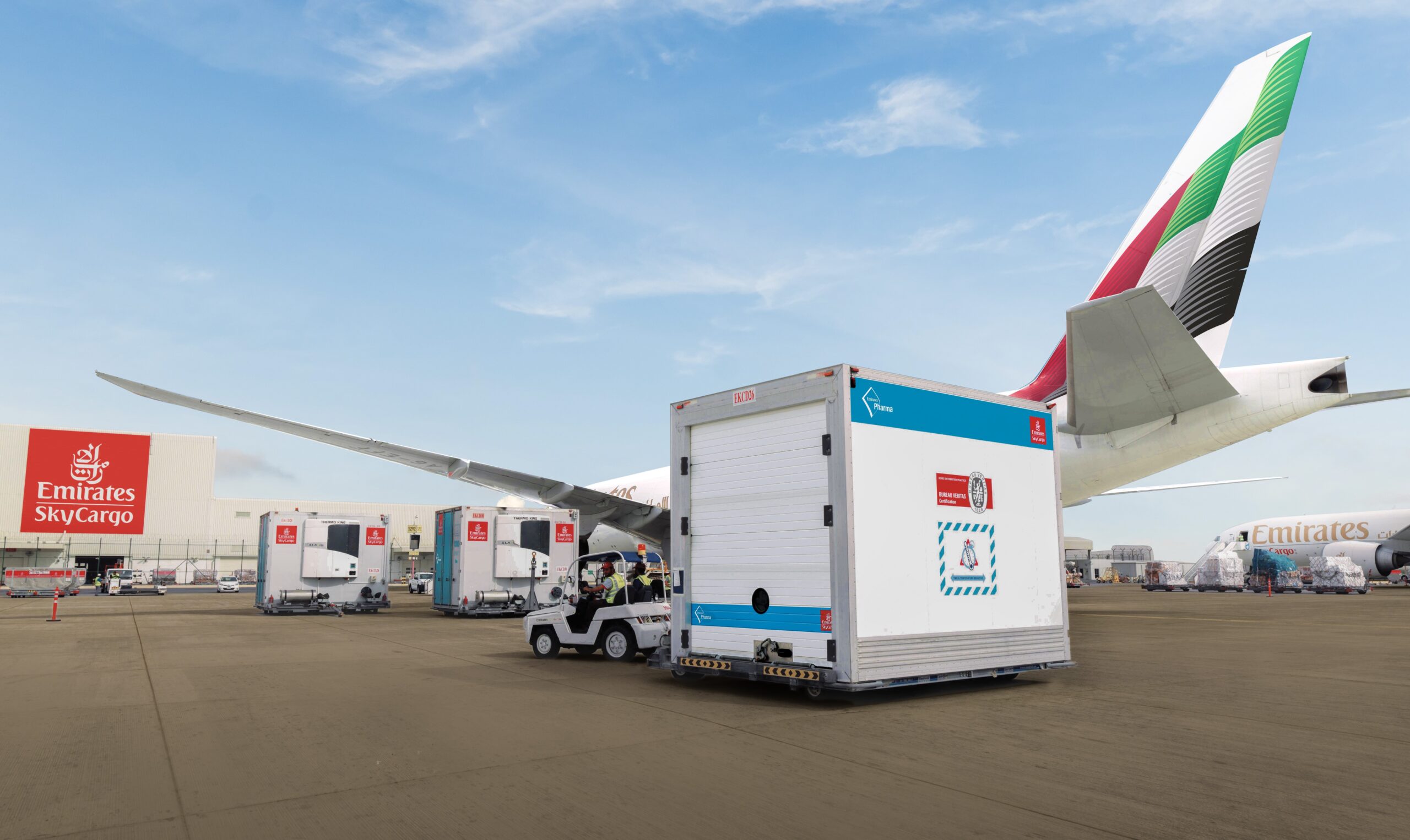
Emirates SkyCargo plans to introduce a weekly freighter flight between Milan Malpensa and New York JFK on 5 December 2026, adding dedicated main deck cargo capacity to the transatlantic route. The Boeing 777F service will offer approximately 100 tonnes per flight, supplementing existing passenger bellyhold services and the airline’s separate Milan–Dubai freighter operation.
The new flight is intended principally to serve exports from northern Italy and Lombardy, where Emirates transports pharmaceuticals, machinery, industrial components and other specialist goods. A dedicated freighter provides a different loading arrangement from a passenger aircraft’s lower hold and can accommodate some large or awkwardly shaped consignments that require main deck access. Acceptance will still depend on equipment, weight and dimension limits for the booked service.
Emirates currently offers more than 500 tonnes of weekly export capacity from Milan to destinations across its network, including more than 100 tonnes of bellyhold capacity on passenger services to New York. It also operates a separate weekly Milan–Dubai World Central freighter. The planned new service is additional capacity, but the airline has not published enough scheduling detail to calculate a guaranteed reduction in end-to-end transit time.
Main deck cargo space is particularly relevant to industrial freight with dimensions that exceed the loading envelope of passenger bellyholds. Pallets and containers must nevertheless meet the aircraft’s door, position and restraint requirements, and operators must confirm what ground equipment is available at departure and arrival. The nominal payload of a freighter does not establish the acceptability of every proposed shipment.
The approximately 100-tonne figure describes the new flight’s indicated freight capacity rather than a guaranteed cargo load on every departure. Fuel requirements, load distribution, weather and cargo characteristics can affect what is actually accepted. It is also a per-flight figure: it should not be added to existing bellyhold totals without preserving the distinction between a single weekly movement and weekly capacity across multiple services.
Emirates reports 13% growth in cargo exports carried from Milan between financial years 2024/25 and 2025/26. Across Bologna, Milan, Rome and Venice, its Italian export volumes increased by more than 12%, while the airline says it now offers over 1,000 tonnes of weekly export capacity from the four gateways. These are carrier-reported figures, not measures of all freight moving through Italy.
Its Italian operation also includes road feeder services linking businesses outside the airports it serves directly. Road movements can consolidate consignments from manufacturing and distribution locations before air transport, although service suitability depends on pickup arrangements, customs procedures and the handling restrictions for individual shipments.
Exports carried by Emirates from JFK and Newark rose 23% across the same two financial years, according to the airline. From New York, the planned freighter can feed international services through Dubai for healthcare products, perishables, machinery and other consignments. That potential onward connectivity does not establish that every shipment will have a through booking or a connection at a particular hour.
Emirates has not yet disclosed departure times, terminal acceptance cut-offs, the complete aircraft rotation or the timetable for onward connections. Those details determine whether additional lift can be used for time-critical or temperature-controlled freight. A weekly service creates another booking opportunity, but it does not provide daily capacity.
Pharmaceutical products can require qualified temperature control, monitoring and secure handling from collection through delivery. Vaccines and clinical trial material may be especially sensitive to the conditions during loading, transfer and customs release. New aircraft capacity is only useful for such consignments when the booked handling arrangements satisfy the product’s specific requirements.
Industrial machinery parts introduce different constraints, including packed dimensions, lifting arrangements, weight concentration and the availability of handling equipment at each airport. A direct main deck flight may avoid some transfer steps compared with a multi-stop routing, although the published timetable and receiving arrangements will determine the actual delivery interval. The carrier has not reported measured transit savings for the new route.
Other consignments can be constrained by seasonal demand or the time required for customs release. Freight booked close to departure must reach the terminal before acceptance closes, and an aircraft landing at JFK does not mean cargo becomes immediately available for collection. Warehouse release, security procedures and customs clearance remain part of the total delivery timeline.
Badr Abbas, divisional senior vice-president at Emirates SkyCargo, described the flight as an addition to the airline’s existing Milan export capacity and its international freight network through Dubai. The company identifies export flows in both directions, with US-origin goods able to connect onwards rather than treating New York as an exclusively inbound destination.
Expansion of the wider freighter fleet provides the equipment behind new routes. Emirates states that eight freighters joined the business in 2026, comprising seven newly built Boeing 777Fs and one converted Boeing 777-300ER special freighter. These are different aircraft types, so the new Milan–New York service should not be described as using the converted 777-300ERSF.
The carrier says its dedicated freighter network grew from more than 40 destinations in March to over 60 by July 2026. In the United States it has introduced services to Los Angeles and Dallas and increased Miami frequencies during the year. The Milan–JFK route extends that expansion into a specific transatlantic manufacturing and pharmaceutical freight market.
The scheduled commencement date, frequency, aircraft type and approximate per-flight capacity are confirmed by Emirates. Pricing, specific cut-off times and any resulting door-to-door performance remain to be established through published schedules and bookings. Those details will determine how manufacturers and freight forwarders use the new capacity after 5 December.