IN Brief:
- DHL Supply Chain is moving AI orchestration into live warehouse operations following a proof of concept, while adaptive robotics remain at pilot stage.
- The company reports more than 9,000 deployed robots, 1.5 billion cumulative robotic picks and 10 million cases unloaded by Boston Dynamics Stretch.
- A workflow under test coordinates mobile robots, packaging automation and warehouse management information to adjust resources in response to order demand.
DHL Supply Chain is moving artificial intelligence orchestration into live warehouse operations after a proof of concept, while piloting robots designed to adapt their actions when conditions change. The two initiatives form part of its Intelligent Supply Chain framework, which links operational information, digital AI, handling equipment and employees in a shared approach to warehouse management.
The orchestration layer is already being introduced in operating facilities, where it connects data, machinery and the people responsible for making operational decisions. Adaptive AI-powered robotics are less advanced: DHL says they are being evaluated in pilots, with wider live deployment still an objective. DHL has not reported measured throughput improvements attributable to either initiative.
Traditional automation can achieve high throughput when a defined task repeats predictably. A robot might follow an agreed route or execute a particular picking and movement sequence, while warehouse software issues the instructions controlling which goods must be processed. When a vehicle encounters an obstruction, a resource becomes unavailable or an order priority changes, the normal response may require another rule, system or human decision.
In the adaptive robotics pilots, machines are intended to work towards defined goals, interpret changes in their surroundings and select alternative movements when circumstances differ from the expected sequence. DHL has not disclosed the robot models involved, the sites conducting the pilots, independent safety results or the frequency with which human intervention is required. Existing installed robots should therefore not be described as though they all possess this new capability.
The operational control problem extends beyond an individual robot. Autonomous mobile robots move materials between areas, packaging machines have their own capacities, and warehouse management systems hold orders and stock records. These processes need to remain aligned as demand changes, including when a downstream activity cannot accept the output of equipment working earlier in the sequence.
A workflow DHL is testing connects mobile robots, packaging automation and warehouse management systems so resources can be reallocated as order demand changes. If the volume of orders requiring packaging rises, moving more goods towards a constrained packing area may create queues rather than improve completed orders. DHL describes the workflow as a test and has not provided a before-and-after measurement of site throughput.
Warehouse management records identify orders, locations and inventory obligations, while equipment events indicate whether handling resources are available or occupied. A coordinated decision can then account for both the work required and the means to carry it out, although DHL has not published the scheduling logic, exception thresholds or safeguards used at individual live sites.
Physical and digital AI are being developed together under the company’s Accelerated Digitalization strategy. The physical element involves machines performing material handling work; the digital element processes operational information and supports decisions. Integrating both requires consistent event records and clearly assigned responsibilities, particularly when equipment actions could affect employee movements or stock accuracy.
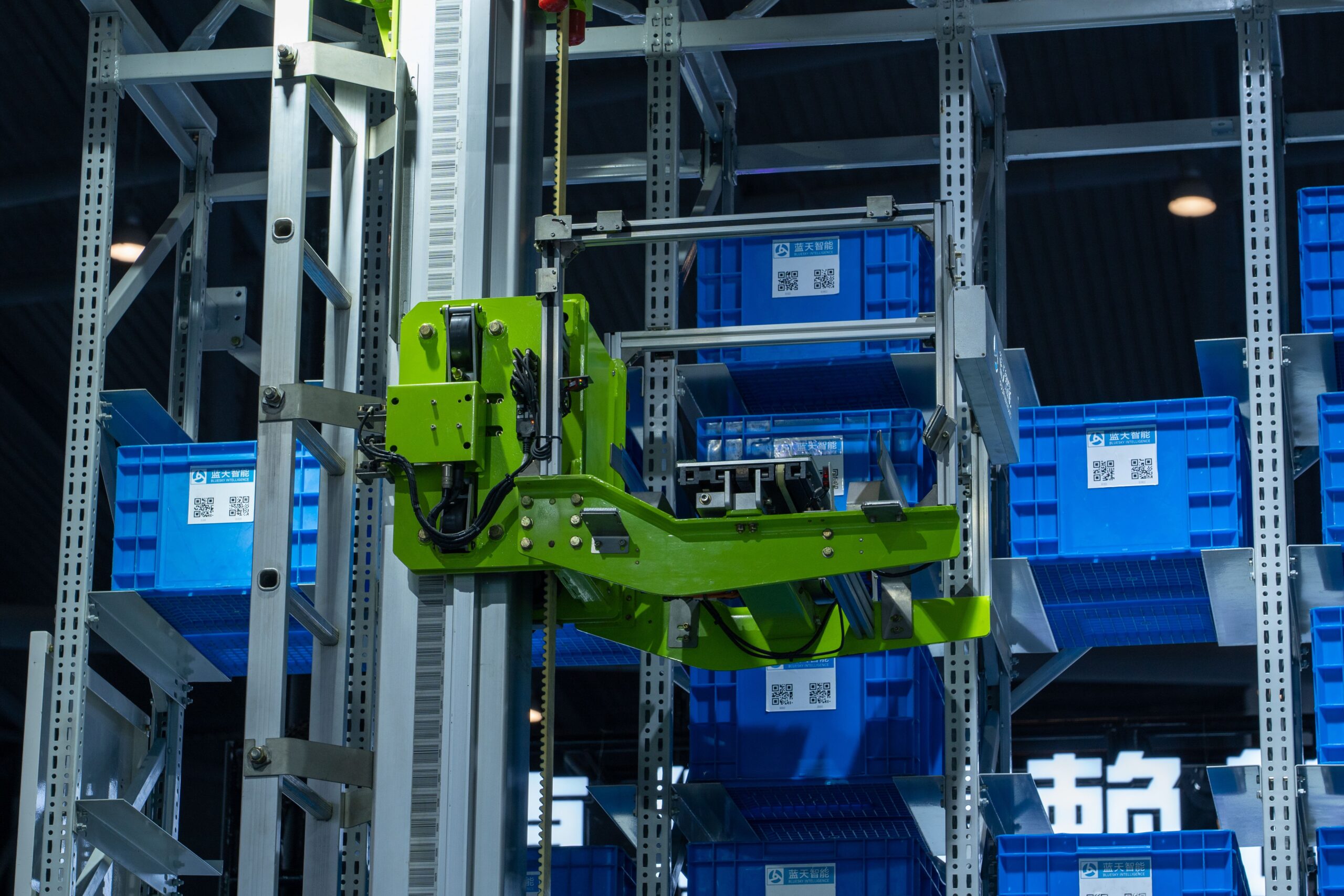
DHL has deployed more than 9,000 robots across its global operations and reports over 1.5 billion cumulative robotic picks, alongside 10 million cases unloaded by Boston Dynamics Stretch. These figures describe established systems rather than the adaptive robotics programme introduced this week. The number of machines previously deployed cannot establish how many will be suitable for the more adaptable tasks under evaluation.
It has also deployed advanced analytics and AI solutions more than 1,400 times, including over 500 during 2026. More than 95% of DHL’s global warehouses have what the company describes as advanced digitalisation solutions. The percentage covers a broader range of technologies than robotic automation, so it should not be interpreted as the proportion of sites operating autonomous machines.
Conversational AI systems have separately recorded more than 2.5 million minutes of user interaction across DHL’s operations. Minutes of use measure engagement, not hours of labour saved, while a conversational support application performs a different function from an automated warehouse vehicle. The company has not supplied a quantified productivity gain specific to the November orchestration deployments.
Tim Tetzlaff, global head of digital transformation at DHL Supply Chain, said: “Our immediate priority is to continue scaling our proven robotics across more sites while moving the next generation of adaptive AI-powered robotics from pilots into live operations.” The company’s approach therefore combines an existing technology rollout with a separate test programme intended to establish what more adaptive systems can reliably do.
Integration becomes more difficult when a site contains several generations of equipment. Robots may have different operating interfaces, while warehouse software can be configured around a particular customer, stock profile and service contract. DHL’s previous adoption of the SVT Robotics SOFTBOT platform sought to simplify the connection of robotics technologies to warehouse systems, providing a basis for faster integration of further equipment.
Task-level integration and site-wide coordination involve different requirements. A connector can enable a robot to receive a warehouse instruction, but coordinated operation also needs current resource status, task priorities and exception handling across multiple systems. If a task record arrives late or a machine becomes unavailable, operators still need an agreed process for identifying the mismatch and changing the allocation.
Exceptions may arise from damaged cartons, stock that fails a scan, blocked travel routes or loads that need manual inspection. Automation cannot safely assume every departure from the standard process is a problem it can resolve unaided. DHL’s emphasis on staff alongside digital and physical AI leaves people responsible for situations in which judgement, checking and authorisation are required.
DHL describes employees as part of the operating model, bringing judgement to situations outside expected conditions while robots undertake repetitive and physically demanding work. Its commercial objective includes supporting planned business growth through 2030, but the November announcement does not establish a specific employment change, customer service improvement or productivity gain from the orchestration deployments.
DHL has not identified the individual warehouses receiving orchestration, a timetable for moving adaptive robots beyond pilots or performance figures against existing operating methods. Its reported network-wide robot counts and picking volumes establish the scale of previous automation investment. Evidence of the new programme’s effectiveness will depend on the results recorded by live facilities and future pilot evaluations.