IN Brief:
- Adani Ports has agreed to acquire Evos at an enterprise value of €2.56bn, with equity valued at €1.18bn.
- Evos operates eight European liquid storage terminals with 6.3 million cubic metres of capacity across 452 tanks.
- The debt-financed transaction remains conditional on approvals and consultation, with no confirmed completion date.
Adani Ports and Special Economic Zone (APSEZ) has agreed to acquire Dutch liquid storage operator Evos for an enterprise value of €2.56bn, extending the Indian group’s international logistics operations into European energy and industrial bulk terminals. The proposed acquisition covers 100% of Evos from Igneo Infrastructure Partners and would add eight facilities across the Netherlands, Germany, Spain, Belgium, and Malta.
The agreement, dated 5 November, values Evos’ equity at €1.18bn. APSEZ intends to finance the transaction through debt, with MUFG providing financing commitments of up to €2.8bn as sole underwriter. Completion remains subject to regulatory approvals, other applicable clearances, and consultation with European works councils. Neither party has confirmed a completion date.
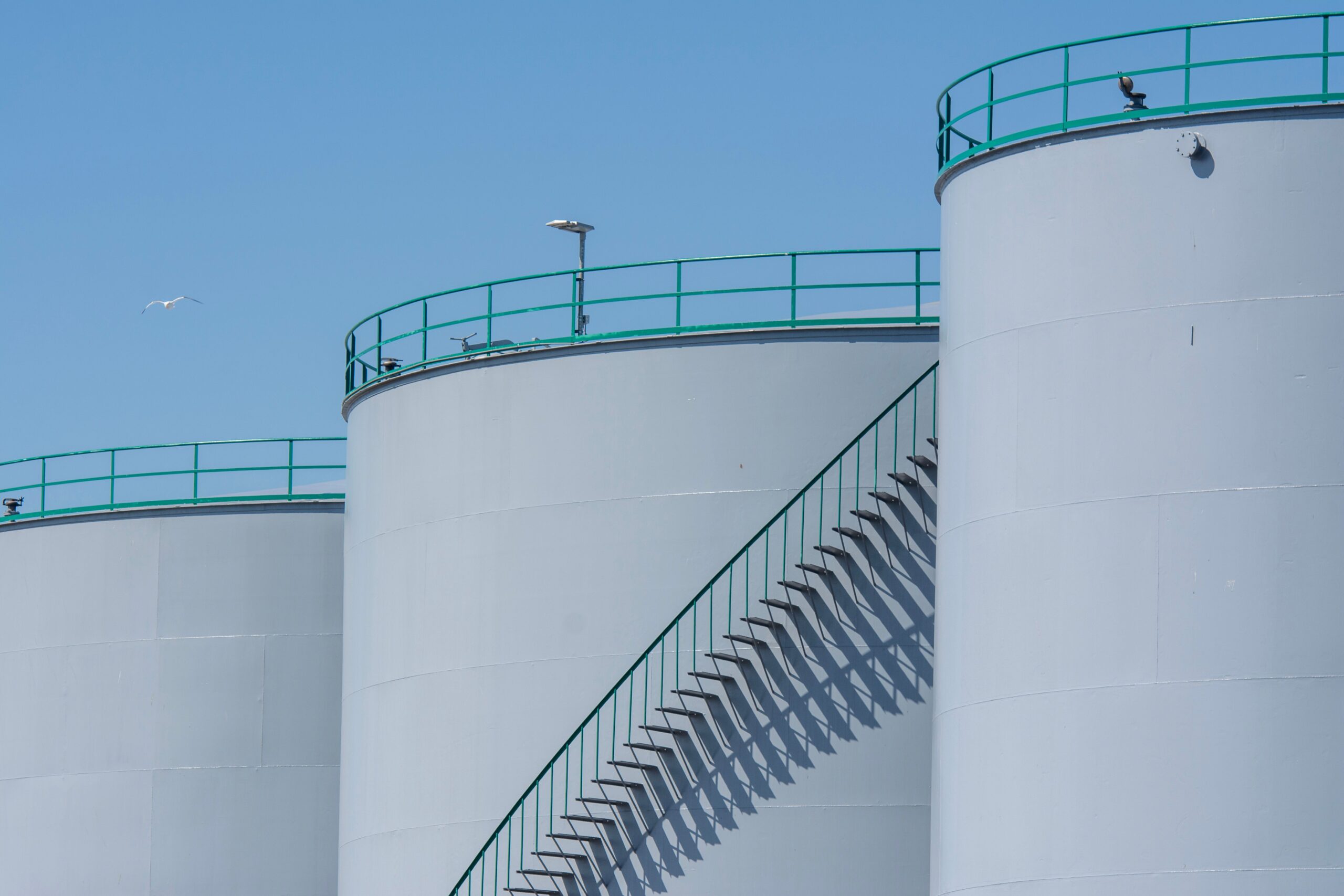
Evos operates 6.3 million cubic metres of liquid storage capacity distributed across 452 tanks, with marine infrastructure comprising 63 vessel and barge berths. Its terminals are positioned around established energy and industrial centres, including the Amsterdam–Rotterdam–Antwerp region, Hamburg, and Mediterranean ports. Pipeline connections include infrastructure associated with Schiphol Airport and the Central Europe Pipeline System.
The network handled 37 million tonnes of liquid products during 2025. Its cargo mix includes petrol, gasoil, marine fuels, and aviation fuel, alongside sustainable aviation fuel, biofuels, methanol, and bioethanol. These products require different storage and handling arrangements, particularly where materials must remain segregated or meet specific quality and safety requirements.
Tank capacity determines how much product a facility can store, while the rate at which cargo can pass through it also depends on berth availability, pumping equipment, pipeline connections, and the scheduling of incoming and outgoing movements. A terminal handling several product categories must allocate suitable tanks and transfer systems to individual customers, taking account of compatibility, cleaning requirements, and the equipment needed for each material.
Evos’ locations connect seaborne movements with European industrial and inland distribution networks. At terminals with pipeline connections, suitable products can move between storage and customers without requiring an additional road or rail transfer for every shipment. Marine berths provide another route for receiving and dispatching cargo, although the amount of throughput available at each location depends on its particular infrastructure and operating conditions.
APSEZ is acquiring a business with substantial contracted storage demand. Evos reported average commercial occupancy of 99%, with a significant share of revenue supported by take-or-pay agreements and contracts incorporating consumer price index adjustments. Under take-or-pay arrangements, customers commit to paying for contracted capacity even where their actual use falls below the agreed level.
These contracts can provide revenue visibility that differs from the exposure of individual freight movements to spot market conditions. They do not remove operating costs, customer concentration risks, or the need to maintain physical infrastructure. High commercial occupancy also reflects commitments over existing capacity and does not establish that every tank is physically full or continuously available for a particular product.
Evos generated revenue of €392m and earnings before interest, tax, depreciation, and amortisation (EBITDA) of €219m during calendar 2025, representing a margin of 56%. The enterprise valuation equates to approximately 11.7 times the target’s 2025 EBITDA. These are historical figures, rather than a forecast of how the acquired business will perform after financing and integration.
The reported margin is higher than the 44.8% generated by APSEZ’s international ports portfolio during the first half of its 2026–27 financial year. The comparison reflects different business activities and accounting periods: contracted liquid storage operates under different commercial arrangements from container, dry bulk, and general cargo handling. Their eventual combined financial contribution will depend on operating performance and the cost of completing the transaction.
APSEZ reported ₹12,502 crore in cash at 30 September 2026. The company calculates pro forma net debt to EBITDA of 2.76 times for the combined businesses, using APSEZ’s 2025–26 financial year and Evos’ calendar 2025 figures. It expects the ratio to move towards approximately 2.5 times in its 2026–27 financial year, although that remains a management projection.
The acquisition expands an international portfolio that already includes interests in Australia, Sri Lanka, Israel, and Tanzania. APSEZ’s overseas ports business handled 47 million tonnes during the first half of its current financial year, compared with 17 million tonnes in the corresponding previous period. Growth at Colombo West International Terminal and the group’s Tanzanian operations contributed to the increase.
Evos would add a different form of infrastructure exposure. Its terminals serve energy suppliers, chemical companies, industrial users, and commodity traders whose movements depend on access to storage capacity and compatible transfer systems. Existing arrangements for aviation fuel and other products also connect parts of the network to fixed infrastructure rather than relying exclusively on cargo movements through conventional port gates.
The range of products handled gives Evos exposure to changes in European fuel demand, although the proposed acquisition does not itself establish additional investment in low-carbon fuels. Methanol, biofuels, and sustainable aviation fuel already form part of its stated product portfolio. Expansion into new products or additional volumes would depend on customer requirements, suitable tank and transfer infrastructure, and any necessary technical or regulatory work.
APSEZ has not identified changes to Evos’ individual terminal operations, customer agreements, or management arrangements as part of the acquisition terms. Existing storage commitments and maintenance requirements will remain central to the operation of the facilities, with regulatory review and works council consultation taking place before ownership can transfer.
The agreed purchase would establish APSEZ as an owner of significant European liquid storage infrastructure, connecting its existing maritime and inland logistics interests with eight established terminals. The transaction’s next milestones are regulatory clearance, completion of consultation, and the finalisation of the debt-financed acquisition.