IN Brief:
- Ati Robotics uses cloud-based simulation to assess autonomous vehicle structures and drive system components.
- The software provides a common engineering environment for teams operating in the US and India.
- The application supports hardware development for autonomous vehicles operating in industrial manufacturing environments.
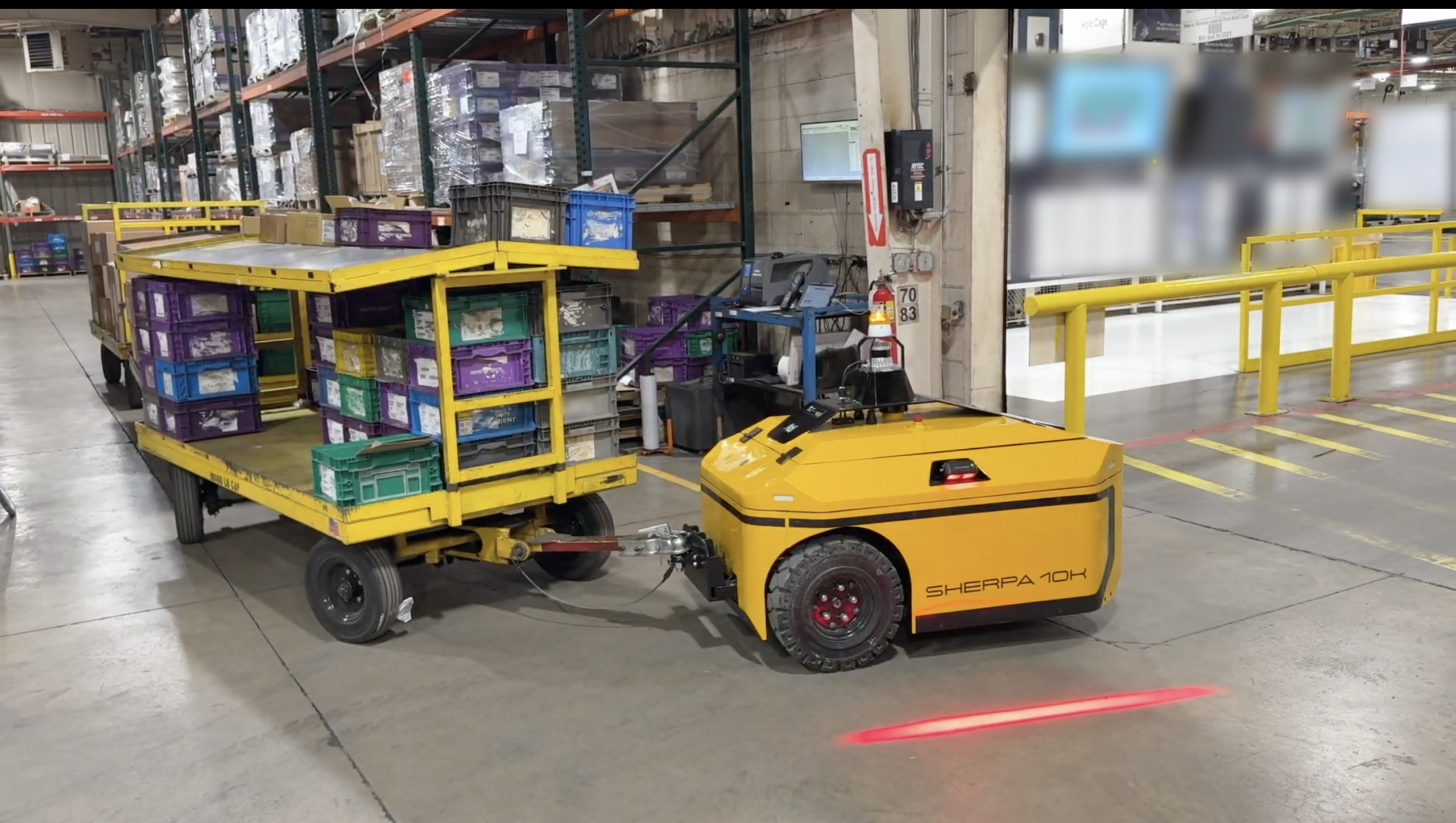
Autonomous material handling vehicle manufacturer Ati Robotics is using cloud-based engineering simulation from SimScale to assess the structural and mechanical performance of its Sherpa autonomous mobile robot platform.
The US-headquartered robotics company outlined its application of the technology on 24 November, identifying vehicle structures and drive system components among the areas being assessed against the requirements of continuous industrial operations.
SimScale provides a shared engineering environment for Ati Robotics personnel working across the US and India, enabling teams to investigate different vehicle configurations without maintaining separate high-performance computing infrastructure at each location.
Founded in 2017, Ati Robotics develops autonomous material handling vehicles for manufacturing industries including automotive and electronics production. Its Sherpa platform is designed to move materials within industrial environments using existing factory infrastructure.
“Designing an autonomous vehicle that operates reliably in continuous production environments requires rigorous hardware validation,” said Venkatesh Prasad, Head of Mechanical Engineering at Ati Robotics. “SimScale gives our team the ability to run structural and dynamic analyses without the infrastructure overhead that would slow down our development cycle.”
The mechanical design of autonomous industrial vehicles presents different challenges from those associated exclusively with navigation software. Vehicles must support varying payloads while accommodating repeated acceleration, braking, turning, and interaction with industrial floor surfaces.
Manufacturers must also account for the distribution of weight across the vehicle structure and the forces transmitted through individual components during operation.
A vehicle carrying a load positioned away from its centre can experience substantially different structural loading from one transporting the same weight in a more central position. The resulting forces can affect chassis deformation, wheel loading, and the performance of mechanical connections between components.
Engineering simulation enables designers to investigate those conditions before committing to the manufacture of physical components. Finite element analysis, for example, divides a structural model into smaller elements through which engineers can calculate the distribution of stresses and deformation under specified loading conditions.
The resulting information can identify areas where changes to geometry, material selection, or structural reinforcement may be required.
Design modifications must also account for the relationship between mechanical performance and the vehicle’s wider operating requirements. Increasing the amount of structural material may improve strength or stiffness, but the additional weight can influence energy consumption, acceleration, and available payload capacity.
Evaluating alternative configurations through simulation enables engineering teams to investigate those trade-offs before selecting designs for further development and physical testing.
Ati Robotics has previously used SimScale to support chassis development. An existing case study published by the software provider describes more than 80 simulations examining different loading conditions and design iterations for an autonomous cargo vehicle.
That earlier project included structural analysis to assess chassis torsional stiffness, with simulated loading applied at different wheel positions to examine the resulting deformation.
The latest application described by the companies covers mechanical validation of the Sherpa platform, including its drive system components and the engineering requirements associated with continuous industrial operation.
The use of cloud-based computing infrastructure also changes how simulation capacity can be allocated across engineering teams. Structural analysis can involve computationally demanding models, particularly where component geometries are complex or where designers must examine several operating conditions.
Locally installed computing infrastructure can constrain the number of simulations that engineers undertake simultaneously. Cloud services provide an alternative through which computing resources can be allocated according to the requirements of individual analysis projects.
A common environment can also support collaboration between engineers working at different locations, providing access to shared models, simulation configurations, and results.
For industrial vehicle manufacturers, the reliability of those models remains important. Simulation results depend on the accuracy of material properties, loading assumptions, boundary conditions, and representations of the mechanical relationships between components.
Physical testing remains necessary to establish how actual vehicles perform under representative operating conditions and to investigate factors that may not be fully captured within digital models.
These considerations become commercially significant when vehicles are deployed across industrial facilities with different operating characteristics. Floor conditions, payload configurations, travel distances, and operating schedules can influence the mechanical demands placed on equipment.
Manufacturers selecting autonomous material handling systems must consequently assess whether individual vehicles are suitable for the intended application, alongside factors such as navigation capabilities, system integration, maintenance requirements, and available technical support.
Ati Robotics’ latest account of its engineering processes does not disclose new quantified improvements in vehicle reliability, development expenditure, or product performance attributable to SimScale’s AI capabilities.
The company has instead identified simulation as a continuing component of its hardware development process, supporting engineering decisions across the mechanical systems underlying its autonomous material handling platform.