IN Brief:
- B&H Worldwide has introduced AI-powered tyre scanning at its New Zealand operation.
- The system cuts average inventory handling time from four minutes to one minute and improves accuracy to above 99%.
- Smartphone-based capture tied into warehouse systems creates a more scalable way to digitise specialist aerospace inventory.
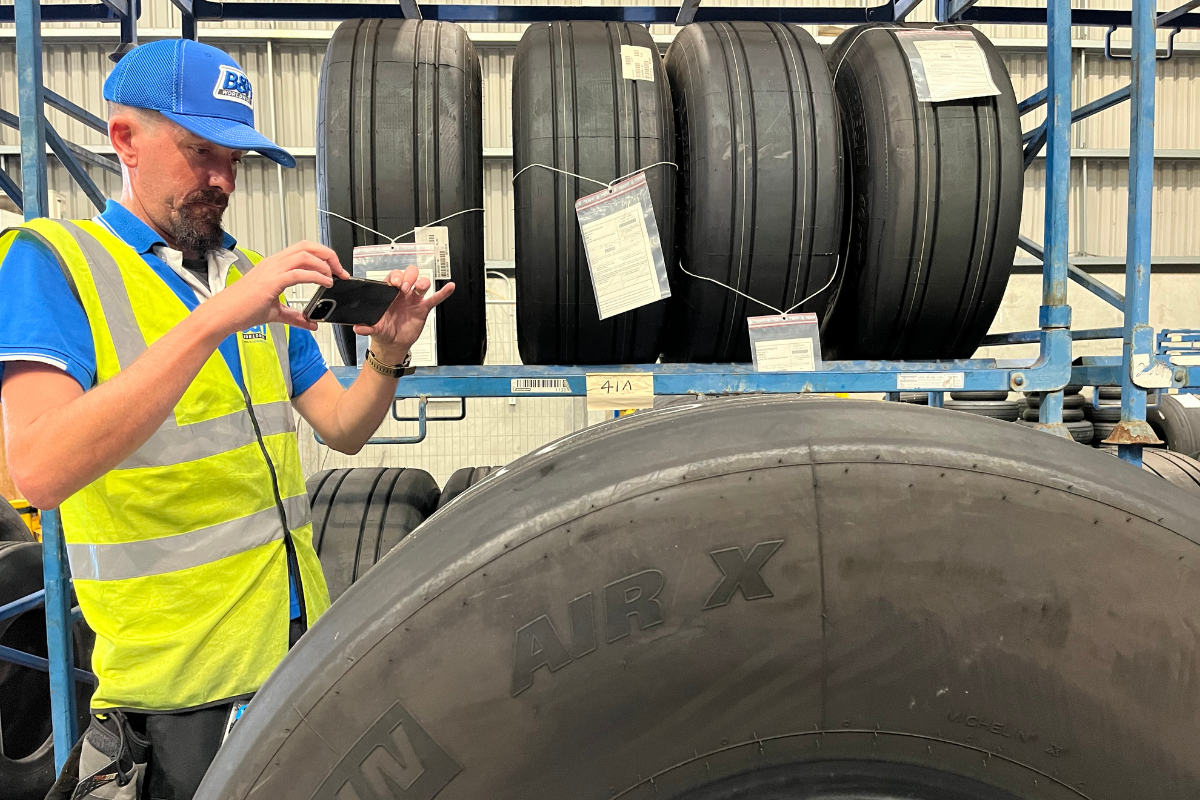
B&H Worldwide has rolled out AI-powered tyre scanning technology at its New Zealand operation, using computer vision and OCR to speed up inventory handling for high-value aerospace stock. The system is integrated into the company’s FirstTRAC platform and captures tyre data directly from barcodes and serial markings on the sidewall, reducing reliance on manual entry.
The productivity gains are significant. B&H says average inventory handling time has fallen from four minutes per unit to one minute, cutting processing time by 60%. Error rates have dropped by 80% to 90%, while data accuracy has moved above 99%. The company also says overall units processed per hour have increased by around 30%. The system works through both mobile and web-based applications, allowing stock checks, dispatch requests, and bulk uploads to feed directly into FirstTRAC in real time.
In aerospace logistics, that kind of improvement carries weight quickly. Tyres are safety-critical assets with serialised data, inspection requirements, lifecycle controls, and audit trails that need to be maintained accurately. Slow or error-prone handling affects more than warehouse productivity. It can influence traceability, stock integrity, reporting speed, and confidence across maintenance support workflows.
The use of smartphones and tablets rather than a heavily specialised scanning set-up gives the deployment a practical advantage. It lowers the barrier to rollout and makes the process easier to replicate across other sites. B&H says Melbourne is next in line, suggesting the New Zealand operation is serving as the model for a broader network deployment. That pattern is often what turns a promising warehouse technology into a durable operational tool: it can move from site to site without heavy reengineering or a major new equipment burden.
The system also strengthens the digital audit trail around used tyre casings and other controlled stock. In aerospace support logistics, data discipline is part of the service requirement. Customers expect rapid handling, but they also expect confidence that component data is being captured correctly and updated in step with physical movement. Real-time integration into a warehouse platform helps close that gap between speed and control.
The wider relevance extends beyond one product category. Logistics operators in specialist sectors are looking more closely at tools that can pull structured data directly from physical assets without burdening staff with repetitive keyboard workflows. If that can be done accurately using mobile devices tied into a live warehouse system, the same approach becomes applicable to other niche, high-value, or compliance-heavy inventory classes. B&H’s tyre deployment is a focused use case, but it sits within a broader shift towards faster, lighter-touch digitisation inside specialist warehousing.