IN Brief:
- GEODIS has opened its first dedicated healthcare cold chain cross-dock facility in the Americas.
- The Chicago site combines a 78,000ft² bonded CFS with a 5,200ft² temperature-controlled addition for healthcare freight.
- The facility adds specialist gateway capacity for regulated imports and exports moving through one of the US’s busiest air cargo markets.
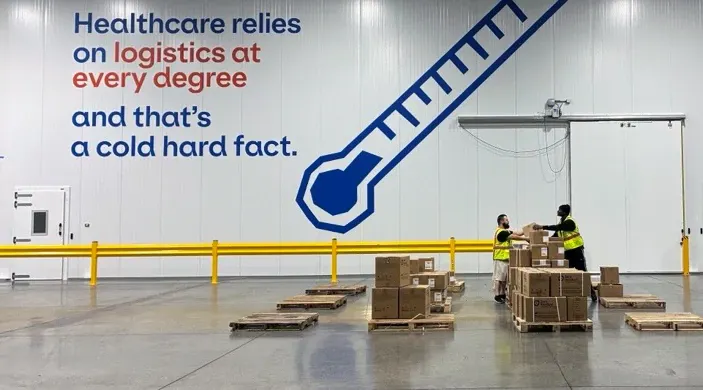
GEODIS has opened its first dedicated healthcare cold chain cross-dock facility in the Americas, adding a specialised temperature-controlled node to its freight forwarding network in Chicago. The site is a 78,000ft² bonded Container Freight Station near O’Hare International Airport and includes a custom-built 5,200ft² temperature-controlled area designed for short-term stowage and specialised handling of pharmaceutical air and ocean imports and exports.
The facility combines several useful characteristics in one location. As a bonded site, it supports international freight movements with greater customs flexibility. As a cross-dock, it is intended to keep shipments moving rather than dwelling in storage. And as a healthcare-specific operation, it gives GEODIS tighter control over products where temperature integrity, handling discipline, and documentation accuracy are critical.
Chicago is a natural location for that capability. O’Hare remains one of the most significant cargo gateways in the US, and the surrounding region is a major distribution and transport hub. GEODIS says Chicago is also one of its CEIV Pharma-certified US branches, and the new site is the first in its US network to include cold chain storage capacity. That pairing of infrastructure and certification is important in healthcare freight, where handling quality depends as much on process control and trained staff as it does on the building itself.
The cross-dock model has been gaining ground in pharmaceutical logistics as operators look for tighter control at transfer points. Products do not always require prolonged storage, but they do require careful management when moving between international air freight, bonded handling, road distribution, and onward network stages. Each handover carries risk. Reducing dwell time and limiting unnecessary touches can improve both velocity and temperature performance, especially for higher-value or more tightly regulated cargo.
That has become more relevant as healthcare supply chains grow more complex. Providers are dealing with a broader range of product profiles, more demanding service expectations, and greater scrutiny over compliance and visibility. The answer is not simply more cold space. It is often more precisely located cold space, tied to gateway operations where freight can be processed, secured, and turned quickly without slipping into general cargo handling patterns.
GEODIS’ Chicago investment fits that shift. It places specialist infrastructure close to a major air cargo hub while keeping it within the company’s own forwarding network. That can reduce dependence on more general-purpose facilities and give customers a cleaner route through one of the more sensitive parts of the supply chain. For the market, it is another sign that healthcare logistics capability is being built into gateway infrastructure more deliberately, with cross-dock design, bonded operations, and temperature control working together rather than being treated as separate add-ons.