IN Brief:
- Ethiopian has started scheduled Hong Kong-Prestwick freighter services operating three times a week.
- The route adds inbound ecommerce volume and gives Scottish exporters new access to onward Asian markets.
- Prestwick’s cargo growth strategy is increasingly built around specialist handling, fast turns, and regional gateway positioning.
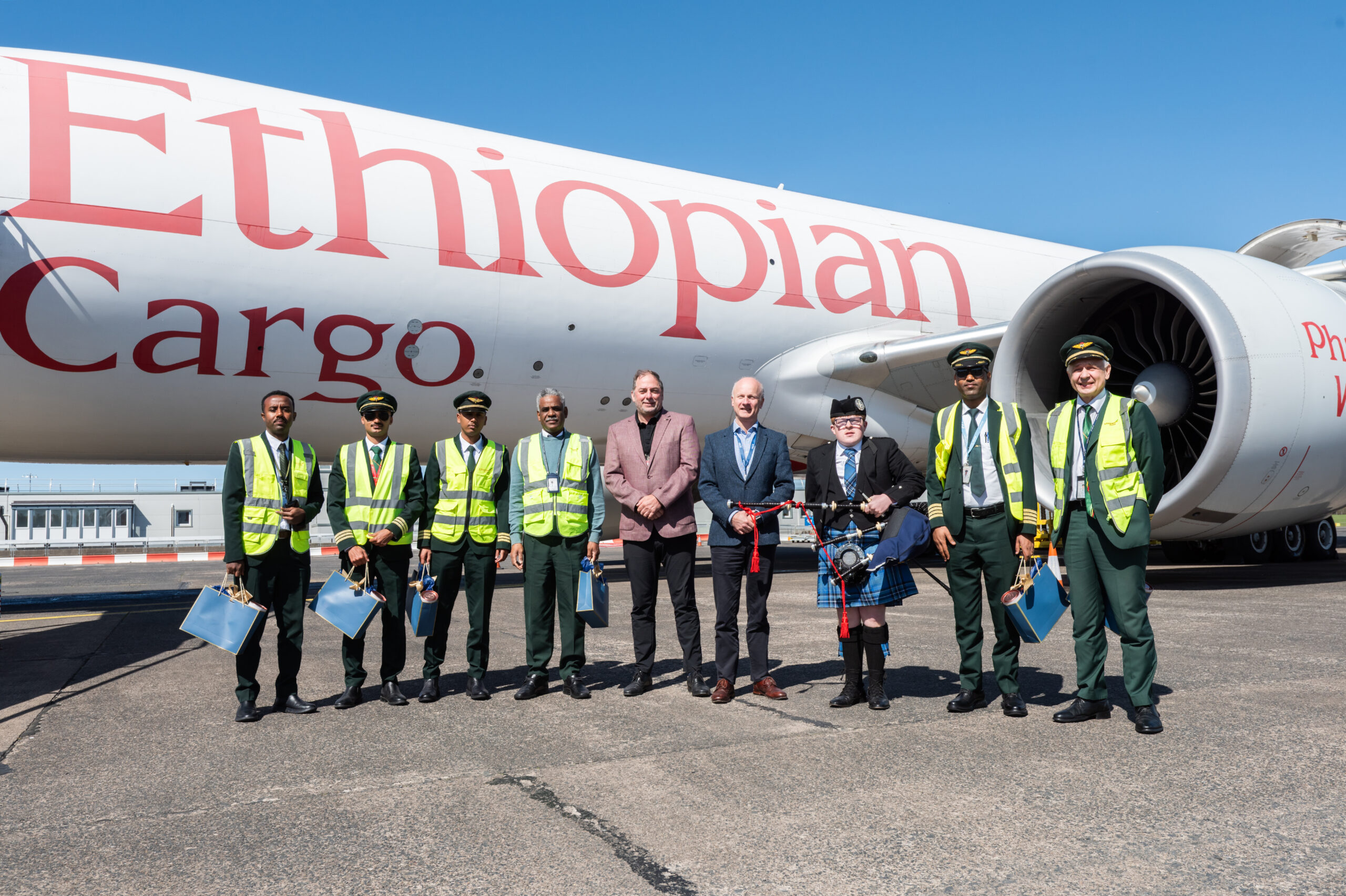
Ethiopian Airlines has launched scheduled cargo services from Hong Kong to Glasgow Prestwick, adding a new airfreight connection that strengthens the airport’s position in UK ecommerce and export handling. The flights are scheduled to operate every Tuesday, Wednesday, and Saturday, bringing additional inbound parcel flows into Scotland while opening a wider set of outbound routing options for Scottish goods moving into Asian markets.
The route supports traffic in both directions. Prestwick gains additional ecommerce throughput from Asia, continuing a growth pattern that has turned the airport into a more active alternative cargo gateway for time-sensitive parcel traffic. The outbound side of the service broadens access to markets including South Korea and Vietnam, extending the value of the route well beyond Hong Kong itself. That gives Scottish exporters of high-value or time-sensitive products another option where shorter road legs and quicker airport processing are part of the calculation.
Prestwick has already been building around that model. The airport says it handles 15 flights a week to and from mainland China, and its wider cargo growth has supported more than 250 direct jobs. It has also developed dedicated cool-chain capability for sensitive exports such as Scottish salmon and pharmaceuticals, reinforcing a cargo proposition centred on specialist handling rather than sheer hub scale. Its recent progress has come from positioning itself as a faster, more focused operating environment for freighters, parcels, and selected export categories.
Regional gateways have been getting renewed attention across the UK as importers, parcel operators, and airport logistics teams reassess congestion, handling speed, trucking cost, and export cut-off times. Airports that can process large parcel volumes efficiently and support specialist cargo products are gaining ground where the larger hubs remain strong on network breadth but more complex on the ground. Prestwick has been pushing into that space with a model built around dedicated cargo operations and fewer layers between aircraft, handling, and onward movement.
The route also fits the wider structure of Asian airfreight demand into the UK. Ecommerce continues to shape capacity decisions, and airports that can process high parcel volumes efficiently are more likely to attract regular freighter services. At the same time, export flows in seafood, pharmaceuticals, and other higher-value sectors depend on stable handling, temperature control, and reliable scheduling. A route that can support both inbound parcel volume and outbound premium freight is commercially stronger than one built around a single traffic stream.
For Prestwick, the Ethiopian service adds weight to a cargo strategy that is becoming more firmly established. The airport has already invested in equipment, infrastructure, and trade links to build its Asian cargo position. A scheduled Hong Kong service strengthens that route map and adds another sign that regional UK cargo growth is being built around specialist capability, ecommerce handling, and export efficiency rather than simple overflow from the largest hubs.