IN Brief:
- Bleckmann will introduce two humanoid robots at distribution centres in the UK and Netherlands.
- Initial deployment will concentrate on training, operational learning, and working alongside employees.
- The company is already evaluating AI-controlled robotic picking equipment developed with AutoStore and Berkshire Grey.
Bleckmann is preparing to introduce two humanoid robots at distribution centres in the UK and Netherlands, extending its investment in warehouse automation to equipment designed to operate within existing manual workspaces.
The fashion and lifestyle logistics specialist will initially concentrate on training the robots, identifying suitable applications, and establishing how the machines interact with warehouse employees. The programme differs from conventional automation installations in which defined throughput and productivity requirements typically inform the equipment specification before deployment.
Bleckmann's investment follows the introduction of a robotic picking system at its Bergen op Zoom distribution centre in the Netherlands. Developed in collaboration with AutoStore and Berkshire Grey, Carrousel AI uses artificial intelligence to control a robotic arm equipped with suction and vacuum technology.
The system was installed in June, with Bleckmann disclosing details of the pilot on 17 November. Its handling equipment incorporates suction cups of different sizes to accommodate variations in product dimensions and geometry, addressing some of the difficulties associated with automating the movement of fashion products.
Unlike a rigid industrial component presented in a consistent orientation, clothing and accessories can arrive in flexible packaging that changes shape during handling. The distribution of weight within an individual package can also vary, affecting the stability of a robotic grasp.
Vacuum gripping provides a means of handling products without enclosing them mechanically between opposing surfaces, although the effectiveness of the grip depends on the material, surface geometry, and ability to establish sufficient contact with the suction cup.
Bleckmann's experience with Carrousel AI provides an existing operational reference for the introduction of more adaptable robotic systems. The humanoid programme will extend that work beyond a dedicated picking installation into applications that may require greater flexibility in the positioning and movement of the equipment itself.
A conventional fixed robotic arm operates within a defined physical envelope. Products can be brought into that space using conveyors, automated storage equipment, or manual handling, with the surrounding workstation designed to support the movement patterns of the robot.
Humanoid systems seek to perform a wider range of activities within spaces already configured around human physical capabilities. Depending on their design, they may be able to approach conventional workstations, reach storage locations, and manipulate equipment without requiring every part of the warehouse to be rebuilt around a fixed automation system.
The absence of extensive building modifications would not, by itself, establish a viable commercial case. A workstation designed around human dexterity may contain tasks that remain difficult for a robot, particularly where employees routinely respond to unexpected changes in product presentation or use several tools within a single operation.
Training and evaluation will help establish which activities can be completed consistently and how frequently human intervention is required. Those factors influence the amount of productive work that can be transferred to robotic equipment without creating additional supervision or administrative demands elsewhere in the operation.
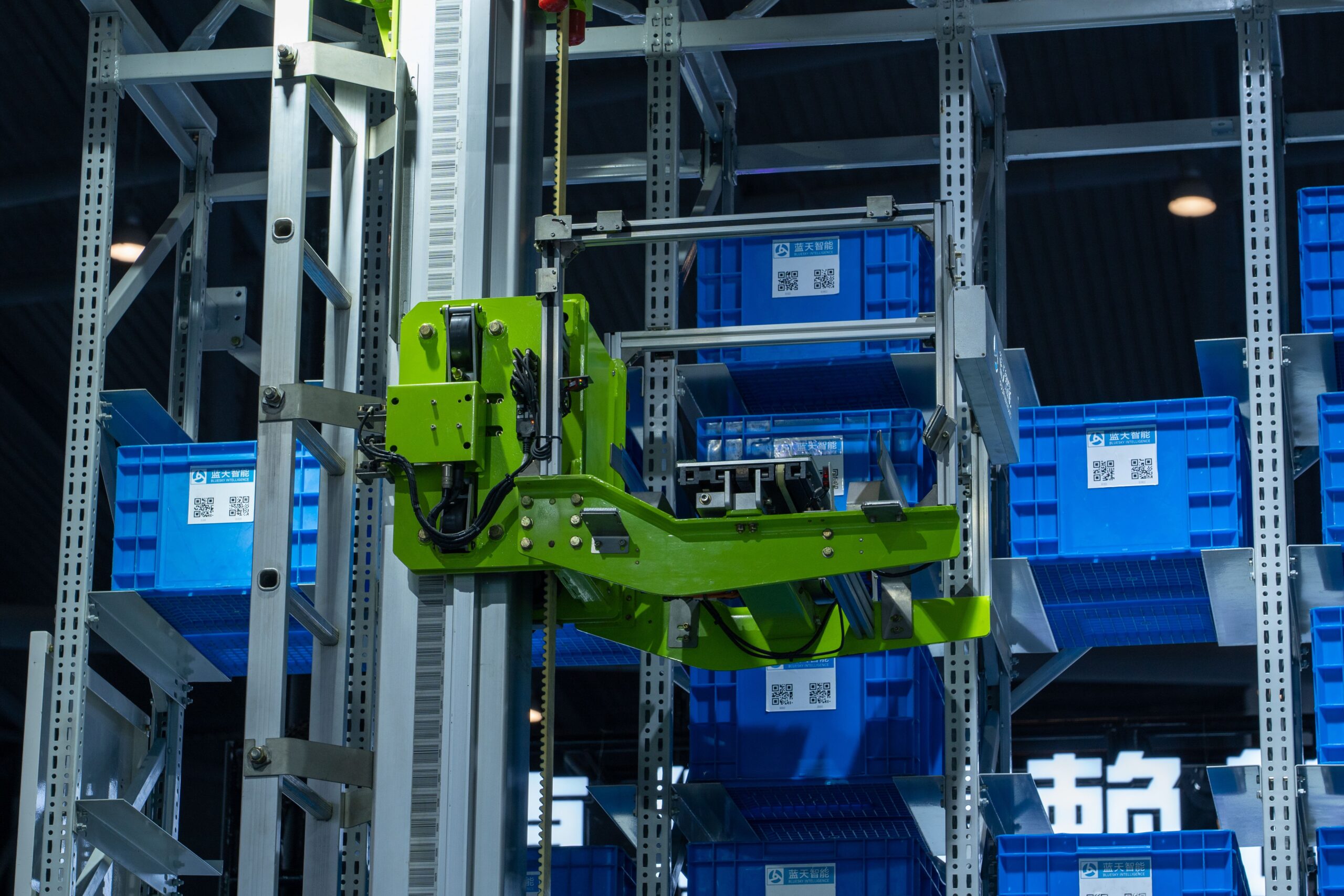
Bleckmann has already developed experience with several forms of warehouse automation. Its Bergen op Zoom facility incorporates an integrated AutoStore installation, while a further distribution centre in Roosendaal opened with AutoStore equipment in May 2026.
Automated storage systems concentrate inventory within a dedicated grid, using robots to retrieve containers and deliver their contents to workstations. This reduces the amount of movement required by employees collecting products from conventional warehouse shelving.
Robotic picking addresses a subsequent stage of that process, transferring individual products from storage containers or presentation equipment into the next part of the fulfilment operation. The effectiveness of the complete installation depends on the coordination of those activities rather than the performance of any individual robot.
Humanoid equipment could eventually complement such installations by undertaking activities outside their dedicated operating environments. Bleckmann has not yet specified which processes the two units will perform or whether they will interact directly with its automated storage systems.
Integration with warehouse software will also affect the suitability of individual applications. Moving an item successfully is only one component of order fulfilment; the associated inventory record must identify the correct product, destination, and transaction.
Where a robot encounters an item it cannot handle, the warehouse needs an established procedure for resolving the exception without introducing discrepancies between its physical inventory and digital records.
Working alongside employees introduces further requirements for risk assessment, particularly where robots operate near manual handling equipment, pedestrian routes, or shared workstations. Their movement characteristics, stability, and response to unexpected obstructions will influence the safeguards required for specific tasks.
Bleckmann's initial programme is intended to establish those operational conditions before pursuing measurable productivity improvements. The company has yet to disclose the robot manufacturer, purchase value, specific participating facilities, or performance targets for a wider deployment.