IN Brief:
- JNPA has ordered India’s first automated vacuum mooring system for its GTI terminal.
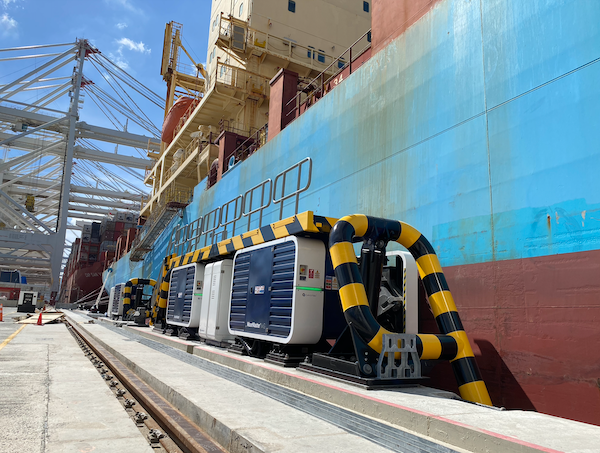
- Cavotec’s MoorMaster NxG uses shore-mounted vacuum pads instead of conventional mooring lines.
- Delivery in late 2027 will create the first Indian operating reference for the technology.
Jawaharlal Nehru Port Authority has placed an approximately €5 million order with Cavotec for a MoorMaster NxG automated vacuum mooring system, creating the first deployment of automated mooring technology at an Indian port.
Delivery to the GTI terminal, operated by APM Terminals, is scheduled for the fourth quarter of 2027. Cavotec will supply a shore-based system that secures vessels directly to the berth using automated vacuum pads rather than conventional mooring lines.
Cavotec says MoorMaster can attach to a vessel’s hull and complete the mooring sequence in less than 30 seconds. The technology is designed to reduce manual line handling during arrival and departure while holding the vessel in position throughout cargo operations.
JNPA chairperson Gaurav Dayal said the installation is intended to support faster and safer berthing and unberthing, improve vessel turnaround, and contribute to the authority’s wider programme of technology-led port development.
The supplier already has equipment operating at JNPA terminals, including cable-reel systems, so the order extends an existing engineering relationship. The new project adds a system at the ship-to-shore interface rather than another piece of container-handling equipment within the yard.
Automating the first stage of a port call
Conventional mooring depends on lines being transferred between ship and shore, secured, tensioned, monitored, and eventually released. Those operations are routine, but they place crews and shore personnel close to lines carrying substantial stored energy and can add variability to the beginning and end of a berth window.
MoorMaster replaces that sequence with shore-mounted vacuum units that extend towards the ship’s hull and establish a controlled connection. Cavotec says more than 430 MoorMaster systems are installed globally and have completed more than 1.5 million moorings.
The manufacturer also states that reduced vessel movement can improve cargo-handling conditions at the berth. At container terminals, steadier positioning can help cranes maintain alignment with the ship during loading and discharge, particularly where wind, tide, or passing traffic causes movement.
Those claims will need to be demonstrated at JNPA under local operating conditions. The Indian installation is not due until late 2027, so no project-specific improvement in turnaround time, safety performance, fuel use, or crane productivity can yet be measured.
The engineering integration is also broader than placing vacuum pads on a quay. The system must be configured around berth geometry, vessel interfaces, operating procedures, power and control requirements, maintenance access, emergency arrangements, and the range of ships expected to use the terminal.
A two-year delivery horizon reflects that integration work. Automated mooring affects the point at which a vessel is physically secured to port infrastructure, so reliability and compatibility have to be established before the system becomes part of routine terminal operations.
India gains an operating reference
The JNPA order gives Cavotec a high-profile reference in a market where port operators continue investing in automation, digital systems, and higher-throughput terminal infrastructure. The first deployment will provide operating data that other Indian terminals can examine before committing to comparable systems.
The technology sits alongside wider automation around container handling rather than focusing solely on cranes and yard vehicles. Gate systems, terminal software, remote equipment, and berth technology all influence how much of a vessel call is spent productively moving cargo.
Mooring represents a relatively small part of a long port call, but it remains a sequential dependency. Cargo handling cannot begin until the vessel is safely secured, and departure cannot proceed until the ship is released.
Cavotec also associates shorter mooring sequences with reduced use of thrusters and tug assistance during berthing. Those effects vary by vessel and operating profile, and JNPA has not published a project-specific forecast for fuel or emissions reductions.
The first measurable milestone is therefore delivery and commissioning rather than a projected productivity figure. JNPA and APM Terminals will have to integrate MoorMaster NxG into established berth procedures without compromising vessel access, safety controls, or terminal availability during installation.
Once operational, the system can be assessed against concrete indicators including the time required to secure and release ships, system availability, maintenance demand, compatibility across vessel calls, and any measurable effect on berth productivity.
India’s first automated mooring installation will ultimately be judged less by novelty than by repeatable performance after 2027. Reliable operation at a major container terminal would give other Indian ports a domestic reference for deciding whether vacuum mooring belongs in routine berth infrastructure rather than remaining a specialist automation project.