IN Brief:
- Flight CK609 left Shanghai Pudong on 17 November carrying more than 92 tonnes towards Copenhagen via London.
- China Cargo Airlines plans four weekly Boeing 777F services carrying ecommerce goods, machinery and apparel outbound.
- The multi-stop rotation adds northern European capacity, but payloads and UK handling arrangements will vary by booking.
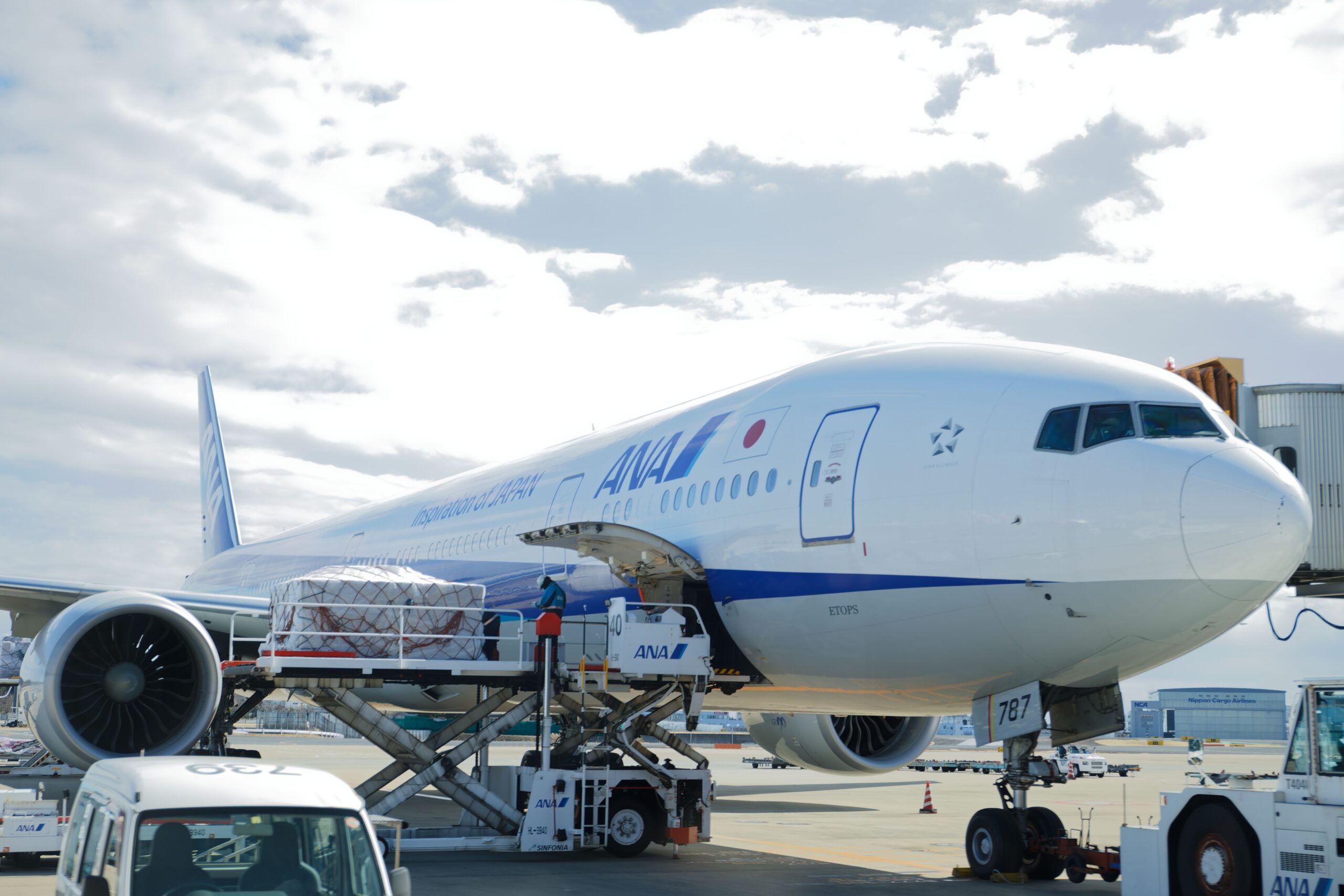
China Cargo Airlines has begun a scheduled Boeing 777F freighter service from Shanghai Pudong to Copenhagen via London Stansted. Flight CK609 departed Shanghai at 05:11 local time on 17 November carrying more than 92 tonnes of cargo, according to China’s civil aviation authority. Four services a week are planned, adding an all-cargo routing between eastern China’s manufacturing and distribution centres and northern Europe.
The service operates through London Stansted before continuing to Copenhagen Kastrup Airport. It is an all-cargo rotation rather than capacity sold in the holds of passenger aircraft, allowing the airline to plan shipments around a dedicated freighter schedule. That arrangement can accommodate a mix of commercial goods within the aircraft’s loading limits and handling requirements. The regulator identifies cross-border ecommerce shipments, machinery and equipment, and apparel among the main outbound cargo categories for the new operation.
The inaugural flight’s load of more than 92 tonnes describes cargo leaving Shanghai on one departure. It cannot be used as a weekly average or multiplied by the planned frequency to establish committed capacity. Freighter loading is constrained by cargo weight, dimensions and position, as well as aircraft operating conditions on each sector. Bulky consignments can fill available pallet or container positions before the aircraft reaches its allowable payload by weight.
The London stop gives the aircraft an intermediate operating point between Shanghai and Copenhagen. Freight carried to the UK and cargo continuing to Denmark may have different handling and customs requirements, depending on the booking. Neither the regulator’s report nor the flight information reviewed establishes exactly how many tonnes were discharged or loaded at Stansted on the initial service. The 92-tonne departure figure relates to the aircraft leaving Shanghai, rather than confirmed cargo delivered at either European airport.
Copenhagen provides an additional gateway for goods moving into and out of Denmark and other northern European markets. Arriving air cargo still needs to be unloaded, presented for the appropriate formalities and collected by a forwarder or inland transport provider. Time saved in the air can be lost if customs documents, handling arrangements or onward trucking are not ready when the aircraft arrives. The new route changes available flight patterns, but it does not remove the associated ground logistics required for an industrial consignment.
The mix of commodities named by the regulator has different logistical characteristics. Machinery and equipment can include heavy or irregularly shaped items requiring careful pallet loading and restraint. Apparel shipments may use numerous cartons consolidated into air cargo units, while ecommerce freight often involves high shipment counts and more intensive identification and sorting processes. The airline has not published the proportion of each category in its inaugural load or the specific handling systems allocated to those cargo streams.
Boeing 777 freighters are designed to carry containerised and palletised cargo on a dedicated main deck, as well as freight in lower-deck compartments. Ground handling equipment must be compatible with the unit load devices and loading configuration booked for each flight. The aircraft type is confirmed for the Shanghai–London–Copenhagen service, but no detailed arrangement has been released for warehouse processing, temperature-controlled cargo or special cargo restrictions at each airport. Such requirements must be confirmed through the airline and appointed handling agents.
The service is intended to carry European goods back towards China as well as move Chinese exports westwards. China’s civil aviation authority describes the expected return flows as higher-value products from northern Europe, without specifying commodities, volumes or individual origins. That does not establish equal load factors in both directions. On an international freighter rotation, outbound and inbound demand can differ, requiring the carrier to manage aircraft space, ground handling and commercial bookings separately for each leg.
With four planned flights each week, exporters have several scheduled departure opportunities without relying on an occasional charter. Manufacturers and forwarders still need to meet cargo acceptance deadlines, arrange consolidation and confirm capacity for the shipment’s exact route. The airline has not published a guaranteed transit time product or detailed public handling cut-offs for each European stop. Those arrangements will be confirmed through individual bookings and ground-handling services.
The new route also contributes to a broader set of changes in air cargo networks linking Asia and Europe. DHL has separately outlined a proposed China–India–Europe freighter connection routed through Navi Mumbai to Liège. That service has a different commercial design and operating geography from the China Cargo Airlines route via Stansted to Copenhagen. The developments show additional published routing options, but they should not be treated as interchangeable capacity for the same origin, destination or cargo restrictions.
Shippers generally use airfreight when shipment urgency, goods value or disruption exposure offsets its higher cost than sea transport. This route offers another scheduled option for machinery, ecommerce and apparel cargo, but end-to-end delivery still includes collection, terminal processing, customs clearance and distribution after arrival. The civil aviation authority’s account does not provide freight rates or comparative cost savings. Customers therefore need the total contracted movement, rather than flight time alone, to assess the service.
The first CK609 flight demonstrates that the route is operating, while scheduled services now provide four weekly departures from Shanghai. Data on cargo discharged at Stansted, cargo delivered at Copenhagen and recurring load factors have not yet been published. Those figures will give the first fuller picture of how the two European stops are being used.