IN Brief:
- CMA CGM and Gemadept have started phase 2 works at the Gemalink terminal in Cai Mep.
- The project is set to lift capacity from 1.7 million TEU to 3 million TEU by 2027, with a longer quay, a larger yard, and more ship-to-shore cranes.
- The build-out reinforces southern Vietnam’s position in Asia–Europe and transpacific supply chains as carriers seek more resilient gateway options.
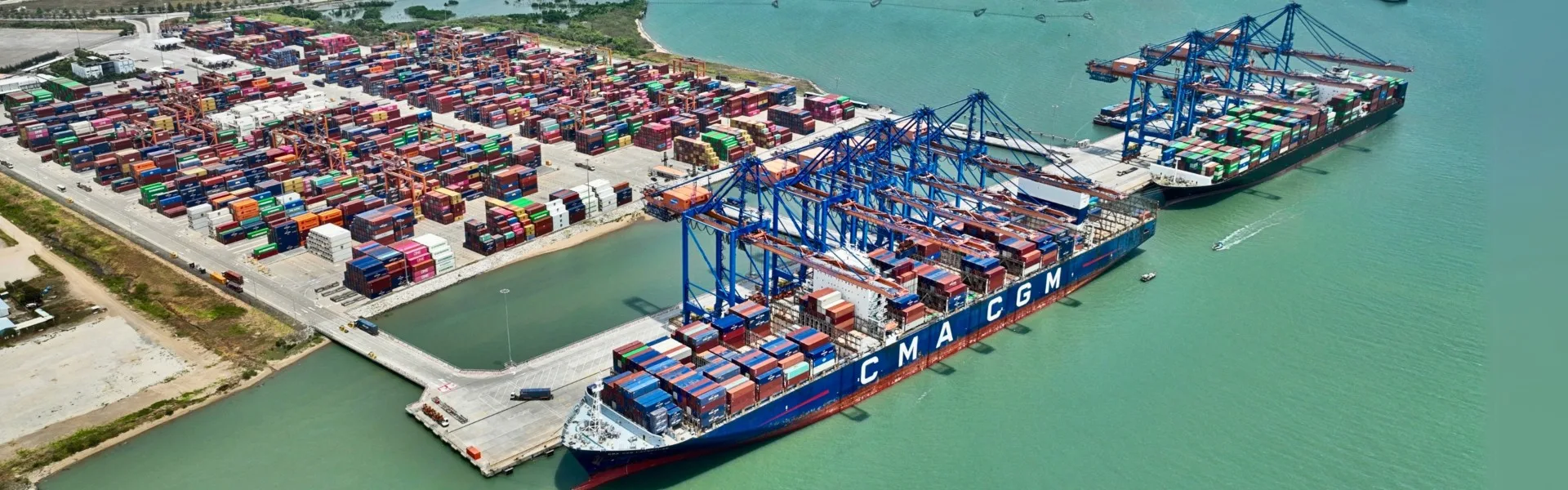
CMA CGM and Gemadept have started phase 2 expansion works at the Gemalink container terminal in Cai Mep, extending a project that is set to increase the terminal’s annual capacity from 1.7 million TEU to 3 million TEU by the fourth quarter of 2027. The move adds another major capacity step in southern Vietnam at a time when shippers, carriers, and port operators are looking for stronger positions in Southeast Asia’s export and transhipment corridors.
The expansion programme includes a 450-metre quay extension, yard growth from 32 to 44 hectares, and the addition of five ship-to-shore cranes, bringing the terminal total to 13. Gemalink’s first phase already gave the port scale and depth attractive to deep-sea services, and the second phase is designed to push that further by giving the terminal more berth, more yard, and more crane intensity as cargo volumes build.
Gemalink sits within the Cai Mep-Thi Vai complex, where carriers have been building more direct long-haul options in response to Vietnam’s manufacturing expansion and the gradual redistribution of sourcing across Asia. That matters because cargo owners increasingly want fewer avoidable transhipment moves, more predictable terminal performance, and a gateway that can handle larger vessels without forcing capacity back through more congested regional hubs.
The terminal’s development also fits the local direction of travel. Gemadept has been expanding port and logistics assets across Vietnam, while carriers with stronger inland, terminal, and forwarding footprints have been leaning harder into end-to-end control of trade corridors. A terminal expansion in this context is not simply a civil-engineering project. It is a bid to capture more of the operational logic around vessel windows, container flows, and hinterland connectivity as trade patterns evolve.
There is another layer behind the timing. Southeast Asian manufacturing growth has been accompanied by sharper competition between gateway ports for direct calls, transhipment activity, and long-term carrier commitments. For Vietnam, that raises the stakes for quay productivity, yard efficiency, and deep-water capacity. Building extra berth length without adding the handling equipment and yard space to back it up solves very little. Gemalink phase 2 at least suggests a more complete answer, with the core operating elements expanding together.
For shippers, the value is straightforward. More capacity at Cai Mep should reduce the risk that growth in Vietnamese export volumes simply outruns terminal capability. For carriers, it improves the case for keeping Vietnam higher in network design rather than treating it as a secondary call behind larger regional gateways. And for the wider market, it is another signal that Southeast Asia’s infrastructure race is now less about headline announcements and more about which ports can turn expansion into dependable execution.