IN Brief:
- deugro has established three dedicated entities to support Papua LNG logistics and long-term project execution.
- Purari Project Services will provide marine transport between Port Moresby and construction areas along the Purari River.
- Specialist river equipment and locally developed operational capability are being prepared ahead of heavier project flows.
deugro is expanding its logistics capability in Papua New Guinea to support Papua LNG, establishing dedicated project entities, strengthening local partnerships, and preparing specialist marine equipment for construction movements along the Purari River.
The project forwarder has created three entities to provide logistics services during development and longer-term execution. Central to that structure is Purari Project Services Limited, a joint venture between deugro and Jerilai Pujari Transport Limited, representing local landowner interests within the PRL-15 licence area.
Purari Project Services is intended to handle marine transportation between Port Moresby and project construction areas along the Purari River. deugro also plans to import a substantial fleet of specialised marine equipment designed specifically for river operations, while developing personnel for transport, yard management, project coordination, supervision, and safety work.
The river connection is a demanding part of the project’s logistics chain. Equipment arriving from international suppliers has to move through Port Moresby before continuing towards remote construction areas where conventional road infrastructure cannot necessarily accommodate the size, weight, or frequency of project cargo.
Large energy developments create a sequence of transport interfaces rather than one freight movement. Ocean shipments, temporary storage, lifting operations, marine transfers, road movements, and final site delivery have to be planned around construction programmes in which a delayed component can affect cranes, specialist crews, and installation work waiting further downstream.
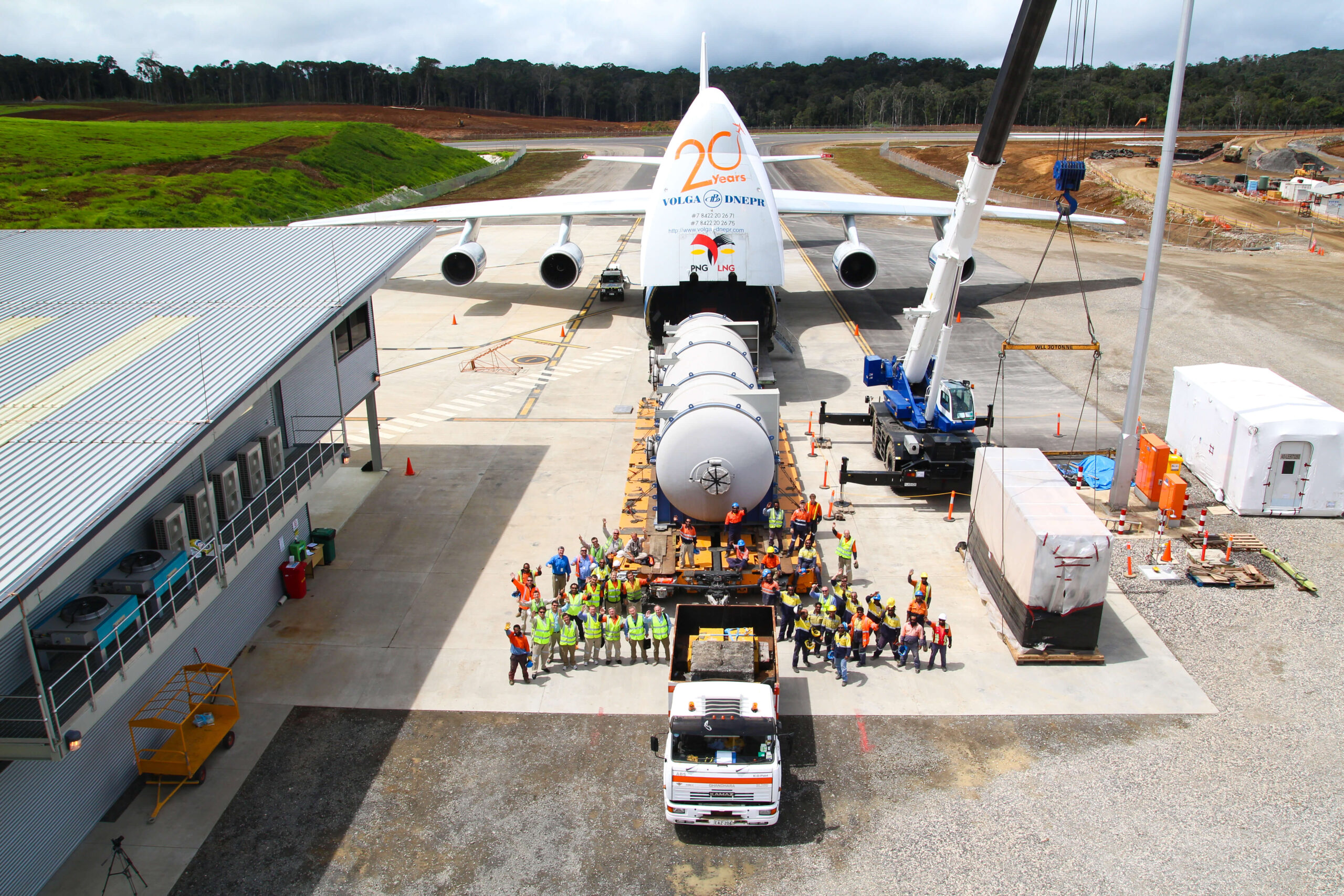
deugro is drawing on its earlier work supporting the PNG LNG project. The company says it coordinated more than 100 Antonov AN-124 flights in around 105 days during that programme and managed more than 3,000 purchase orders from worldwide origins, representing approximately 300,000 freight tonnes of project cargo.
That programme also involved hydraulic axle lines, trucks, trailers, and heavy-lift handling equipment for cargo moving into difficult project locations. The current Papua LNG work shifts the emphasis towards a permanent local logistics structure able to support river transport and associated project activity over a longer execution period.
Preparing those assets before construction volumes increase reduces the risk of specialist equipment becoming the limiting factor after cargo has already started moving. A project can secure ocean capacity months in advance and still lose time if the receiving location lacks suitable barges, lifting equipment, yard space, or trained crews when the shipment arrives.
The creation of local project entities also brings landowner participation into the operating structure. Local companies can contribute knowledge of labour, suppliers, river conditions, stakeholder relationships, and operating constraints, while deugro provides international freight management, transport engineering, and access to specialised equipment.
That arrangement still has to operate as one supply chain. International procurement schedules have to align with vessel bookings, Port Moresby handling, river capacity, site readiness, and the availability of personnel at destination. A disruption at any one of those stages can create storage costs or leave equipment waiting elsewhere in the chain.
Project logistics becomes particularly unforgiving when individual components are oversized or engineered for a specific installation sequence. They cannot always be substituted, split into smaller loads, or diverted to another customer, so transport plans have to accommodate the actual dimensions and handling requirements of each shipment.
River operations introduce additional variables around water conditions, vessel capability, loading limits, weather, and access to temporary construction sites. deugro’s planned fleet is intended to provide equipment suited to those conditions rather than adapting ordinary marine assets after mobilisation has begun.
The workforce programme is similarly practical. Marine transport and heavy project cargo require operators, supervisors, safety personnel, and coordinators who understand both the equipment and the project procedures, making local capability part of day-to-day execution rather than an activity separated from the logistics contract.
The current announcement does not disclose the size of the marine fleet, expected cargo volumes, or the value of the work deugro expects to perform. Those figures will become more useful as construction packages move into mobilisation and the frequency of inbound project cargo increases.
For now, the company is putting the transport structure in place before the heavier flows arrive. Dedicated project entities, river equipment, local partnerships, and trained personnel create the operating base through which globally sourced equipment can be moved from Port Moresby towards remote construction locations without assembling the logistics chain shipment by shipment.
Papua LNG will ultimately test that preparation at scale. The useful measures will be vessel utilisation, cargo throughput, handling performance, and whether the Purari River operation can keep equipment moving in step with construction rather than becoming another constraint between international suppliers and the project site.