IN Brief:
- JNPA has awarded Gateway Distriparks an eight-year contract covering its common rail yard at Nhava Sheva.
- The facility has 1,500-metre DFC-compatible lines and handles containers destined for different port terminals.
- Gateway will manage train positioning, container segregation, stacking and transfers, with operational performance yet to be reported.
Gateway Distriparks has won an eight-year contract to operate and manage the common rail yard at Jawaharlal Nehru Port Authority (JNPA), at India’s Nhava Sheva container gateway. The company will oversee train placement, the segregation of mixed container trains, container handling and stacking, and transfers between terminals. The contract assigns day-to-day management of existing rail infrastructure at a port where different marine terminals share inbound and outbound container flows.
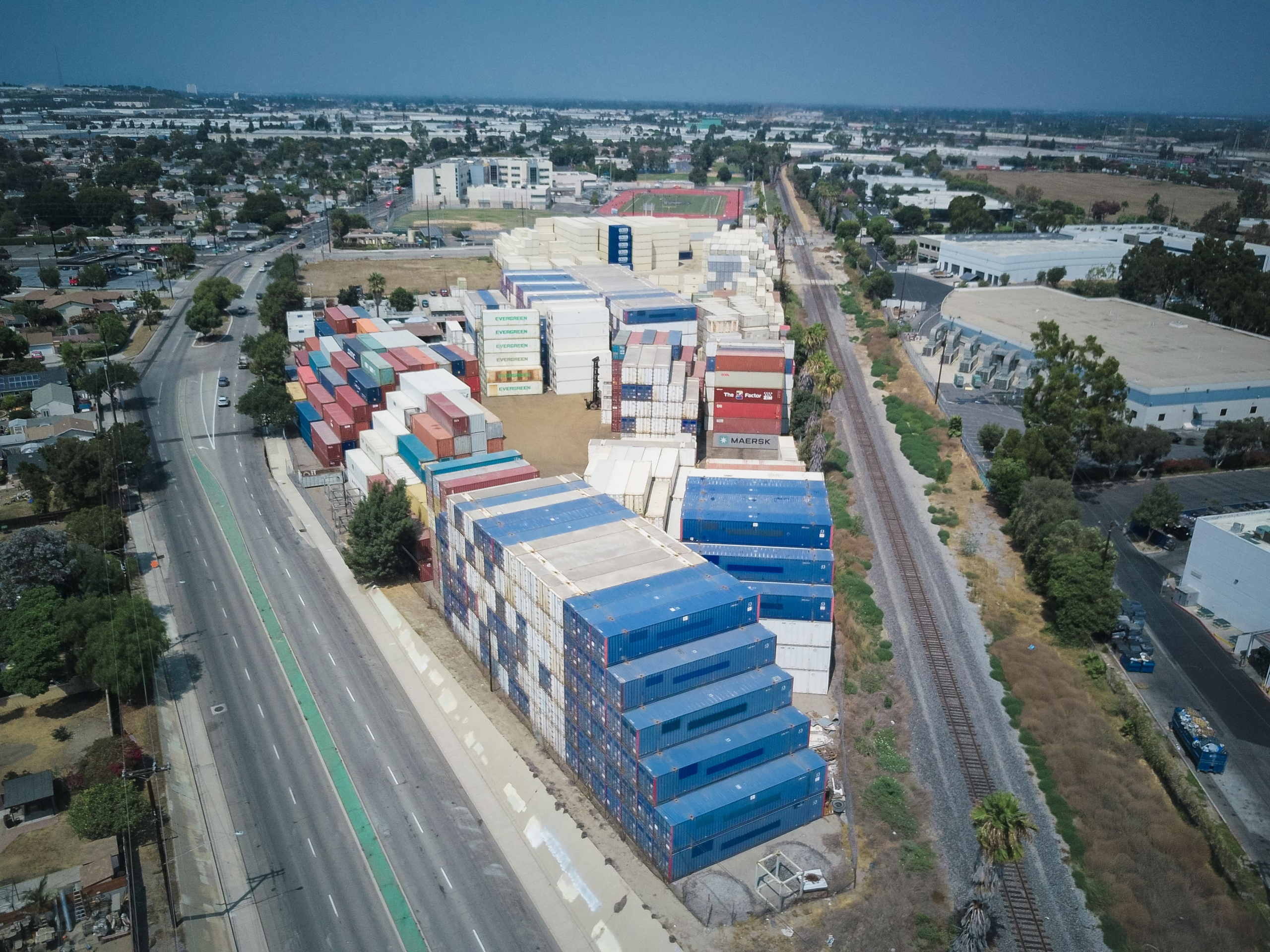
Among JNPA’s five rail terminals, the common yard is one of two with 1,500-metre-long lines compatible with India’s Dedicated Freight Corridor (DFC) network. Longer reception lines can accommodate trains that would otherwise need to be divided across shorter sidings. Yard capacity, however, also reflects the rate at which handling equipment unloads wagons, the availability of storage positions and the speed of onward transfers. The eight-year award concerns coordination of those operations alongside use of the existing tracks.
JNPA’s infrastructure information describes two lines commissioned to accommodate long-haul and double-stack DFC rakes. Containers arriving on those trains may be booked for different vessels and marine terminals, requiring a further sorting step after the inland rail movement. The common yard provides a point where a long train can be received and its load separated into the movements required by each terminal. That function links long-distance rail capacity with the port’s individual terminal handling arrangements.
A train arriving from an inland container depot can carry boxes booked with different shipping lines and due for different vessels. Those containers cannot simply remain together on a single train if the receiving terminals and vessel stacks are separated. Yard staff must identify each consignment’s intended destination, position the train for unloading, transfer containers to appropriate storage positions and arrange movements to the correct terminal. Gateway’s contract expressly includes segregation of mixed trains, train placement, container stacking and inter-terminal transfers.
The sequencing is operationally sensitive because container rail movements compete for track access, handling equipment and space in the yard. If unloading is delayed, an incoming train can occupy a reception line that is needed for the next arrival. Conversely, a container moved too early into the wrong stack may require additional lifts before it can be delivered to the receiving terminal. The award places coordination of those linked tasks with one operating contractor, subject to arrangements with JNPA and the terminal operators.
The same interface works in the opposite direction for exports. Containers delivered to the port must be matched with their assigned vessel and terminal, while rail movements of boxes leaving the port require consolidation into outbound trains. Their timing depends on shipping line cut-offs, customs and terminal processes and the availability of suitable rail services. The common yard’s long tracks provide physical capacity for DFC-compatible trains, but they do not remove the need to schedule equipment and container transfers around vessel operations.
India’s western freight corridor is intended to support more intensive rail use between inland production and consumption centres and the country’s major western ports. A rail yard capable of receiving longer container trains is a necessary component of that system, since long-distance trains still need somewhere to enter the port, exchange containers and depart. The value of the infrastructure depends as much on the reliability of those terminal connections as on the distance and train capacity offered by the wider corridor.
Gateway already operates container rail transport, inland container depots and container freight station services. It also has a container freight station at JNPA, but the new mandate is broader than handling its own customers’ boxes. The common yard receives mixed trains associated with multiple terminal destinations, so the operator will need to coordinate with other participants in the port’s rail and marine systems. The company has described the award as an expansion into third-party terminal management rather than another container transport route.
JNPA handled 864,255 twenty-foot equivalent units (TEU) in October 2026, its highest monthly container throughput. The figure covers the whole port, including cargo that does not use the common rail yard. It nevertheless illustrates the scale of competing road, rail and terminal movements that must be coordinated at the gateway. Handling volumes in the common yard, and their allocation among marine terminals, will require separate operating data.
No contract value, management fee structure, annual container commitment or measured productivity improvement was disclosed with the 18 November award. Nor has Gateway published a starting date for operating responsibility in the information reviewed. It would therefore be premature to attribute any shorter turnaround, higher rail share or lower handling cost to the new operator. Those outcomes can only be assessed against operational data once the handover and subsequent train movements have taken place.
Train release time, yard dwell and container transfer performance will give different measures of how the arrangement operates once Gateway takes over. A train can be unloaded promptly while its containers remain in a storage stack awaiting a marine terminal transfer; conversely, rapid delivery to a terminal may still coincide with a long train occupation time. Reporting those stages separately would make it possible to distinguish improvements within the common yard from delays elsewhere in the port system.
Gateway’s management responsibility will also sit alongside infrastructure maintained or controlled by other organisations. Rail arrivals depend on the wider network and its dispatching decisions, while transfers into marine terminals are governed by each terminal’s capacity and booking arrangements. An operator can improve internal work sequencing without controlling every source of delay. The eight-year term gives Gateway a long operating horizon, but the published contract announcement does not specify investment obligations or productivity targets.
Gateway has not published an operating handover date or management fee for the common rail yard. The first train turnarounds under its control, followed by figures for container segregation and inter-terminal transfers, will show how the long-train reception infrastructure is being used under the eight-year contract.