IN Brief:
- Motor-driven factory equipment can lose recoverable energy during repeated deceleration, braking, lowering, and stop-start cycles.
- IR Power’s retrofit systems capture electricity from existing braking circuits and feed it back into a site’s power grid for reuse.
- The model removes upfront capital costs, with operators paying a monthly fee based on measured energy savings.
As factories face mounting pressure to cut energy costs without disrupting production, one overlooked source of waste sits inside the braking cycles of everyday industrial equipment. We speak with Richard Bradshaw, Founder of IR Power, about how factories can recover lost energy from motor-driven systems such as hoists, conveyors, and presses.
Factories run conveyors, hoists, and heavy handling equipment around the clock. Is energy waste a significant issue in these environments?
It can be, depending on the type of equipment and how it operates. Any motor-driven system that repeatedly starts, stops, lowers loads, or controls speed will generate energy during deceleration. That applies to conveyors, hoists, presses, and many automated handling systems commonly found in manufacturing environments.
In some installations, that energy is dissipated as heat through braking resistors. In others, it may already be partially recovered. The scale of the opportunity varies — sometimes it’s a small number of large drives wasting significant energy, and in other cases it’s many smaller drives where the losses add up in aggregate.
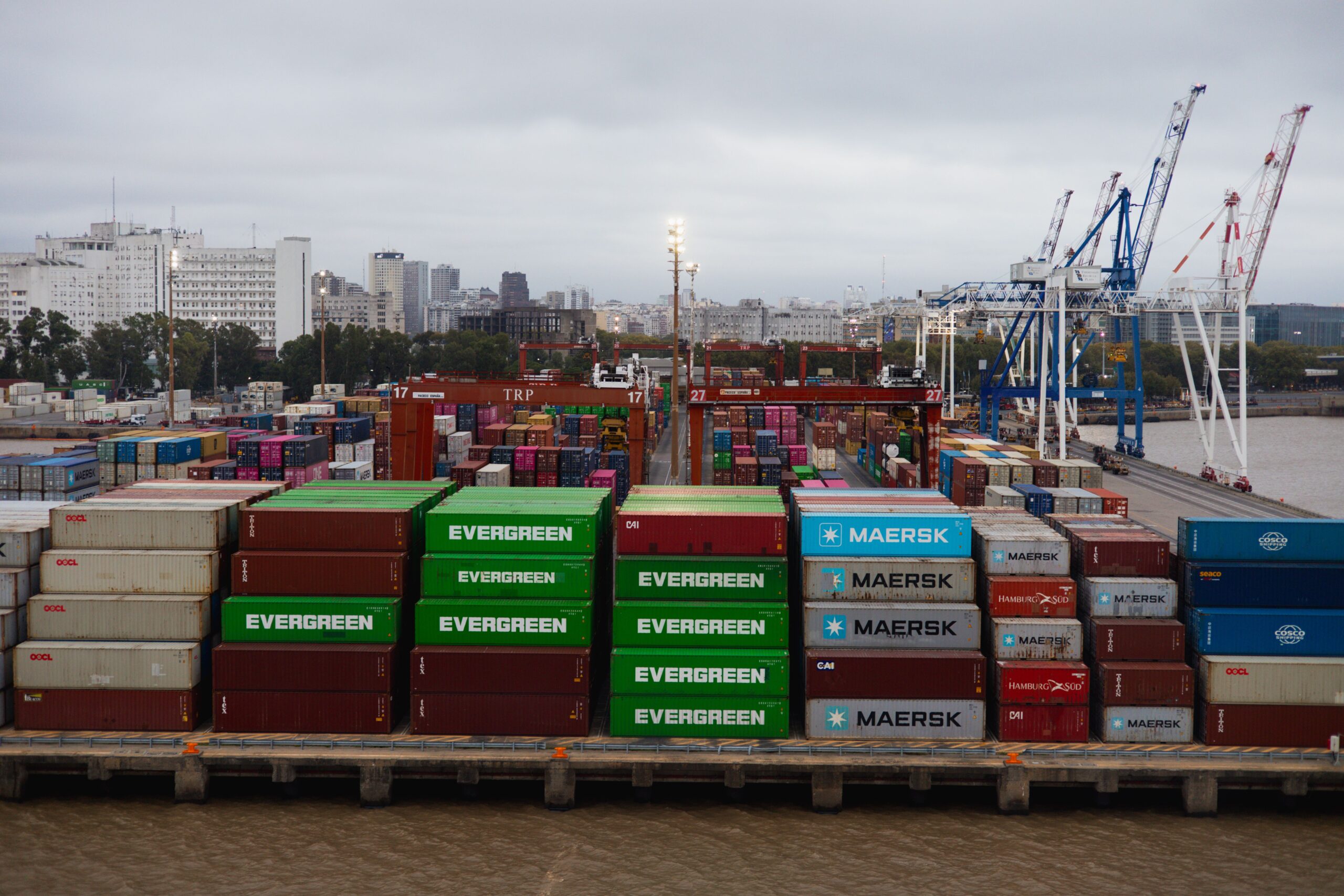
We’ve seen this most clearly in high-power applications such as container cranes, where the effect is very pronounced. The same underlying behaviour exists in factory environments, although typically at a different scale — for example in lifting, lowering, and packing operations.
Where the duty cycle involves frequent deceleration, it’s not unusual for a meaningful proportion of electrical energy to be lost in this way. The opportunity is to capture that energy and reuse it, provided it can be done simply, without disruption, and with a clear economic return.
How does IR Power address that waste?
Every time an industrial machine slows down or stops, it wastes electricity. IR Power captures it and puts it straight back to work, whether that’s a little or a lot. Think of it like regenerative braking in an electric car but applied to industrial equipment. Our systems capture the electricity generated when machines decelerate, condition it, and feed it straight back into the facility’s power grid for immediate reuse by other equipment on site.
It’s not theoretical — the technology has existed for years. What IR Power has done is package it in a way that’s practical to deploy: standardised systems that install in hours, connect to existing equipment without any modifications, and require zero production downtime.

What types of equipment does this apply to in a factory setting?
It applies to motor-driven equipment where there is regular deceleration, braking, or controlled lowering of loads.
In factory environments, that typically includes hoists, cranes, lifts, and other handling systems where loads are raised and lowered. These generate energy during lowering that is often dissipated as heat. Automotive presses, industrial mixers, and heavy machinery with frequent start-stop cycles are also prime applications.
Some conveyors and transfer systems are relevant, particularly where they operate in a stop-start or speed-controlled manner. However, continuously running conveyors with minimal deceleration will have less recoverable energy.
Automated handling systems, sortation equipment, and packaging lines can also present opportunities where motors are frequently accelerating and decelerating as part of normal operation.
The key factor is not the type of equipment alone, but how it is used. Where there are repeated braking events, there is potential to recover energy. In some cases, this comes from a small number of large drives; in others, many smaller drives contribute in aggregate.
Our role is to identify where that recoverable energy exists and provide a practical way to capture it without disrupting operations.
What has stopped this from being solved before?
It wasn’t a single issue — it was a combination of economics, complexity, and disruption.
The underlying technology has existed for some time, but earlier approaches typically required bespoke engineering, integration into existing drive systems, and significant upfront capital. That made projects slow to approve and difficult to justify, particularly when electricity was relatively inexpensive.
At the same time, installation was often seen as intrusive. Modifying existing equipment or taking systems offline for extended periods creates operational risk, which most operators are understandably reluctant to take on.
Those conditions have changed. Energy costs are higher and less predictable, grid connections are more constrained, and businesses are under increasing pressure to optimise energy use within existing infrastructure.
What we observed was that energy was being wasted in many of these systems, but the solutions available were more complex and expensive than they needed to be. That constrained adoption.
Our approach has been to remove that friction — standardising the equipment, reducing installation to a simple retrofit, and aligning cost with savings. The aim is to make the decision to install straightforward: if it can be deployed quickly, without disruption, and delivers a clear return, it becomes an operational improvement rather than a capital project.
What does it cost an operator to get started?
Nothing upfront. Our model is simple: we install the equipment, we own it, we maintain it, and customers pay a monthly fee based only on their measured energy savings. If the system doesn’t perform, they don’t pay. We take all the performance risk.
For factory operators, that’s significant — it typically qualifies as operating expenditure rather than capital, which means faster approval and no capital budget required. It’s cash-flow positive from day one.
How disruptive is installation?
Minimally. Our systems connect to existing braking circuits without modifying the machines themselves or touching control logic. In most cases, installation can be completed during a planned maintenance window or outside operating hours. We’re talking hours, not weeks.
Our clients usually see no disruption to their production cycle, with connection made during a short one-hour window.
What kind of savings can operators realistically expect?
Savings vary depending on the equipment and how it is used.
In some cases, individual machines may only present a modest opportunity — hundreds to low thousands of pounds per year. However, across a factory or wider estate, those opportunities can accumulate, particularly where there are many motor-driven systems operating with regular braking or deceleration.
On larger equipment with heavy weights and heavy-duty cycles, we’re recovering 10–20% of total electricity consumption — worth £50,000–100,000 annually per machine cluster at current UK energy prices.
The key variables are duty cycle, how often equipment decelerates, and how much energy is currently being dissipated through braking. Historically, smaller opportunities were often ignored because the cost and complexity of recovery outweighed the benefit. Our approach is to reduce that barrier, enabling energy that was previously uneconomic to recover to become viable.
By simplifying installation and removing the need for upfront capital, operators can turn existing energy waste into a measurable cost saving without operational disruption. We also carry out site-specific assessments to quantify the opportunity before deployment, so operators have a clear, evidence-based view of potential savings.
For a factory operator reading this, what is the first step?
Get in touch and request a site assessment. It costs nothing and carries no obligation. We’ll assess your equipment, your operating patterns, and give you a realistic view of what’s recoverable. The energy is already being generated every time your equipment brakes — right now it’s likely just being wasted. We’d like to help you use it.
This article originally appeared in the April 2026 edition of IN Supply. Read the full issue here.