IN Brief:
- Kalmar will maintain eight ship-to-shore cranes and 32 automated stacking cranes at TTI Algeciras.
- The terminal is expanding towards annual handling capacity of 2.1 million TEU by 2028.
- The contract extends Kalmar’s existing service relationship at the semi-automated Spanish transshipment hub.
Kalmar has secured a service agreement with Total Terminal International Algeciras covering preventive and corrective mechanical maintenance for eight ship-to-shore cranes and 32 automated stacking cranes at the Spanish container terminal.
The Kalmar Care agreement was booked in the company’s third-quarter 2026 order intake and expands an existing service relationship at TTI Algeciras. Kalmar already supports equipment at the terminal, which also operates 23 Kalmar straddle carriers, placing the supplier across several parts of the container handling operation.
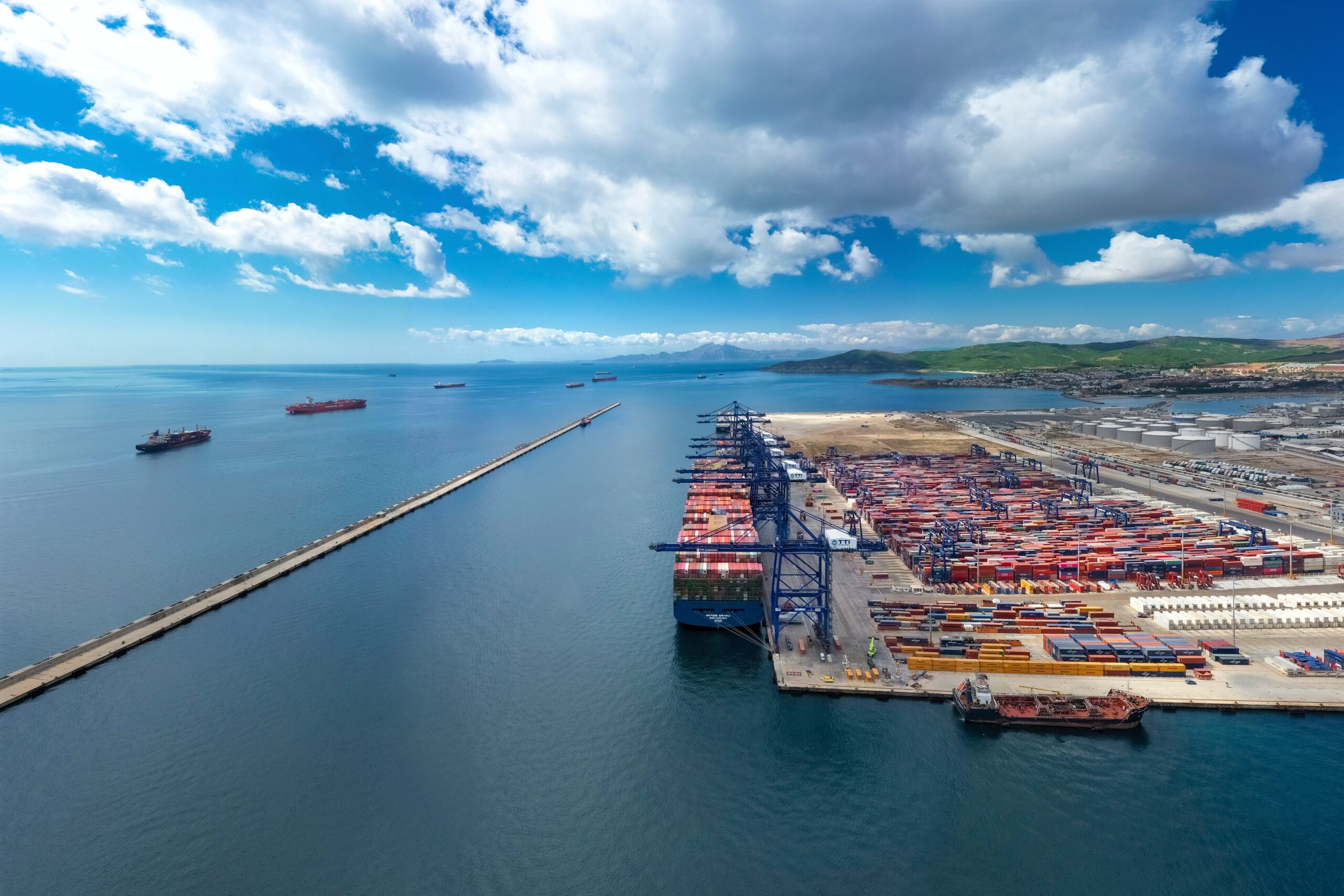
TTI Algeciras is one of two container terminals in the Port of Algeciras Bay and was the first semi-automated terminal in Southern Europe. Its position on the Strait of Gibraltar places the facility on major east-west and north-south shipping routes, while its berth and crane infrastructure is designed to handle current and next-generation ultra large container vessels.
The new contract concentrates on the mechanical availability of the equipment connecting quay and yard operations. Ship-to-shore cranes transfer containers between vessels and the terminal, while automated stacking cranes organise boxes within the yard. Reliability across both equipment groups influences berth productivity, yard flow and the terminal’s ability to recover from peaks in vessel activity.
Alonso Luque, chief executive officer of TTI Algeciras, said: “Reliable maintenance is essential to ensure maximum operational efficiency and equipment uptime as we continue servicing next-generation Ultra Large Container Vessels at our terminal.”
The agreement arrives while TTI Algeciras is undertaking an expansion intended to raise annual handling capacity to 2.1 million TEU by 2028. Increasing nominal capacity puts additional pressure on equipment availability because higher utilisation can reduce the periods in which cranes can be taken out of service without affecting vessel or yard operations.
Preventive maintenance therefore becomes part of capacity planning rather than a separate workshop activity. Scheduled inspections and component replacement can reduce the likelihood of unplanned failures, while corrective maintenance provides the response when faults develop during live operations. The challenge is to protect equipment condition without removing critical assets from service unnecessarily.
That balance is particularly important in a semi-automated terminal, where machines operate as part of a connected handling process. An unavailable stacking crane can alter yard routing and create pressure elsewhere in the system, while reduced ship-to-shore crane availability can extend vessel working times and affect subsequent berth schedules.
TTI Algeciras already relies on Kalmar for fleet maintenance, so the latest agreement broadens an established relationship rather than introducing a new service provider. Local familiarity with the terminal and its equipment can shorten diagnostic work and improve maintenance planning, although contract performance will ultimately be measured through availability and response times rather than the breadth of the supplier relationship.
The contract is distinct from Kalmar’s recent equipment order with International Container Terminal Services Inc. in the Philippines. ICTSI has ordered 12 hybrid Kalmar straddle carriers for South Luzon Container Terminal, with delivery planned during 2027 ahead of commercial operations in 2028. Algeciras concerns lifecycle support for an established European terminal rather than new fleet supply.
The two projects nevertheless illustrate different stages of the same equipment cycle. New terminals have to specify, procure and commission handling fleets before operations begin, while mature terminals increasingly depend on maintenance, upgrades and modernisation to keep expensive assets productive through long service lives.
That lifecycle becomes more important as automation increases. Replacing automated stacking cranes or ship-to-shore equipment early is capital intensive and can itself disrupt terminal operations, giving operators an incentive to maintain existing machinery while selectively upgrading controls, components and supporting systems.
Kalmar provides equipment and services to ports, terminals, distribution centres, manufacturing operations and other heavy logistics users across more than 120 countries. Its service business includes maintenance, parts, upgrades and modernisation alongside new equipment supply, creating recurring work around machinery already installed at customer sites.
For TTI Algeciras, the immediate requirement is maintaining 40 cranes while the terminal continues live operations and advances its expansion. As annual capacity moves towards the 2.1 million TEU target, the effectiveness of that maintenance regime will increasingly be visible in crane availability, vessel working times and the ability of the yard to absorb higher container volumes.