IN Brief:
- Maersk's 6 November guidance confirms that rail capacity at APM Terminals Maasvlakte II will remain constrained until June 2027.
- The terminal operator previously identified a reduction of approximately 40% in rail capacity, effective from July 2026.
- Barge transport, road haulage, and alternative rail services remain possible, subject to individual cargo requirements and capacity.
A.P. Moller–Maersk has confirmed that reduced rail capacity at APM Terminals Maasvlakte II in Rotterdam is expected to continue until the end of June 2027. The carrier’s updated customer guidance, issued on 6 November, advises freight operators to plan around restrictions associated with the container terminal’s ongoing expansion and to consider alternative inland transport arrangements where necessary.
Maersk had originally advised customers in May that the restrictions could continue until January 2027. The terminal operator subsequently identified June 2027 as the expected end of the reduced capacity period in a separate operational notice published on 26 June. The latest Maersk update therefore brings its customer guidance into line with a timetable already communicated by APM Terminals.
The restrictions began on 1 July 2026 as the terminal reconfigured the area between its container yard and rail facilities. APM Terminals identified an approximately 40% reduction in available rail capacity compared with normal operations, reflecting the need to accommodate construction and operational testing while maintaining existing terminal services.
Rail operations have not been suspended entirely. Services remain available within defined and previously agreed time slots, with the terminal coordinating access alongside customers and railway operators. The reduced capacity limits the flexibility available for additional movements or changes to established train schedules.
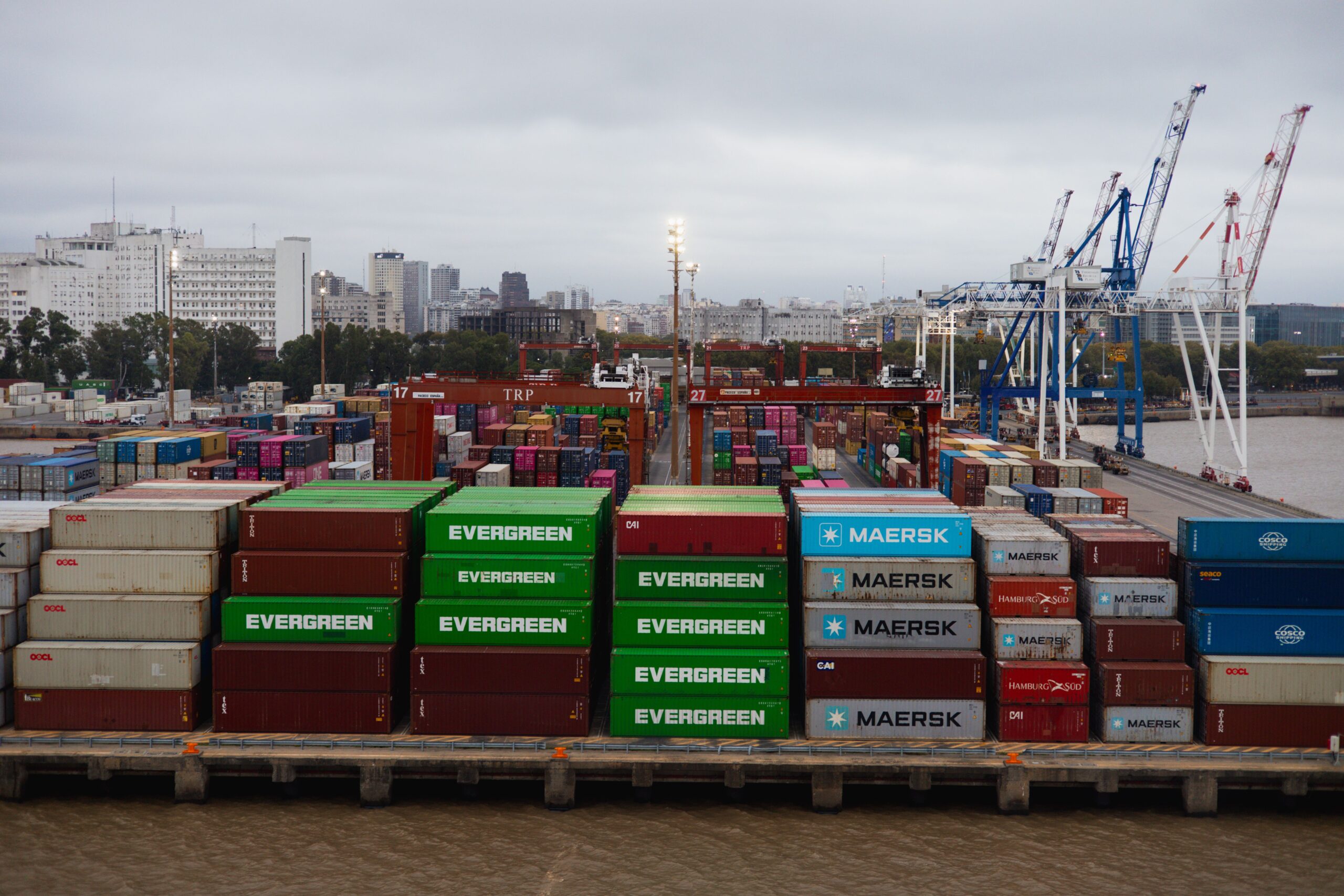
Maasvlakte II is a major European container gateway where deep-sea shipping services connect with inland freight networks. Containers arriving from international routes can move onwards by rail, truck, or barge, according to their destinations and the transport arrangements made by cargo owners and logistics providers.
Rail provides a connection between Rotterdam and inland freight terminals serving manufacturing and distribution centres across Europe. A reduction in the number of available rail handling slots can affect the timing of movements into and out of the port, particularly where a container must meet a specific train departure or delivery commitment.
The capacity restriction is associated with the physical configuration of the terminal during construction. Reorganising the space between storage yards and rail infrastructure allows development and testing to proceed, but temporarily reduces the area and operating arrangements available for the existing rail service.
Rail handling requires sufficient space for trains, equipment access, and the transfer of containers between railway wagons and terminal storage areas. These activities must be coordinated with the movement of containers arriving from vessels and those being prepared for export. Construction works can constrain that coordination even when the underlying rail connection remains open.
The published 40% reduction describes available rail capacity relative to normal operations. It does not establish that container volumes carried by rail have fallen by the same percentage, since actual throughput also depends on booking demand, train utilisation, and the allocation of the remaining operating slots.
APM Terminals has not published a current figure showing how many containers have been diverted from rail to other transport modes since the restrictions began. Nor has Maersk provided a total estimate of the additional cost incurred by customers using alternative arrangements.
Maersk is working with customers to identify suitable inland transport options. These include barge connections to inland terminals, road haulage, and alternative rail arrangements where operationally possible. The available options differ according to the cargo destination, existing transport bookings, and the capacity of individual services.
Barges provide an established connection between Rotterdam and inland terminals on the European waterway network. Containers can be transferred from the seaport to another terminal before continuing by road or rail. This arrangement may require different collection schedules and additional handling compared with a previously planned direct rail movement.
Road transport can provide a more direct connection to some warehouses and industrial facilities, although availability depends on vehicles, drivers, terminal appointments, and the distance involved. The ability to substitute trucks for rail capacity is consequently determined by the requirements of individual shipments rather than the existence of road connections alone.
Alternative rail services may be possible through other terminal facilities or routes, but such arrangements require available handling slots and suitable onward connections. A shipment already booked for one rail service may need its transport plan revised before it can use another departure or terminal.
Import and export cargo can be affected differently by changes to inland capacity. Imported containers must be collected after discharge and release through the applicable procedures, while export units need to reach the port ahead of their vessel’s loading requirements. Delays to inland transport can therefore affect either the collection of arrived cargo or the delivery of containers intended for a scheduled sailing.
Advance coordination becomes more important when flexibility is limited. Freight operators may need to secure inland transport earlier, review the availability of alternative services, and allow for different transfer and arrival times. Cargo already allocated to a particular receiving warehouse or production facility may also require adjustments to its planned delivery arrangements.
The rail works form part of Maasvlakte II’s wider expansion programme. APM Terminals is adding deep-sea berth and container yard capacity, deploying further automated handling equipment, and developing four additional rail tracks. The project is intended to increase annual container handling capacity towards approximately 5.4 million TEU.
Those future rail tracks do not provide immediate relief from the restrictions affecting the existing infrastructure. Construction and commissioning must be completed before additional facilities can contribute to the terminal’s normal operating capacity.
The operator has said that maintaining the previous landside configuration would create greater risks to safety, throughput, and operational stability as development proceeds. The temporary adjustment is therefore part of the staged construction programme rather than a permanent withdrawal of rail services from the terminal.
Maersk’s latest advice leaves the June 2027 horizon unchanged from APM Terminals’ earlier notice. Both organisations say the operating position will continue to be monitored, with further guidance to follow if the project timetable or rail arrangements change materially.
For shipments moving through Maasvlakte II over the coming months, the confirmed position remains reduced rail availability within agreed time slots. The eventual restoration of normal capacity will depend on progress with the expansion works, while barge, road, and alternative rail services provide possible interim connections for cargo that cannot use its preferred rail arrangement.