IN Brief:
- Shein plans €500m of investment in its Polish logistics network during 2026, bringing cumulative investment since 2022 towards €1bn.
- The operation comprises approximately one million square metres of warehousing across 20 facilities, supported by more than 6,500 autonomous robots.
- Employment is expected to increase from approximately 8,000 to more than 10,000 by the end of 2026.
Shein plans to invest €500m in its Polish logistics operations during 2026, expanding warehouse capacity and automated fulfilment infrastructure around Wrocław. The programme will bring the company’s cumulative investment in Poland since 2022 towards €1bn, strengthening a distribution network that serves customers across Europe.
The retailer outlined the investment during a presentation of its facilities at Kąty Wrocławskie on 4 November. Its European Logistics Centre now comprises 20 warehouses across Poland with a combined floor area of approximately one million square metres, representing an increase of around 25% in its warehousing footprint.
The main operational centre is located at Kąty Wrocławskie, where three warehouses occupy approximately 250,000 sq m. Additional facilities are situated elsewhere in the Wrocław region, including Magnice, Kobierzyce, Pietrzykowice, and Bielany Wrocławskie, with further locations near Poznań and Katowice.
The distribution network has developed since Shein began operating in Poland in 2022. Its principal centre connects imported merchandise and inventory held within Europe with the processes required to prepare and dispatch individual orders. Warehouse capacity is distributed across several buildings rather than concentrated in a single facility covering the entire one million square metres.
Automation forms an established part of the operation. Shein says more than 6,500 autonomous robots support inventory replenishment, product sorting, and order picking across its European logistics centre. The systems work alongside warehouse staff and other handling equipment to move stock through storage and fulfilment activities.
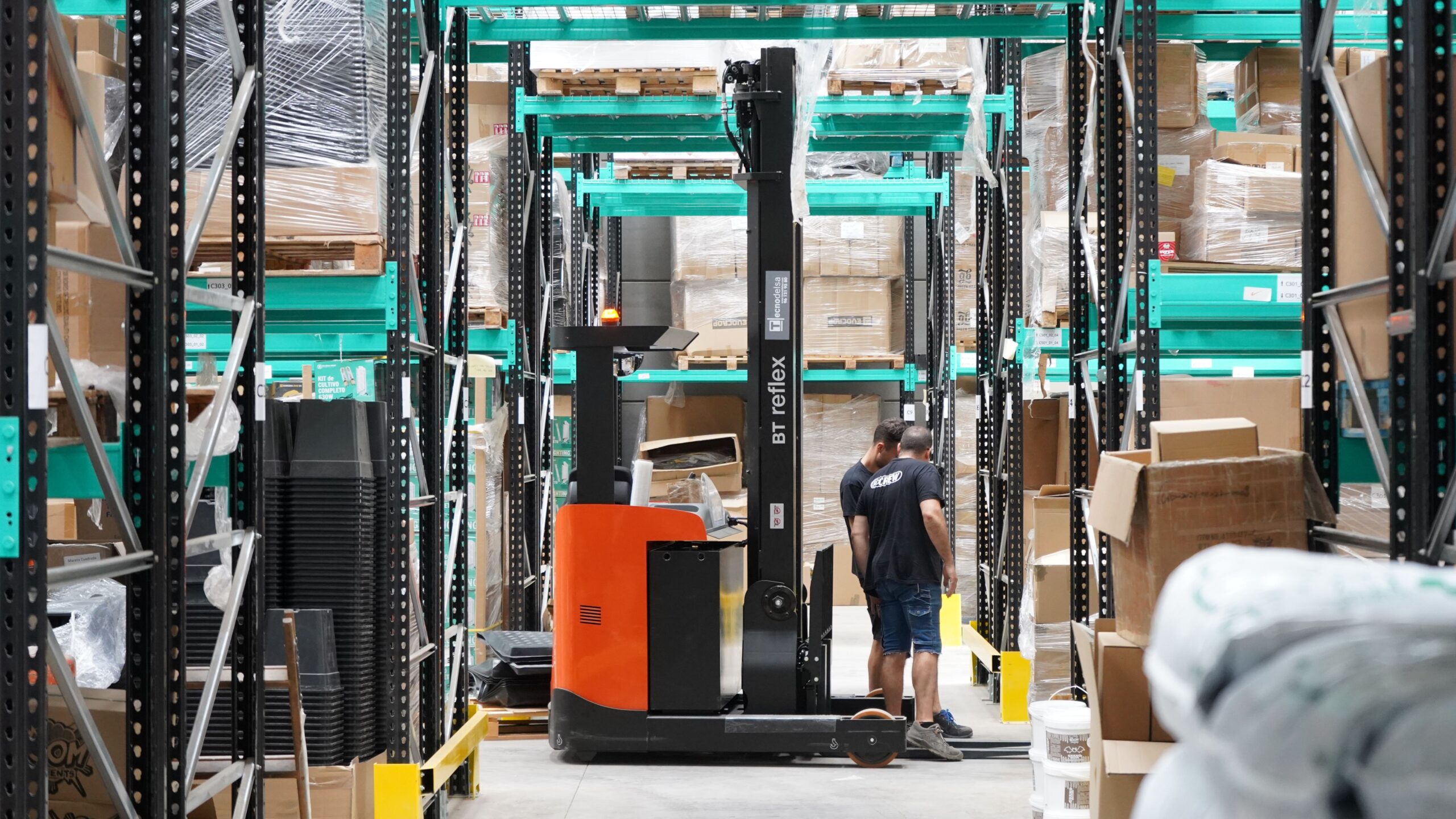
One of the principal warehouse buildings at Kąty Wrocławskie is approximately 750 metres long and operates continuously. Products are stored in containers positioned within extensive racking systems, with robotic equipment supporting the retrieval and movement of goods required for order preparation.
The arrangement creates a close connection between inventory records and physical materials handling. Products must be identified within the warehouse system, assigned to suitable storage locations, and made available when orders require them. Automated vehicles or retrieval equipment then carry out assigned movements according to the information received from the operating software.
Storage and picking capacity depend on more than the number of robots installed. Handling stations, packing equipment, conveyors, available storage space, and the timing of incoming and outgoing freight all affect how quickly an order can pass through the distribution process. Shein has not disclosed a verified order processing rate for the expanded Polish network or a like-for-like productivity comparison with its previous facilities.
The additional warehouse space provides greater scope to hold goods within Europe before they are assigned to individual customer orders. Products received in consolidated consignments can be stored at regional facilities and subsequently prepared for delivery to the destinations served by the network.
Inventory held nearer to customers can reduce the distance and number of international transport stages required after an order is placed. The commercial result depends on the location of stock, the availability of suitable products, and the performance of the final delivery network, rather than warehouse capacity alone.
Shein reports that qualifying products held in its Polish facilities can reach customers in selected European markets within 48 hours. The figure is not a universal delivery commitment for every product or destination and does not establish average delivery performance across the company’s entire European business.
Warehouse expansion also changes inbound freight requirements. International consignments must be received, cleared through the applicable customs procedures, and transferred into storage before goods can be allocated for distribution. Larger regional facilities create opportunities to consolidate those movements, while the operation must continue matching incoming inventory with demand across different markets.
The investment comes as changes to European import arrangements alter the commercial treatment of some lower-value consignments arriving from outside the European Union. These regulatory changes affect the costs and administrative requirements associated with direct imports, although the use of European warehousing does not remove customs obligations when merchandise first enters the Union.
Holding stock within the European market can change the timing and organisation of customs clearance and distribution. Once goods have entered under the relevant customs procedures, subsequent order preparation may take place at regional warehouses rather than requiring each customer order to follow the same international transport route.
Shein’s Polish operation supports its own online retail activities and businesses selling through Shein Marketplace. More than 500 Polish brands and sellers have joined the local marketplace since its introduction in April 2025, creating additional relationships between the company’s digital sales platform and its wider distribution infrastructure.
The company also works with more than 230 Polish small and medium-sized businesses supplying goods and services to its operations. These relationships include businesses involved in transport and logistics, alongside other suppliers supporting the company’s activities in Poland.
Growth in physical capacity is being accompanied by recruitment. Shein reported a workforce of approximately 8,000 in Poland during November and expects employment to exceed 10,000 by the end of 2026. The positions being recruited include logistics operations, customs clearance, transport, inventory management, data analysis, and maintenance of automated equipment.
The increase in employment is taking place alongside wider use of robotics rather than through an exclusively automated operating model. Warehouse employees remain responsible for activities requiring supervision, handling, inspection, maintenance, and coordination between different parts of the distribution process.
As robotic systems become more widely used, their reliability depends on suitable charging and maintenance arrangements, the availability of replacement equipment, and the ability of warehouse software to coordinate movements without creating congestion at individual processing points. Shein has not published operating availability or maintenance performance figures for its robot fleet.
Property company Logicor is involved in the development of additional warehouse facilities used by Shein in Lower Silesia. The wider investment programme includes buildings and logistics technology, although the company has not released a detailed allocation of the €500m between property development, automation equipment, and other operating infrastructure.
Leonard Lin, Shein’s global head of public affairs and president for Europe, the Middle East, and Africa, said the investment is intended to develop the company’s European logistics capabilities. “Through this investment, we are building more efficient, flexible and resilient European operations,” he said.
The company has described the €500m as its investment programme for 2026. The announcement does not provide an audited breakdown of expenditure already completed during the year, and the cumulative €1bn figure remains the anticipated total once the stated investment is taken into account.
The expanded distribution operation provides additional storage and handling capacity across Poland, with Kąty Wrocławskie remaining its principal operational centre. Further recruitment and infrastructure development are expected during the remainder of 2026, while the performance of the enlarged network will depend on warehouse throughput, inventory availability, transport connections, and the reliability of its automated handling systems.