IN Brief:
- On 21 October, Ports Minister Bimal Rathnayake told Parliament that concerns about procedures for a 10-acre land allocation contributed to government opposition to the previous hub agreement.
- The Sri Lanka Ports Authority's 19 October announcement terminated the earlier joint venture and proposed competitively selecting an operator through a new public–private partnership.
- The cancelled venture envisaged around US$280 million of investment and 150,000 square metres of floor space; neither is an approved specification for the replacement.
Sri Lanka’s Ports Minister Bimal Rathnayake has told Parliament that concerns over a 10-acre land allocation at the Port of Colombo contributed to the government’s opposition to a proposed logistics hub agreement. Speaking on 21 October, he said the site between the East and West Container Terminals had been allocated under arrangements whose procedures the government questioned. His explanation follows the cancellation of a China Merchants-backed joint venture and a separate plan to invite competitive bids for replacement logistics infrastructure.
Rathnayake said the government supported the investment in principle but objected to the way the previous agreement had been concluded. He also said he had helped arrange discussions with senior company representatives after taking office, rather than treating the project as unwanted from the outset. The minister rejected suggestions that the government’s position had driven investors away, arguing that proceeding under agreements he regarded as procedurally deficient could itself discourage future investment. These were statements of the government’s position, not an independent adjudication that particular individuals or companies had acted unlawfully.
The Sri Lanka Ports Authority had already confirmed on 19 October that shareholders would discontinue the South Asia Commercial and Logistics Hub venture. The authority said it would instead pursue a new integrated logistics hub through a public–private partnership (PPP), selecting prospective investors by competitive bidding subject to the necessary approvals. The 21 October ministerial account adds a more specific explanation of the disputed land arrangements; it does not amount to a new contract award, planning consent or construction start.
The cancelled venture was established in 2023 by China Merchants Port Holdings, through a wholly owned subsidiary, together with the authority and Access Engineering. China Merchants held 70% of the project company, while the Sri Lankan participants each held 15%. Plans envisaged approximately US$280 million in investment and around 150,000 square metres of floor space for logistics activities. Those figures belonged to the abandoned scheme, and no comparable budget or capacity specification has been published for the replacement PPP.
The port authority attributed the decision to abandon the joint venture to an assessment of external conditions, commercial considerations and shareholder interests. Under the termination arrangements, the three shareholders are expected to receive refunds of approximately US$29.8 million in equity contributions, distributed in proportion to their stakes and subject to regulatory requirements and operational expenses. The refund concerns the winding up of the former investment structure; it is not money assigned to construct a new hub.
The distinction between the minister’s 21 October explanation and the 19 October commercial decision affects what can be concluded about the project. The authority’s earlier statement confirmed that the former partnership would not proceed and that competitive procurement was planned. Rathnayake subsequently identified the allocation of strategically situated port land as a factor in the government’s objections. Neither account provides the terms of a replacement site agreement, an approved concession period or evidence that the competitive process has produced a successful bidder.
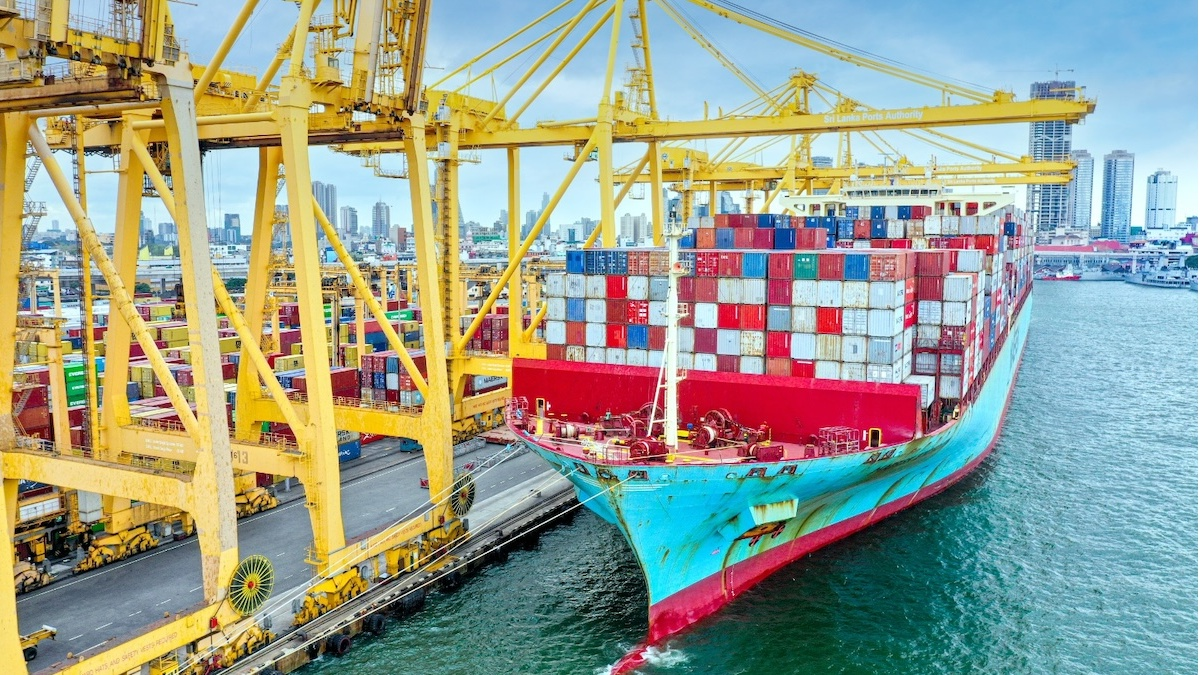
Colombo is an important transshipment port, with large volumes of cargo moving between ocean vessels rather than going directly to Sri Lankan consignees. The handling process depends on berth schedules, container yard availability, vessel connections and the movement of boxes through controlled access points. A logistics hub can complement those operations by providing storage, consolidation and preparation of goods close to the terminals, but its contribution depends on the services actually permitted and the design of the operating arrangement.
Space inside a working port is constrained by roads, stacking areas, security boundaries and the access required by terminal equipment. A decision about land between major container terminals therefore has consequences beyond the size of a prospective warehouse. Freight arriving for sorting or storage must be moved without obstructing terminal traffic, while customs controls determine which goods can enter or leave particular areas. A proposed building’s floor area alone is insufficient to predict throughput, handling costs or improved vessel turnaround.
The replacement PPP could define who finances construction, provides equipment, operates the warehouses and maintains the facilities, but those responsibilities have not yet been disclosed in tender documentation. The choice of operator would also determine how inventory systems, gate appointments, security procedures and onward transport are integrated with existing port infrastructure. Without an agreed layout and service specification, the authority cannot establish publicly how much additional cargo processing capacity the project will provide.
Competitive selection may also change the financial arrangements compared with the cancelled joint venture. The authority says its objective is to attract private investment, use port land more effectively and support a broader range of services for shipping lines, cargo owners and logistics companies. The future concession terms, commercial risk allocation, capital commitments and timetable remain unannounced, so neither the original investment figure nor the proposed operational benefits should be presented as secured.
Rathnayake’s parliamentary explanation leaves the government with two separate tasks: resolving the consequences of terminating the earlier agreements and establishing a defensible new procurement process for logistics infrastructure. The next verifiable milestones will be any formal approval of the PPP structure, publication of tender terms and identification of an operator. Until then, the 21 October development is the minister’s account of why the previous land arrangement was opposed, against the background of the authority’s 19 October decision to seek an alternative.