IN Brief:
- MSC has named MSC WIND II, voyage HF645A, for an expected Shanghai call on 4 November 2026.
- Jasmine’s published sequence includes Shanghai, Ningbo, Shekou, Singapore, Surabaya and Semarang, with two Singapore calls.
- The rotation resembles MSC’s February Firehorse service; MSC has not confirmed whether Jasmine replaces it or increases capacity.
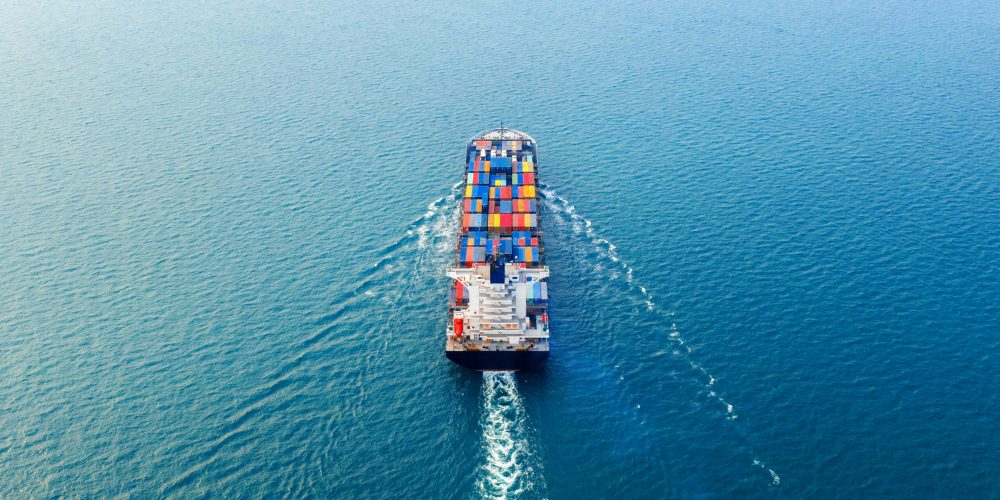
MSC has announced a Jasmine intra-Asia container service calling at ports in China, Singapore and Indonesia, with its first advertised vessel expected at Shanghai on 4 November 2026. The carrier describes it as a standalone service and lists Shekou alongside Shanghai and Ningbo before calls in Singapore, Surabaya and Semarang. The published notice gives the route and first vessel but no frequency, scheduled transit times or total capacity.
MSC has identified MSC WIND II, voyage HF645A, for the expected inaugural call at Shanghai. The full announced sequence is Shanghai, Ningbo, Shekou, Singapore, Surabaya, Semarang, Singapore and Shanghai. The stops at Surabaya and Semarang serve cargo flows to and from Java, while Shekou offers a loading and discharge point in South China. Because two Singapore calls appear in the rotation, their respective connection opportunities will depend on the detailed operating timetable.
The 21 October notice confirms the ports and expected starting call but does not disclose the vessels to be deployed over a complete rotation, how often sailings will operate or the capacity available to customers. Those missing details prevent an assessment of whether the service will increase weekly space or mainly rearrange existing schedules. Shippers cannot infer an improvement in transit time solely from the order of ports.
In February, MSC announced Firehorse as a standalone China–Singapore–Indonesia service with the rotation Shanghai, Ningbo, Singapore, Surabaya, Semarang, Singapore and Shanghai. Jasmine’s October list adds Shekou to those previously named ports. MSC has not stated in the Jasmine notice whether Firehorse will be replaced, continue alongside it or have vessels redeployed. The additional named call is verifiable; an increase in the number of services or total capacity is not.
The China calls serve different manufacturing hinterlands. Shanghai and Ningbo connect to extensive industrial and inland logistics networks in East China, while Shekou is part of the Pearl River Delta port system serving southern export production. A direct call may reduce the need for some cargo to reach a different gateway or take a feeder leg, but that depends on the actual origin of the shipment and its final destination. The carrier has not provided comparative door-to-door timings for Jasmine.
Surabaya and Semarang give the published service access to distinct Indonesian markets in East and Central Java. Containers for either gateway may move directly from the China calls, subject to booking acceptance and the way the service is operated. Freight moving beyond those ports will still depend on domestic transport arrangements and any further sea connection. The announcement should not be treated as a general reduction in freight times across Indonesia.
Singapore is listed between the China and Indonesia calls and again before the return to Shanghai. Calls at a hub port can make transshipment connections available to other scheduled services, provided the receiving vessel has space and the schedules align. The announcement does not list individual onward connections or their cut-off times. The extent of available transshipment connections at either Singapore call remains unconfirmed.
Warehouse collection and container loading schedules will have to match the actual export receiving windows at each port. Carriers and forwarders typically require documentation, customs clearance and a delivered container before terminal cut-off. A new or revised scheduled call changes the options for arranging those steps, but cargo can still miss a departure when inland transport, booking confirmation or gate access fails to line up. At the destination, terminal release and inland delivery remain separate from the vessel’s advertised arrival time.
A rotation with several port calls may offer useful direct connections but also leaves more points at which a vessel can lose schedule time. Weather closures, berth congestion and changes to handling windows can affect the sequence of later arrivals. Vessel deployment, operating buffers and the number of available ships determine how much delay a service can absorb. MSC has not supplied those operational details for Jasmine, so reliability benefits or faster transit would be claims without published evidence.
The carrier’s immediate milestone is the expected MSC WIND II call at Shanghai on 4 November. Following that call, published sailing schedules and the treatment of Firehorse should clarify whether Jasmine represents a replacement, an adjustment or additional deployed capacity. Until then, the confirmed commercial announcement is a rotation incorporating Shekou and two Indonesian port calls, rather than a quantified expansion of MSC’s Asia network.