IN Brief:
- MS Direct's 25,000-bin Kaufbeuren AutoStore went live on 8 October after 17 weeks.
- Ten robots serve a system rated for up to 400 bins per hour across approximately 600m².
- The partners designed the Kaufbeuren system for modular expansion while existing fulfilment operations continue.
MS Direct has commissioned a 25,000-bin AutoStore system at its fulfilment centre in Kaufbeuren, Germany, after a 17-week implementation carried out while the existing warehouse remained operational. The installation, developed with intralogistics specialist Kardex and online outdoor retailer Bergzeit, went live on 8 October. The site is MS Direct’s first automated facility in Germany following earlier projects at Arbon and Oftringen in Switzerland.
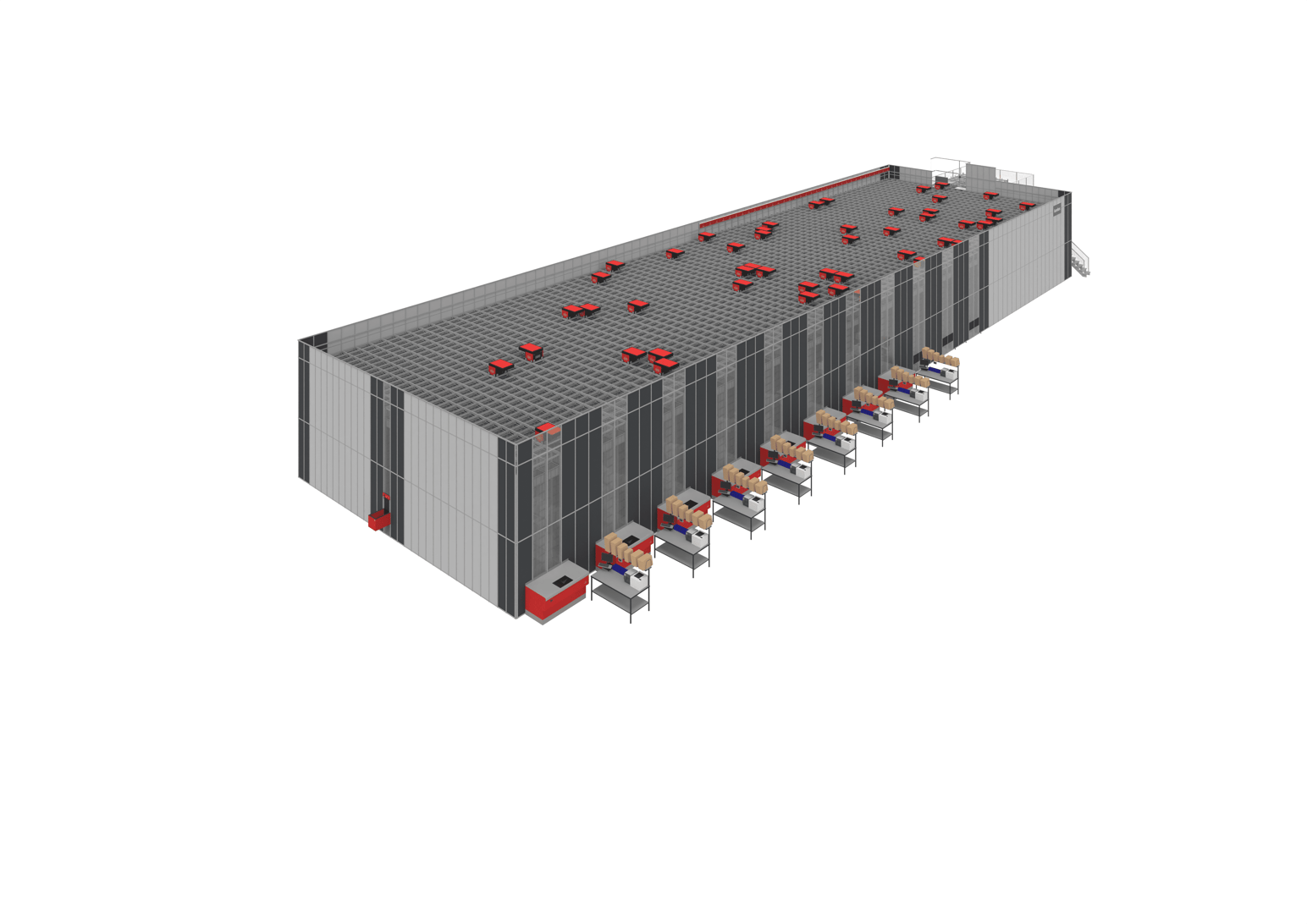
The new installation uses ten AutoStore robots and occupies approximately 600 square metres. Its stated handling capacity is up to 400 bins per hour, although that is a system specification rather than a published measurement of sustained daily productivity. The partners say the high-density layout requires approximately 70% less floor space than a comparable conventional warehouse arrangement. The precise comparison is not independently documented in the project announcement.
Kardex says an AutoStore project of this scale would typically require at least six months from contract signing to operational launch. The Kaufbeuren partners completed the process in 17 weeks by applying lessons from earlier installations and preparing warehouse processes and software interfaces in advance. That delivery time reflects the particular circumstances of this facility and should not be assumed achievable at every site.
Responsibilities were divided between the technology supplier and warehouse operator. MS Direct led project planning, integration of fulfilment processes and connections to its warehouse management and e-commerce platforms. Kardex designed and installed the AutoStore equipment, with retail customer Bergzeit’s inventory and service requirements defining the use case. Automation performance depends on both mechanical equipment and the processes directing work into the system.
In a high-density automated storage system, goods are held in bins within a compact grid rather than spread across conventional shelving aisles. Robots retrieve or reposition containers to make stock available for picking and other fulfilment tasks. The configuration can reduce walking and storage footprint, but order throughput still depends on how rapidly items are received, picked, packed and despatched. The quoted bin-handling rate should therefore not be interpreted as 400 completed customer orders per hour.
The Kaufbeuren site is designed for fashion and outdoor retail fulfilment, which involves a substantial number of product variants, including differences in size and colour. Dense storage can be useful for inventories with numerous stock-keeping units, provided the software maintains accurate stock locations and directs retrieval appropriately. Its order flow will therefore depend on the warehouse management system linking goods receipt and bin retrieval to picking, packing and despatch, as well as the number of robots available for retrieval.
Installation took place alongside existing fulfilment operations, so changes to equipment and stock handling had to accommodate live customer orders. Retrofitting automation into an active building requires work to be planned around inventory movements, staff access, safety and service commitments. Changes to stock locations and picking sequences also need to be reflected accurately in warehouse systems. An installation that is mechanically complete but poorly integrated could disrupt customer orders just as readily as it could accelerate them.
MS Direct has presented readiness of processes, interfaces and its operational team as the main reasons it could introduce the new equipment quickly. The company previously implemented automation in Switzerland, allowing it to apply an established approach to testing, commissioning and software connections. For other operators, that experience suggests a project timetable should be judged by the state of its process design and systems integration, not by equipment installation time in isolation.
Bergzeit expects the installation to support service performance during seasonal peaks, when a larger proportion of orders may need to be processed within a limited period. The partners have not published an independently measured reduction in order cycle time or a before-and-after labour productivity comparison. The announcement does, however, identify new technical and system-support jobs in Kaufbeuren, demonstrating that automation can change the composition of warehouse work as well as the handling method.
The system has been designed for modular expansion while the site continues operating. That gives MS Direct a potential route to increase storage or handling capacity without planning a complete replacement, subject to available space and the demands placed on surrounding processes. Sustained throughput, picking accuracy and results during peak trading will provide evidence of how the installation performs beyond its initial commissioning, while any modular expansion will depend on space and surrounding processes. Those measures will show whether the rapid 17-week commissioning delivers equally durable gains in day-to-day fulfilment.