IN Brief:
- Nevoya and Meta agreed a multiyear environmental-attribute purchase supporting 25 Class 8 battery-electric trucks on the California–Arizona I-10 corridor.
- The trucks are expected to begin service in 2027 and cover approximately four million freight miles annually, according to Nevoya.
- Meta will purchase environmental attribute certificates, not exclusive haulage capacity, and the planned charging sites are intended to serve additional operators.
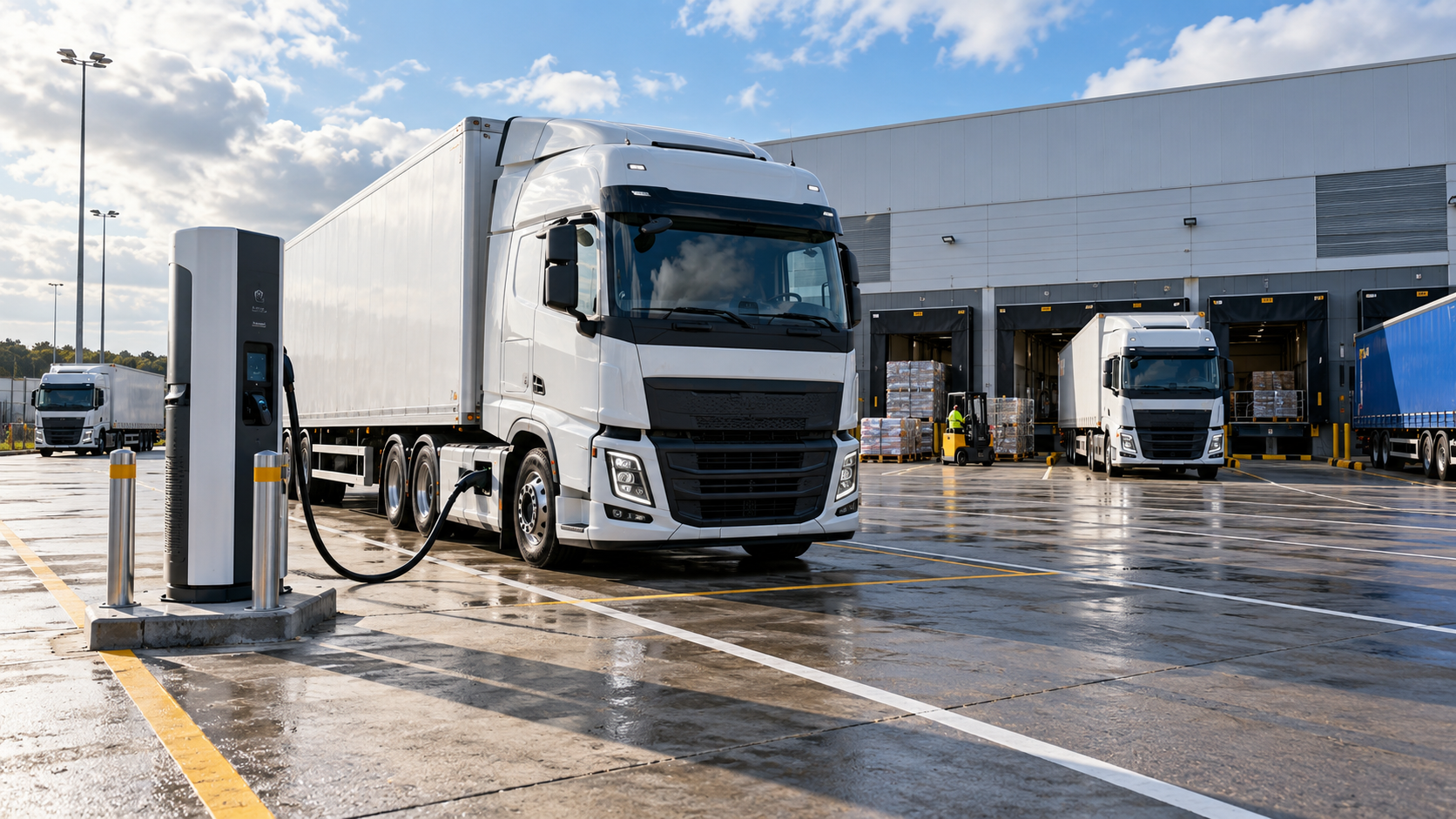
Electric freight carrier Nevoya plans to deploy 25 battery-electric Class 8 trucks between San Bernardino, California, and Phoenix, Arizona, under a multiyear environmental-attribute purchase agreement with Meta. The vehicles are expected to enter service in 2027 and collectively cover approximately four million freight miles a year, according to the carrier. The arrangement also supports new charging infrastructure along the Interstate 10 corridor, where freight movements connect southern California with inland distribution and industrial markets.
Meta will purchase environmental attribute certificates (EACs) representing characteristics of the electric freight service, rather than reserving the trucks to carry its own loads. That arrangement provides a separate revenue mechanism alongside ordinary haulage contracts: vehicles can transport freight for corridor customers while a certificate buyer acquires the associated environmental attributes under agreed accounting terms. Nevoya has disclosed neither the EAC price nor the overall agreement value, and has not identified customers committed to the forecast freight mileage.
The proposed route links San Bernardino’s established warehousing and distribution market with Phoenix, passing through a corridor used by heavy freight traffic and industrial construction supply chains. Nevoya identifies the movement of materials for data centre construction as one relevant market, although the agreement does not identify a dedicated programme of Meta shipments. The planned trucks may serve different shippers, and their allocation to individual customers has not been published. Meta’s role is as purchaser of the environmental attributes rather than named consignee for the projected four million miles.
Environmental certificates require a documented relationship to the underlying transport activity. Recording that a truck has entered service is insufficient to establish the quantity of emissions benefits represented by an EAC, and the same claimed attributes should not be assigned to multiple purchasers. Nevoya has not published the certificate calculation methodology, independent verification arrangements, or a quantified emissions reduction for this corridor. Any estimate attributed to Meta would therefore exceed the evidence disclosed with the agreement.
Nevoya expects the proposed charging infrastructure to serve freight operators beyond its own 25 vehicles. The company says electricity used by the fleet will be matched entirely with renewable energy certificates. Those electricity certificates are distinct from the trucking environmental attributes Meta will purchase, and matching generation certificates does not establish that every charging session uses renewable output at the same moment. Nevoya has not disclosed its temporal or geographical matching arrangements.
Class 8 battery-electric vehicles eliminate tailpipe exhaust during operation, but their commercial suitability depends on route length, payload, charging opportunities, and vehicle availability. A freight schedule linking San Bernardino and Phoenix must account for loading appointments, driving time, the energy used in different operating conditions, and the time needed to replenish the battery. Heavy loads, elevated temperatures, and use of vehicle auxiliaries can affect energy consumption. Nevoya has not identified the truck model, usable battery capacity, payload limits, or charger ratings for the planned fleet.
Nevoya’s annual forecast of four million freight miles is a fleet-wide projection rather than an operating result. Achieving it will depend on dispatch patterns, the proportion of loaded and empty movements, charging access, and the availability of trucks during maintenance. The company has not disclosed vehicle-by-vehicle utilisation targets or the share of the forecast linked to committed freight contracts. Those data will be necessary to compare the planned service with diesel operations on the same corridor.
Truck-compatible charging locations must provide room for tractor-trailer access, safe manoeuvring, and sufficient charging power without disrupting freight schedules. Hauliers also need clarity over whether third-party drivers can reserve a charger, how payment will work, and who will maintain the equipment. Nevoya has not announced the number or exact locations of the new sites, their charger ratings, or access terms for operators outside its own fleet.
Meta previously joined other organisations in the Center for Green Market Activation’s environmental-attribute buying alliance, which supports a separate 63-truck Nevoya deployment between Houston and Dallas. The California–Arizona agreement is instead a standalone deal between Nevoya and Meta. The two initiatives have different purchasing arrangements and operating locations; they do not represent an 88-truck fleet contracted to move Meta cargo.
Longer commitments for environmental attributes can provide a carrier with additional revenue visibility when making capital decisions about vehicles and charging systems. Heavy-duty electric trucks and depot infrastructure require expenditure before the associated freight movements generate operating income. The agreement aims to support that investment process without requiring the certificate purchaser to control the trucks’ dispatch schedules. However, the parties have not disclosed whether the certificates are paid for before operations begin, delivered over time, or subject to minimum verified mileage.
Meta relates its certificate purchase to indirect emissions from activities in its value chain, including logistics and data centre construction materials. How such certificates are reported depends on the applicable accounting framework and the supporting evidence. No independently verified emissions baseline, emissions intensity per mile, or total tonnes of carbon dioxide equivalent avoided has been disclosed for the I-10 programme. A claim about tailpipe emissions from an electric vehicle cannot be substituted for a full life-cycle assessment of the service.
Nevoya expects the trucks to begin service in 2027, alongside charging infrastructure intended to remain accessible to other commercial carriers. Commissioning dates, verified freight mileage, charger availability, and the terms on which other operators can use the sites will establish how far the announced corridor progresses from its current contractual stage.