IN Brief:
- Wasaline, OnRail, Kvarken Ports Umeå, and the Port of Trondheim are developing an east–west freight corridor linking Finland, Sweden, and Norway.
- Electrification of the Meråker Line enables electric traction between the Swedish network and Trondheim, with proposed trains carrying containers and trailers.
- The rail service has not launched, and its frequency, train capacity, and start date depend on further customer and logistics partner commitments.
Wasaline, railway operator OnRail, Kvarken Ports Umeå, and the Port of Trondheim are developing an east–west freight corridor linking Finland with Norway’s Atlantic coast through Sweden. The proposed route would connect the existing Vaasa–Umeå ferry to a new electrified freight train service between Umeå and Trondheim, followed by onward maritime connections. The partners announced the project on 11 November 2026, but have not yet committed to a start date, train frequency, or carrying capacity.
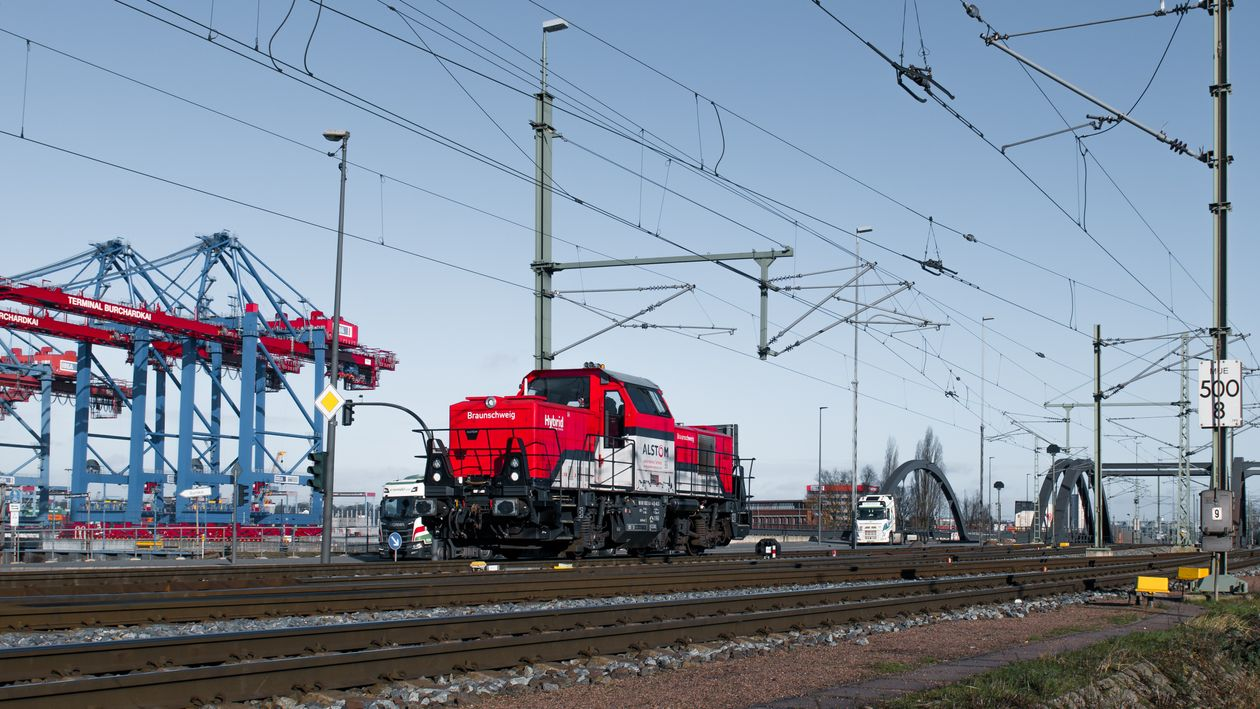
The rail proposal follows completion of electrification on the Meråker Line in Norway, which connects Trondheim towards the Swedish border at Storlien. The connecting Swedish railway infrastructure is already electrified. Electric locomotives could therefore operate the proposed cross-border leg without the diesel traction previously needed for part of the route. This removes one significant infrastructure constraint, although timetable paths, terminal handling, rolling stock, and committed freight volumes still have to be organised.
The planned trains would carry containers, semi-trailers, and other industrial cargo. OnRail intends to work with cargo owners and forwarders to establish a service suited to actual demand, rather than simply adding scheduled trains before a viable traffic base has been confirmed. The partners have not disclosed a train length, locomotive requirement, payload limit, or terminal throughput target. Without train and terminal capacities, the route’s usable freight volume cannot be inferred from the completion of electrification alone.
At the eastern end, the Vaasa–Umeå crossing is already operated by Wasaline’s hybrid passenger and freight vessel Aurora Botnia. The ferry links western Finland to the Swedish coast, where cargo could transfer to the proposed rail service. The ferry is a hybrid vessel, so its energy use and emissions must be assessed separately from the electric railway. Although the partners describe an emission-free corridor, the evidence establishes zero direct emissions from electric traction on the rail leg, not verified zero emissions across the ferry, rail, port handling, and onward sea movements.
Moving freight from a ferry to a train also involves practical choices about the unit carried. Containers can be lifted between road, ship, and rail equipment when suitable terminals are available, while semi-trailers require wagon and terminal arrangements compatible with their size and lifting characteristics. Industrial cargo may need additional securing or handling measures according to its weight and dimensions. The project has not specified which loading systems, wagon types, or cargo configurations will be used, so those decisions remain part of the implementation work.
The partners want to give northern Scandinavian imports and exports an east–west alternative to established north–south transport flows through Baltic and Kattegat gateways. Freight moving west across the peninsula could reach Trondheim and connect to shipping serving destinations such as the United Kingdom and Iceland. Any journey-time or cost advantage will depend on departure frequency, transhipment time, available onward sailings, and the origin and destination of individual consignments. No comparative commercial transit-time schedule has yet been published.
The proposed westbound link could diversify the maritime gateways available for Scandinavian industrial freight. Disruption at one coastal gateway or on one shipping corridor may leave cargo with fewer alternatives if all available services depend on the same infrastructure. The project partners have highlighted concern about possible future restrictions in the Baltic Sea, although that is a risk scenario rather than evidence of a present closure. A functioning alternative requires contracted service, equipment, and trained staff in place before disruption occurs.
The completed electrification removes a traction constraint, but train paths and terminal capacity still need to be secured. A cross-border train has to be timetabled alongside passenger traffic and existing goods services, with traction, crew, and network access coordinated between railway systems. Terminals must be able to receive trains, transfer cargo, and maintain safe movements between quay and rail. The partners have not described a signed infrastructure-access agreement or announced specific terminal modifications, leaving the service’s operational design to be worked through with customers.
OnRail also plans a separate freight service between Trondheim and Oslo beginning on 1 February 2027. The partners say that connection could provide an additional routing option for freight arriving from Finland or Sweden, potentially adding access to the Norwegian capital without requiring every movement to continue by sea. The February launch date concerns the Trondheim–Oslo operation, not the still-proposed Umeå–Trondheim train. Treating the two services as though they were already a through route would overstate the maturity of the project.
Wasaline already operates the ferry route and its existing port interfaces. The proposed Umeå–Trondheim train still needs an agreed schedule, commercial commitments, and reliable transfer arrangements. A shipper deciding whether to divert cargo will assess the consistency of departures, any intermediate handling, documentation requirements, cut-off times, and the reliability of onward links. The new corridor would have to satisfy those operational conditions as well as any emissions objectives attributed to it.
The partners are discussing future frequency and capacity with potential customers, and these discussions will determine whether a regular service can be justified. They have not reported a first departure date, minimum contracted volume, or capital investment for dedicated freight-handling assets. The 11 November agreement establishes planning cooperation around an available electrified route; it does not establish that a train or end-to-end freight service has begun operating.
A start date, committed cargo volumes, and confirmed handling arrangements between the ferry, Umeå rail terminal, and Port of Trondheim are still outstanding. Those conditions will determine whether the planned corridor offers usable capacity for industrial goods bound for Atlantic markets.