IN Brief:
- Numina Group has become Rapyuta Robotics’ first US systems integration partner for its modular goods-to-person automated storage and retrieval systems.
- The integration links Rapyuta’s robotic tote storage and picking stations with Numina’s RDS warehouse execution and control platform.
- Several selected warehouse projects are scheduled for 2027, although their locations, capacities, and contractual performance levels have not been disclosed.
Warehouse systems integrator Numina Group has become the first US integration partner for Rapyuta Robotics’ modular goods-to-person automated storage and retrieval system, with several selected warehouse projects expected to enter service during 2027. The arrangement combines Rapyuta’s robotic tote-handling equipment and picking stations with Numina’s Real-time Distribution Software, or RDS, platform for warehouse execution and equipment control. It brings a new integration route to the US market rather than marking the immediate opening of a completed distribution centre.
The companies describe the target applications as warehouses handling mixed business-to-business and consumer orders, including electronics, computer accessories, industrial parts, and other smaller products. Numina identifies facilities with approximately 3,500 to 15,000 stock-keeping units as a potential fit for the goods-to-person system. That range is a supplier description of the intended application, not a universal capacity limit: throughput also depends on the number of storage bins, their contents, workstations, and the mix of orders released into the system.
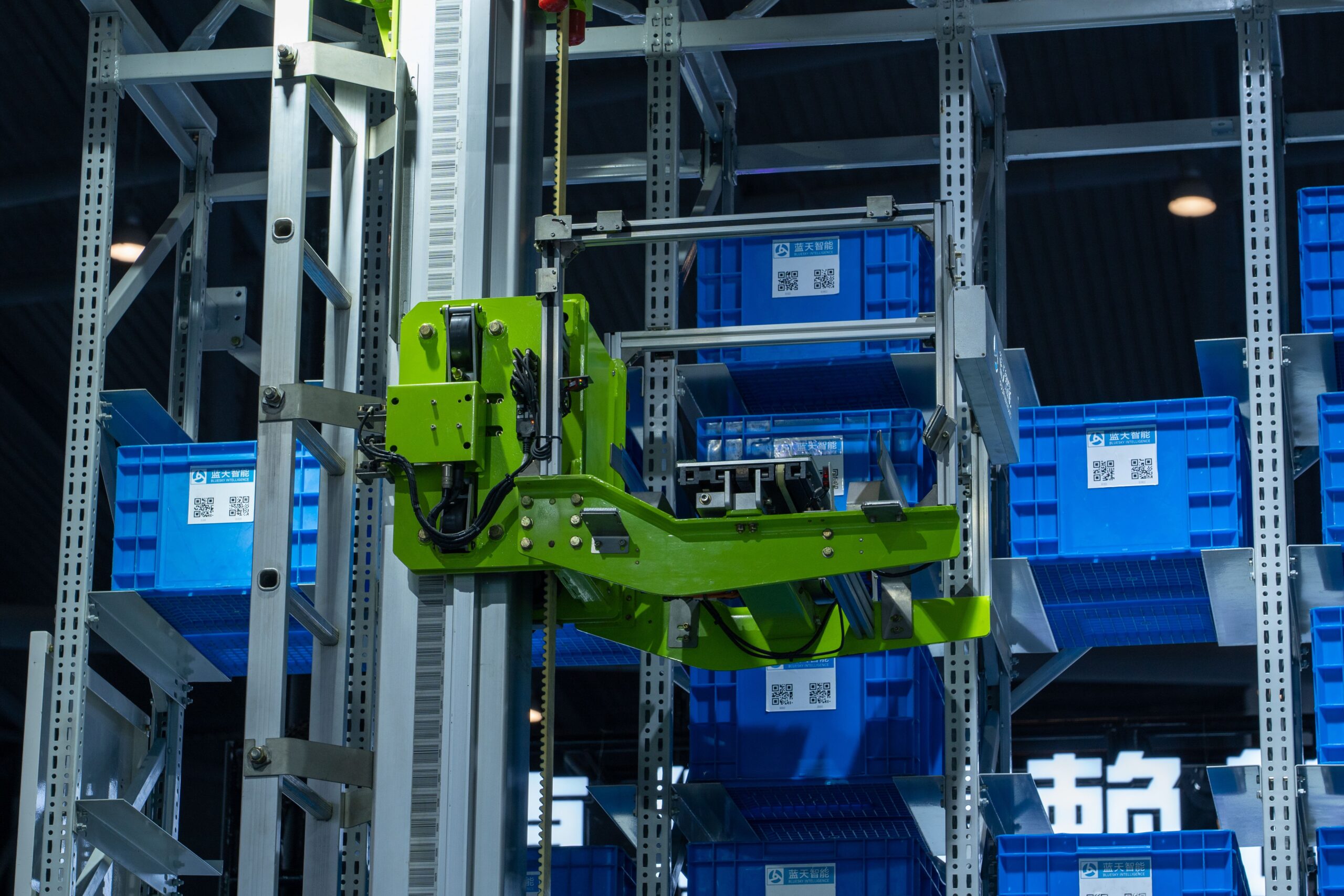
Goods-to-person storage moves inventory to a staffed picking position instead of sending staff through storage aisles to collect each line. Robotic equipment retrieves totes from the storage structure, delivers them to a workstation, and returns them after the requested goods have been picked. Order accuracy still depends on identifying the presented stock, confirming the quantity removed, and updating the inventory record; reducing walking distance does not remove those checks.
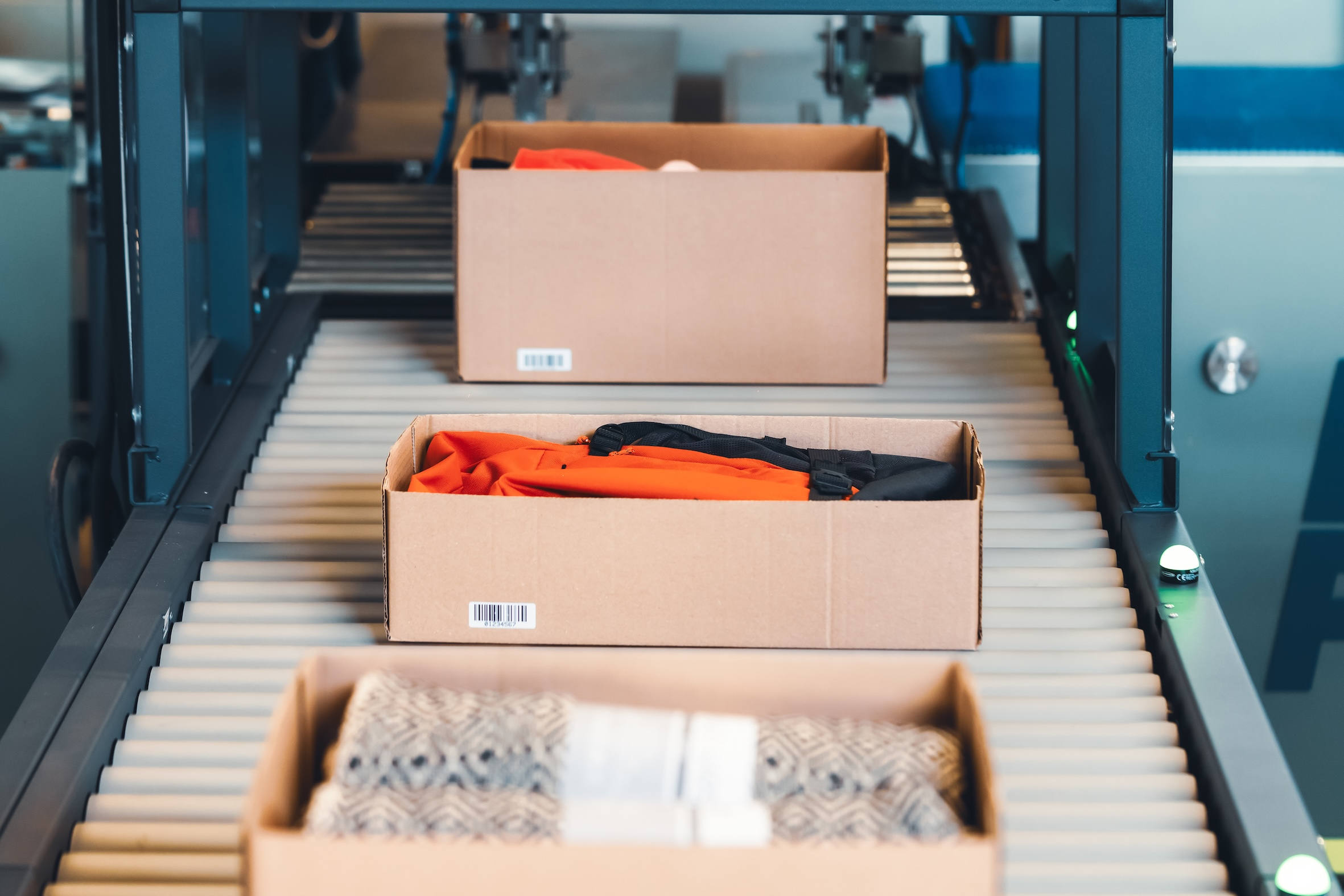
Rapyuta’s design uses a modular storage structure and coordinated robotic movements, with integrated order buffering and workstations capable of presenting multiple totes. Its intended operating model reduces some of the fixed transfer equipment otherwise needed between storage and picking. This does not make every installation conveyor-free: the broader warehouse may still require conveyors, label applicators, sortation, or other handling systems to transfer completed orders through packing and dispatch. The appropriate equipment mix is part of the integrator’s design decision.
Numina’s RDS warehouse execution and control platform is intended to coordinate the robotic system with existing enterprise resource planning and warehouse management applications. A warehouse management system typically maintains inventory and order records, while execution and controls software allocates work, monitors machine status, and sequences the physical tasks required to complete orders. The proposed integration requires reliable exchanges of tote identity, item availability, workstation capacity, work priority, and exception status.
The RDS platform already supports workflows involving voice-directed picking, pick-to-light, autonomous mobile robots, sortation, and shipping. Adding Rapyuta’s goods-to-person equipment creates another process for that orchestration layer to manage. A single customer order could contain tote-friendly items stored in the robotic system and larger products handled through conventional case or pallet picking. The different streams have to be consolidated before packing, so a faster picking station will not improve overall fulfilment throughput if the downstream order is still waiting for missing lines.
Rapyuta says the robotic system can buffer picked orders and release stored totes in the sequence needed for shipping. This would allow picking to continue while downstream packing is busy, provided the available storage space and order associations remain accurate. The companies have not provided a measured extension of the available picking window, a site-level throughput result, or a comparison of staffing requirements with a conventional warehouse.
The companies intend to apply the combined system to both new-build warehouses and existing buildings. Retrofit design must account for load-bearing floors, storage layout, fire protection, safe maintenance access, and interfaces with packing or sortation equipment already on site. Robot storage density and nominal picking capacity cannot determine the layout on their own. Neither partner has named the first US customer facilities or identified the site modifications planned for their 2027 projects.
Numina says it will evaluate the Rapyuta system alongside conventional automation and autonomous mobile robot picking before recommending a technology to a customer. That comparison needs to account for item size, order profile, storage density, replenishment frequency, and the proportion of cases that cannot use standardised totes. A warehouse primarily moving full pallets presents a different handling problem from one dispatching many small items; neither the presence of robotics nor a high SKU count alone demonstrates that goods-to-person storage is the lowest-cost option.
During commissioning, the integration will have to manage congestion between robots, stock discrepancies, workstation stoppages, and incomplete orders. A warehouse control system must identify when an expected tote cannot be retrieved, retain the related order information, and route work around equipment taken out of service. The suppliers describe a resilient architecture but have not disclosed a system availability guarantee, fault recovery benchmark, or validated operating results for the combined configuration.
Rapyuta will supply its robotic technology, while Numina will act as the US systems integrator and incorporate the equipment into its broader warehouse design and control offering. The company already has experience coordinating different automation systems, but the announcement does not specify a contract value, a number of robots, or a total US installation programme. Several projects have been selected for implementation in 2027; the number of customer facilities and their individual equipment configurations remain confidential.
Selected US warehouse projects are scheduled to enter service in 2027, but Numina and Rapyuta have not disclosed their number, customer identities, robot counts, or project values. Their first operating results will establish achievable picking rates, order accuracy, equipment availability, and how effectively tote-based inventory can be combined with larger goods handled through other warehouse processes.