IN Brief:
- Humanoid has selected Bosch as a manufacturing partner for the HMND 01 robot.
- The agreement follows a logistics proof of concept in a Bosch operational environment.
- The project brings humanoid robotics closer to scaled production for logistics and manufacturing tasks.
Humanoid has selected Bosch as a manufacturing partner for its HMND 01 humanoid robot, moving the platform from proof-of-concept work towards scaled industrial production.
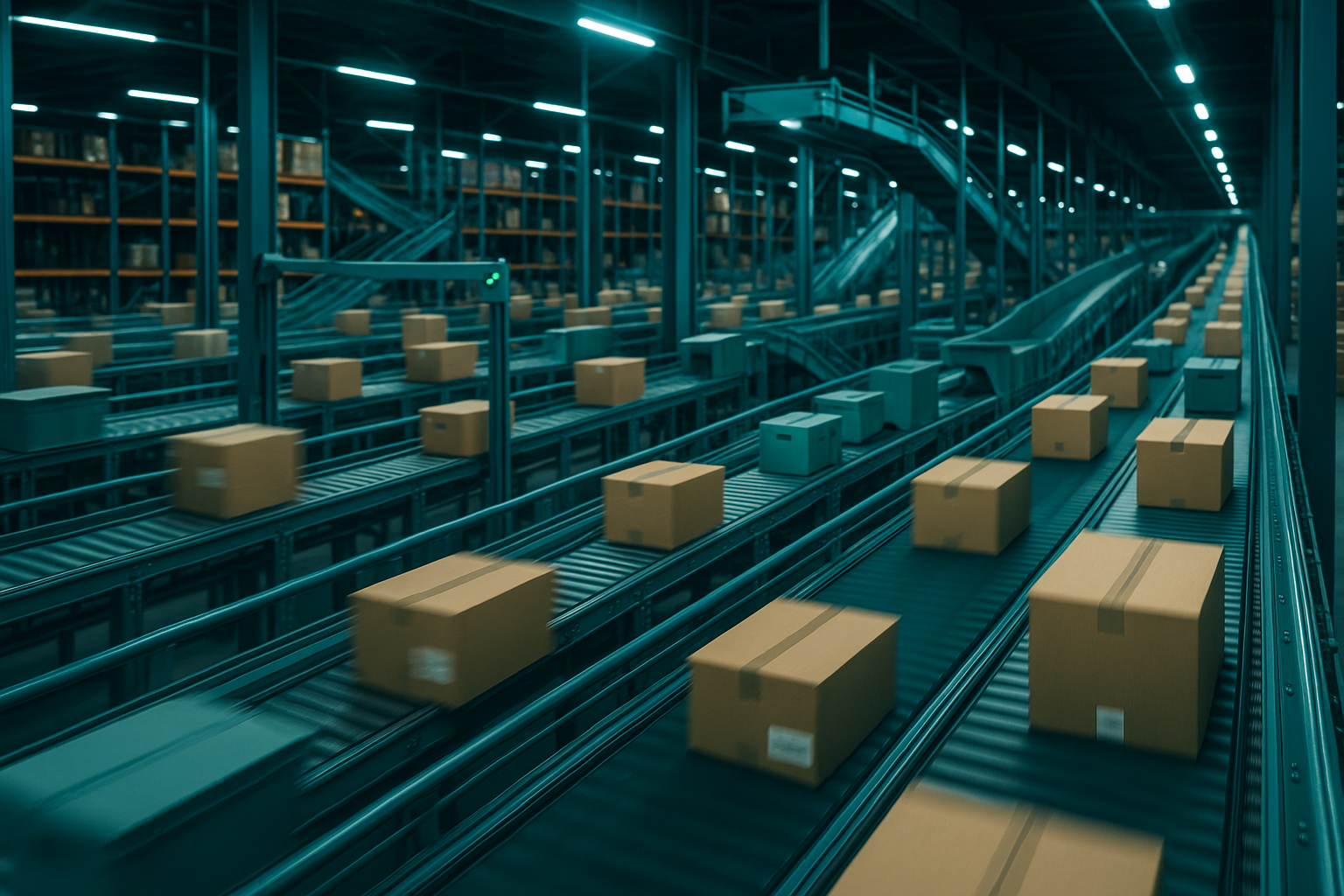
The agreement follows a joint trial carried out in March 2026 at Bosch’s logistics environment in Bühl, Germany. During the proof of concept, the HMND 01 moved boxes from a conveyor to a trolley and handled five different box sizes across multiple footprints, heights, and weights.
The robot uses Humanoid’s KinetIQ artificial intelligence framework and is being developed for use in logistics and manufacturing environments. Bosch will support the programme through contract manufacturing, production planning, design-for-excellence work, supply chain development, and cost optimisation.
Founded in 2024, Humanoid has offices in London, Boston, and Vancouver, with a team of more than 200 engineers and researchers. Its HMND 01 platform is being positioned for repetitive or physically demanding industrial tasks where conventional automation may be difficult to justify or install.
Humanoid robotics has attracted strong interest because many warehouses and factories still rely on manual handling in environments designed around human movement. Workstations, conveyors, trolleys, shelves, and packaging flows often assume a human form factor, which gives humanoid systems a potential route into existing sites without the same level of infrastructure change required by some fixed automation.
The manufacturing partnership with Bosch addresses one of the harder stages in robotics development. A controlled demonstration can show task capability, but production readiness depends on manufacturability, component sourcing, cost discipline, reliability, serviceability, and safety. Those factors determine whether a robot can move from pilot conditions into industrial fleets.
Contract manufacturing expertise can help reduce complexity before production volumes rise. Design-for-excellence work is particularly important for young robotics companies, because small choices in component layout, service access, assembly process, and material selection can have a large effect on cost and uptime.
Logistics is becoming one of the most active test environments for humanoid robots because the sector still contains many variable handling tasks. Case movement, tote handling, replenishment, loading support, and mixed SKU operations can be awkward for fixed systems where volumes are uncertain or workflows change by customer.
Competition will be tough. Humanoid robots must prove their value against autonomous mobile robots, robotic arms, conveyors, pallet shuttles, automated storage systems, and conventional materials handling equipment. Many of those technologies already have clearer payback models, established safety cases, and proven integration routes.
Even so, robotics investment across logistics and manufacturing is widening. Exotec’s warehouse automation project for MUSINSA and OAL’s food robotics rollout both sit within the same broader move towards automated handling in environments that remain exposed to labour pressure and throughput volatility.
Warehouse and manufacturing operators are under pressure to improve labour productivity without rebuilding every facility around fixed automation. Higher wage costs, recruitment constraints, safety expectations, and seasonal demand swings are all increasing interest in systems that can be deployed within existing workflows.
Humanoid robotics remains at an early stage of industrial adoption, and scaled deployment will depend on reliability, safety certification, cost, software performance, and support infrastructure. Bosch’s role does not remove those hurdles, but it gives Humanoid a stronger route towards industrialised production.
If the HMND 01 reaches commercial scale, its value will depend on flexibility rather than novelty. A platform able to support varied handling tasks across changing shifts, products, and workflows could become a useful labour-support tool in sites where fixed automation is either too rigid or too capital-intensive.