IN Brief:
- Tritax Big Box has completed Amazon's one million sq ft cross-dock facility at Symmetry Park, Kettering.
- The 20-year lease secures £9.8m in annual rent with five-yearly index-linked reviews.
- Three committed buildings totalling 1.6 million sq ft have now been delivered across the 136-acre park.
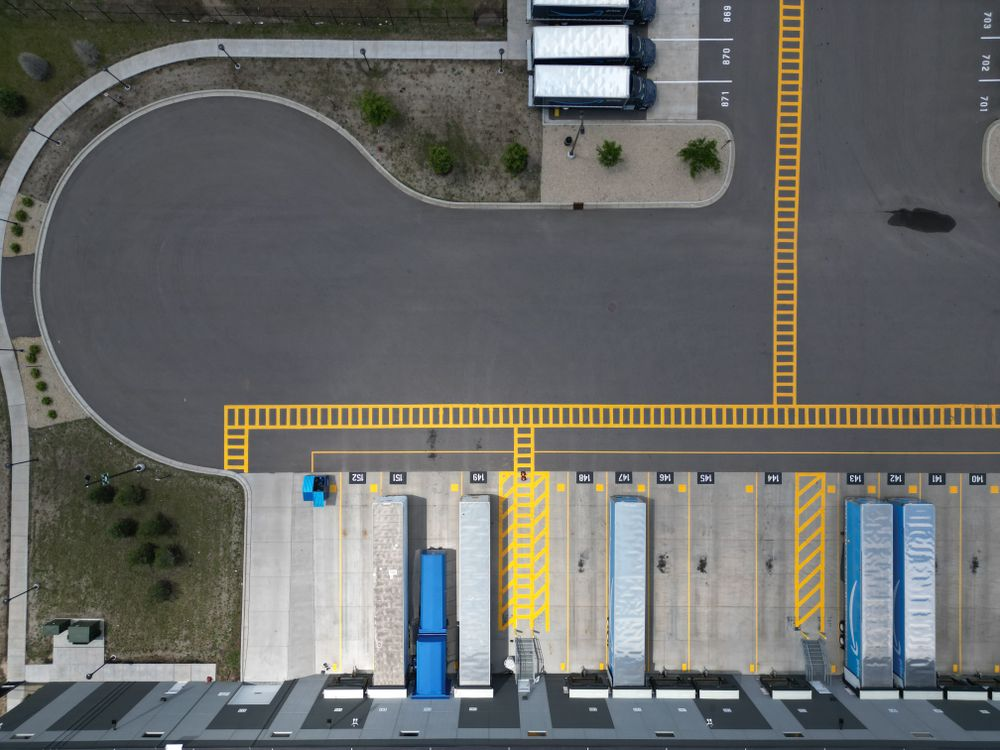
Tritax Big Box REIT has reached practical completion on Amazon’s one million sq ft logistics facility at Symmetry Park, Kettering, bringing the retailer’s 20-year lease into effect and completing all three committed buildings at the 136-acre development.
The cross-dock warehouse has been delivered through Tritax Big Box’s development programme and secures £9.8m of annual rental income. The lease includes five-yearly index-linked rent reviews, while the developer says the project has achieved a yield on cost at the upper end of its 6% to 8% guidance range.
Completion takes the three committed buildings at Symmetry Park to a combined 1.6 million sq ft. Amazon joins Iron Mountain, which occupies a 0.3 million sq ft unit, and Greggs, which operates a similarly sized national distribution centre at the scheme.
The Amazon building has been delivered to Grade A specification, with an EPC A rating, BREEAM Excellent certification and Net Zero Carbon in Construction standards. Tritax expects the facility to support around 2,000 jobs once fully operational.
Symmetry Park sits beside the A14 at Junction 9, giving the development direct access to an east-west freight corridor linking the Midlands with the east coast ports and wider motorway network. Outline planning covers up to 2.3 million sq ft of logistics space, leaving additional development capacity beyond the three buildings already delivered.
The scale of Amazon’s building reflects the continuing role of very large distribution centres even as ecommerce networks also add smaller urban and sub-regional facilities. Large hubs provide enough floor area to consolidate substantial inbound volumes, hold stock and reorganise goods for movement into more local parts of a fulfilment network.
Cross-dock operations place particular emphasis on throughput. Inventory can enter through one side of the building and move through sorting, consolidation and despatch processes without spending extended periods in conventional storage. Transport schedules, dock availability and internal material flow consequently have a direct effect on how much useful capacity the building can provide.
Buildings of this size are also becoming more dependent on their infrastructure specification. Automation, data systems, electric vehicle charging and other electrically intensive equipment can increase power requirements well beyond those of a conventional storage operation, making electrical capacity part of the location decision rather than a secondary utility issue.
Tritax’s occupier research earlier this year found continued demand for larger warehouse footprints, alongside greater emphasis on power availability, automation and fleet electrification. The Kettering development places those requirements within a long-term pre-let rather than speculative construction.
The 20-year lease creates a planning horizon much longer than the lifecycle of many warehouse technologies. Automation platforms, vehicle fleets, picking processes and ecommerce order profiles are likely to change considerably during that period, increasing the value of buildings that can accommodate new equipment and operating layouts without substantial structural alteration.
A pre-let also changes the development risk. Constructing a one million sq ft warehouse without a committed occupier would expose the developer to substantial letting risk and carrying costs, while an agreed tenant allows the building specification to be developed around a known operating requirement.
Tritax’s announcement converts that development exposure into contracted rental income. The company had already identified the Kettering rent among income expected to commence during the second half of 2026; practical completion now marks the point at which the lease begins rather than another forecast milestone.
The warehouse itself still has to move through Amazon’s operating ramp-up. Practical completion of the property does not mean every material handling system, IT connection, recruitment programme and distribution process is immediately operating at full design capacity.
Large fulfilment buildings typically require equipment commissioning, inventory build and process stabilisation before their theoretical capacity becomes routine throughput. Those steps are particularly demanding at cross-dock sites, where inbound and outbound schedules have to remain closely aligned to prevent congestion moving from one side of the building to the other.
Symmetry Park has now delivered the three buildings committed so far, shifting attention from construction towards utilisation. For the Amazon facility, performance will be measured in the less visible operating figures behind the million-square-foot headline: dock turns, inventory flow, transport reliability and the amount of productive throughput generated by the space.