IN Brief:
- Amazon Now will expand from London into Manchester and Birmingham.
- The company plans to double its UK micro-fulfilment network from 10 sites.
- Same-day fresh grocery ordering is being added in selected London delivery areas.
Amazon is expanding its UK rapid grocery fulfilment model through Amazon Now, same-day fresh grocery ordering, and additional sub-same-day delivery locations.
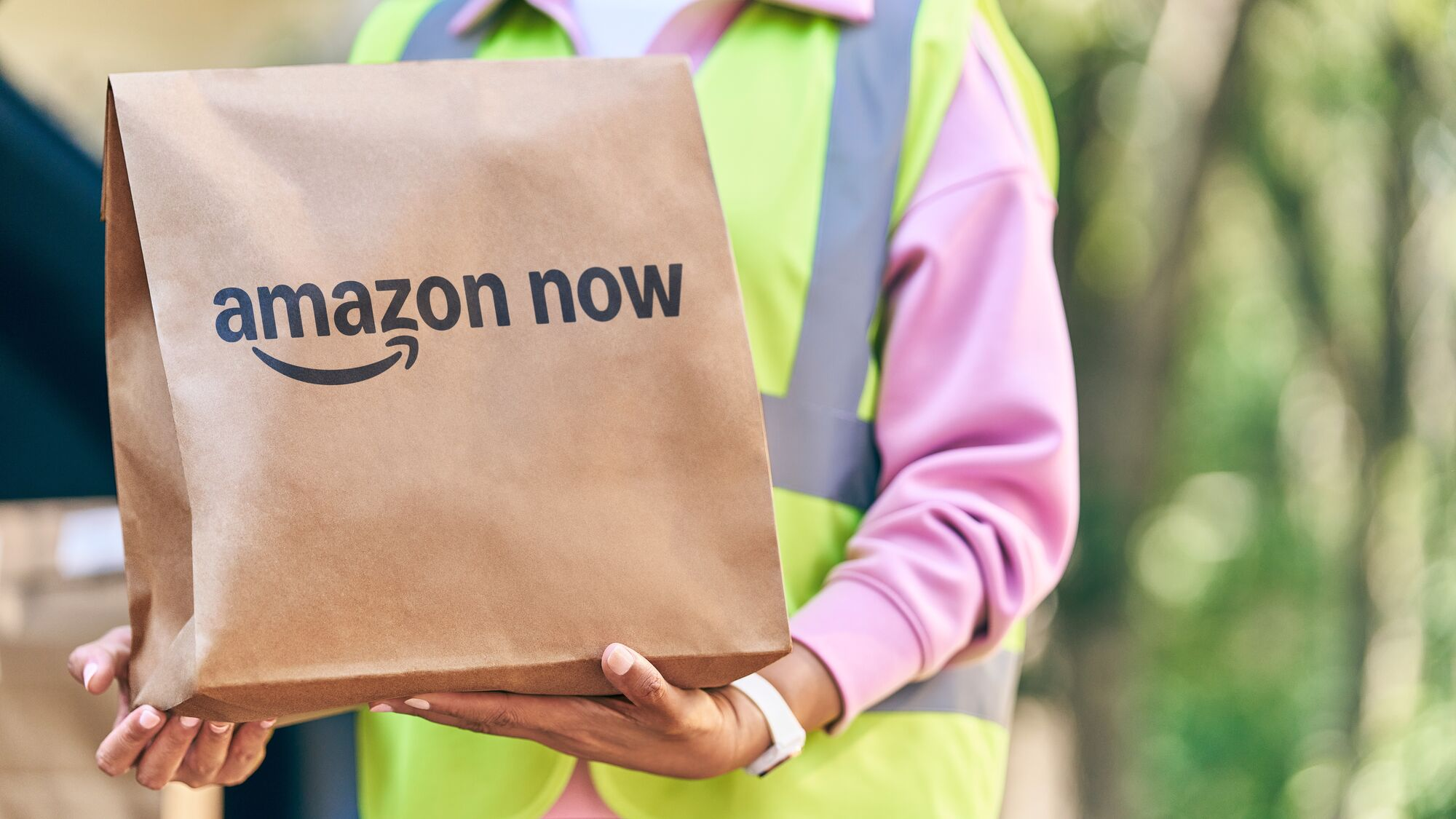
Amazon Now offers thousands of grocery and household essentials for delivery in around 30 minutes or less. The service is already available in parts of London and will expand to Manchester and Birmingham later this year. Amazon also plans to double its UK micro-fulfilment network from 10 sites.
Fresh groceries are being added to same-day Amazon orders in selected parts of Central and East London. Customers will be able to combine fresh produce, meat, dairy, frozen foods, and other products in a single basket for delivery within hours. Further expansion is planned after the initial rollout.
Across Europe, Amazon is also growing its sub-same-day delivery network, with more than 25 locations planned this year. The UK programme includes Coventry, while Germany will gain a site in Nürnberg. These locations combine storage, fulfilment, and delivery activity close to areas of demand.
Rapid grocery fulfilment requires a different operating model from standard parcel fulfilment. Inventory has to sit much closer to customers, picking has to be rapid, cold-chain handling has to be controlled, and last-mile routes must support short delivery windows without destroying delivery economics. The model works best where order density is high enough to keep pickers, riders, drivers, and micro-fulfilment stock moving efficiently.
Grocery is especially difficult because product types do not behave alike. Ambient goods, chilled items, frozen food, fresh produce, and general merchandise each require different handling conditions, but they may need to arrive in a single customer order. That puts pressure on inventory accuracy, picking sequence, temperature control, staging, and handover to the final-mile network.
The same competitive pressure is already reshaping UK grocery ecommerce. Asda and Ocado’s ecommerce overhaul will bring Ocado Smart Platform into Asda’s online grocery operations from 2027, covering stores, dark stores, webshop activity, in-store fulfilment, aggregator orders, and last-mile planning. Amazon’s rollout adds another layer to that shift, with speed and proximity becoming central parts of the retail logistics model.
Retail fulfilment is also becoming more hybrid. Stores, dark stores, parcel networks, lockers, micro-fulfilment centres, and same-day delivery nodes are being combined depending on product type, basket size, geography, and service promise. Physical retail has not disappeared; more stores now operate as customer-facing assets and fulfilment nodes at the same time.
Amazon brings advantages in software, marketplace scale, Prime membership, fulfilment experience, and delivery network design. Those advantages do not remove the cost challenge. Ultra-fast delivery can be expensive where basket values are low, order density is thin, or demand spikes require spare labour and transport capacity to sit idle until needed.
For grocery logistics, the operational constraint is often not the front-end promise but the process beneath it. A 30-minute delivery window depends on stock being available in the right location, picked correctly, packed safely, and handed to a driver or rider almost immediately. Poor substitutions, unavailable fresh items, or delayed handovers can erode the value of the speed promise quickly.
The expansion will increase pressure on grocers, quick-commerce operators, and retailers using aggregator networks. Even where sub-hour delivery remains a minority of grocery volume, it can raise expectations around top-up shopping, fresh essentials, and emergency household purchases. Competitors will not all match the same delivery window, but many will need to sharpen availability, order cut-off times, and local fulfilment design.
Amazon’s UK grocery move points to a retail supply chain built around density. The companies able to place stock close to demand, protect product condition, and run short lead-time fulfilment without excessive cost will be better placed as online grocery competition becomes faster, more local, and more operationally demanding.