IN Brief:
- Domino Printing Sciences and DHL Supply Chain have extended their established European warehousing and distribution agreement.
- The relationship covers fluids, spare parts and digital printers supplied to Domino subsidiaries and customers across Europe.
- The partners intend to modernise warehousing and improve supply chain visibility; no contract price or new completion date is disclosed.
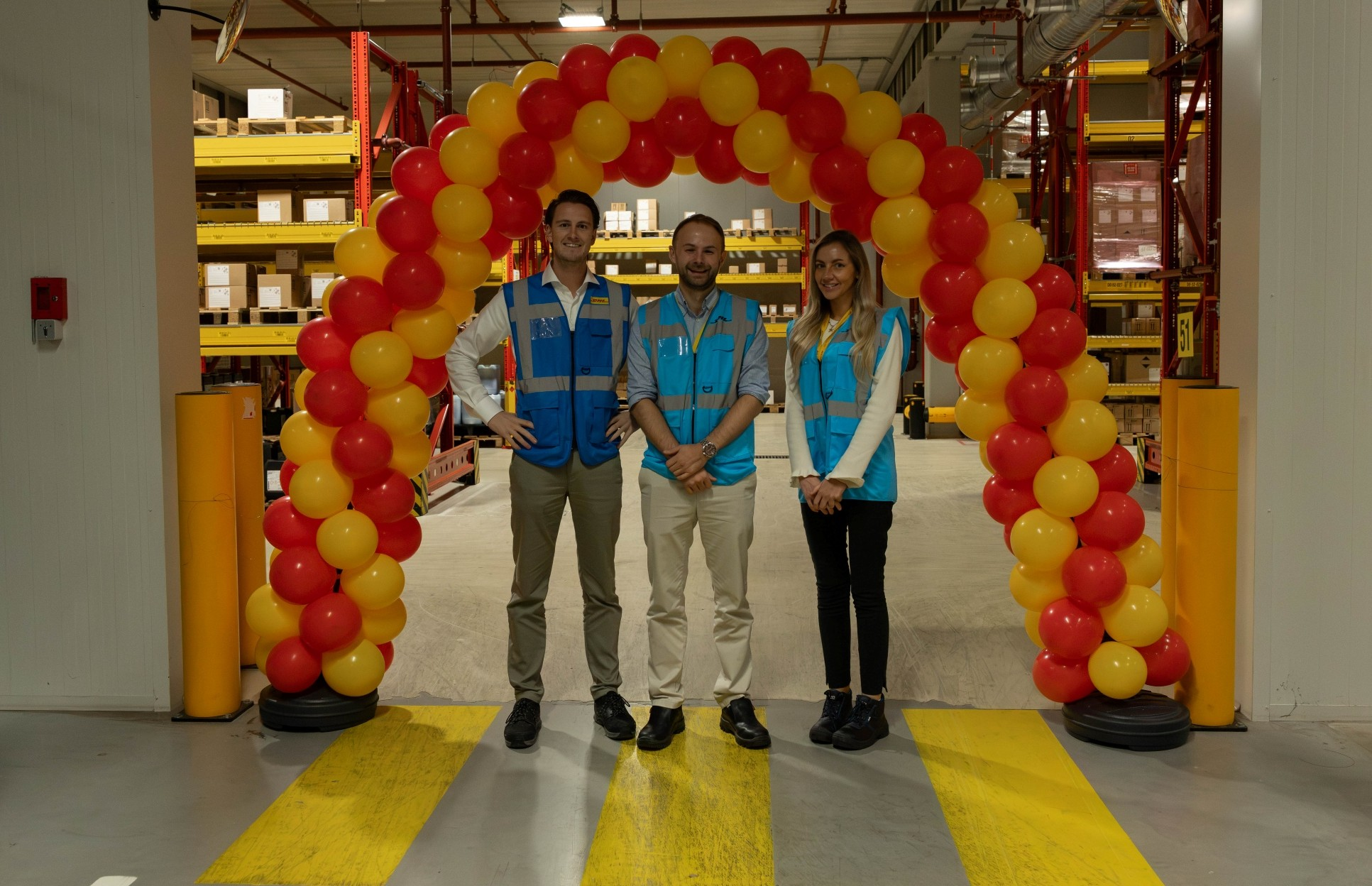
Domino Printing Sciences and DHL Supply Chain have renewed a European warehousing and distribution agreement after 25 years of collaboration. DHL stores, handles and distributes Domino’s printing fluids, spare parts and digital printing equipment for subsidiaries and customers across Europe. Representatives met at a DHL warehouse in the Netherlands to mark the anniversary, while the renewed multi-year contract provides for continued services and work on warehouse modernisation and supply chain visibility.
The partners’ long-running operation serves product flows with different order sizes and handling requirements. A replacement part required to restore a stopped coding line may need urgent picking and dispatch, while equipment orders can involve scheduled deliveries and higher-value handling. Printing fluids require accurate product identification, stock rotation and compliance with applicable storage rules; the announcement does not specify the individual fluid classifications, service levels or facilities covered by the renewed agreement.
Domino’s equipment is used for industrial coding and marking, and supply continuity can affect the availability of the machines installed at customer premises. A functioning coder or printer may depend on matched consumables, a serviceable component and the ability to arrange technical support when required. A distribution system consequently needs reliable product identification and replenishment, not simply available pallet positions. The companies say their existing cooperation has supported equipment uptime, although they have published no independent before-and-after availability measurement tied to this agreement.
Domino and DHL intend to improve visibility and integration across the broader European supply chain. The practical work could include reconciling order records with inventory positions, picking completion and shipment updates, although no particular warehouse management system, integration supplier or deployment date has been announced. The partners have stated operational objectives, not reported a completed software conversion or measured improvement in order accuracy.
Coordination is particularly important when products have different replenishment patterns. Replacement parts may be required infrequently but urgently, whereas consumables can move in recurrent quantities determined by customer production activity. Keeping stock in one regional hub can consolidate inventory, but may increase transport time to distant destinations unless service levels and local replenishment are properly designed. Multiple stocking points can shorten certain journeys while raising inventory and handling costs. The announcement gives no detailed network map from which to calculate these trade-offs for Domino.
The two companies credit their established distribution arrangements with maintaining service through periods of global disruption. Their statement does not provide a comparison against alternative logistics providers or quantified on-time delivery and equipment-availability data. Continuity would depend on inventory accuracy, available labour, working transport connections and the ability to prioritise orders when capacity is constrained; the contract extension alone cannot establish that every disruption has been absorbed without delay.
Domino also attributes support for its sustainability ambitions to carbon-neutral warehousing solutions provided by DHL. Neither company has published the site boundaries, energy figures, emissions methodology or independent verification underpinning that description in this announcement. The claim should therefore be understood as the companies’ account of warehouse operations, not as evidence that printing-fluid manufacturing, outbound transport and the full European distribution chain have zero emissions.
Hollie Jackson, Domino’s Global Customer Operations Director, has linked the next phase to warehouse modernisation, better integration and opportunities to improve value for customers. Peter Korte, DHL Supply Chain’s Vice President for its Health Logistics business unit, has emphasised continuity of service and business operations. Their statements do not specify extra warehouses, guaranteed volume commitments or financial targets. They are indications of the cooperation’s intended direction rather than independently measured outcomes.
Warehouse and transport records have to link customer orders to specific consumables, compatible spare parts and the stock position from which each order can be dispatched. An inventory system that cannot distinguish similar items or synchronise reservations with picking may show nominal stock without meeting an urgent maintenance requirement. The proposed visibility work could address those interfaces, but the partners have not published a rollout plan or committed performance targets against which to test the changes.
The agreement’s price, exact renewal period, warehouse footprint and any changes to delivery service levels remain undisclosed. The stated next phase concerns modernisation and integration rather than an announced new distribution site or capital project. Subsequent system deployments, network changes and recorded service performance will be needed to establish what the new multi-year contract changes beyond maintaining the existing European logistics relationship.
Image courtesy of Domino Printing Sciences and DHL Supply Chain.