IN Brief:
- Gebhardt is modernising pallet conveyor and stacker crane systems for Zschimmer & Schwarz.
- The project covers a high-bay warehouse and additional conveyor systems across further facilities.
- The retrofit is being delivered in stages while the site continues operating.
Gebhardt is modernising pallet conveyor and stacker crane infrastructure at Zschimmer & Schwarz’s main site in Lahnstein, Germany, through a staged retrofit designed to keep intralogistics operations running during the upgrade.
The project covers replacement of the existing conveyor system across three levels and modernisation of seven pallet stacker cranes in a high-bay warehouse. Conveyor systems at two further facilities are also being replaced as part of the programme, with work phased to limit disruption to live production and distribution operations.
Zschimmer & Schwarz produces chemical specialities and auxiliaries, making internal logistics reliability central to manufacturing continuity. Pallet movement between production, storage, and dispatch must remain consistent because delays inside a high-bay system can quickly affect outbound service, plant scheduling, and customer delivery performance.
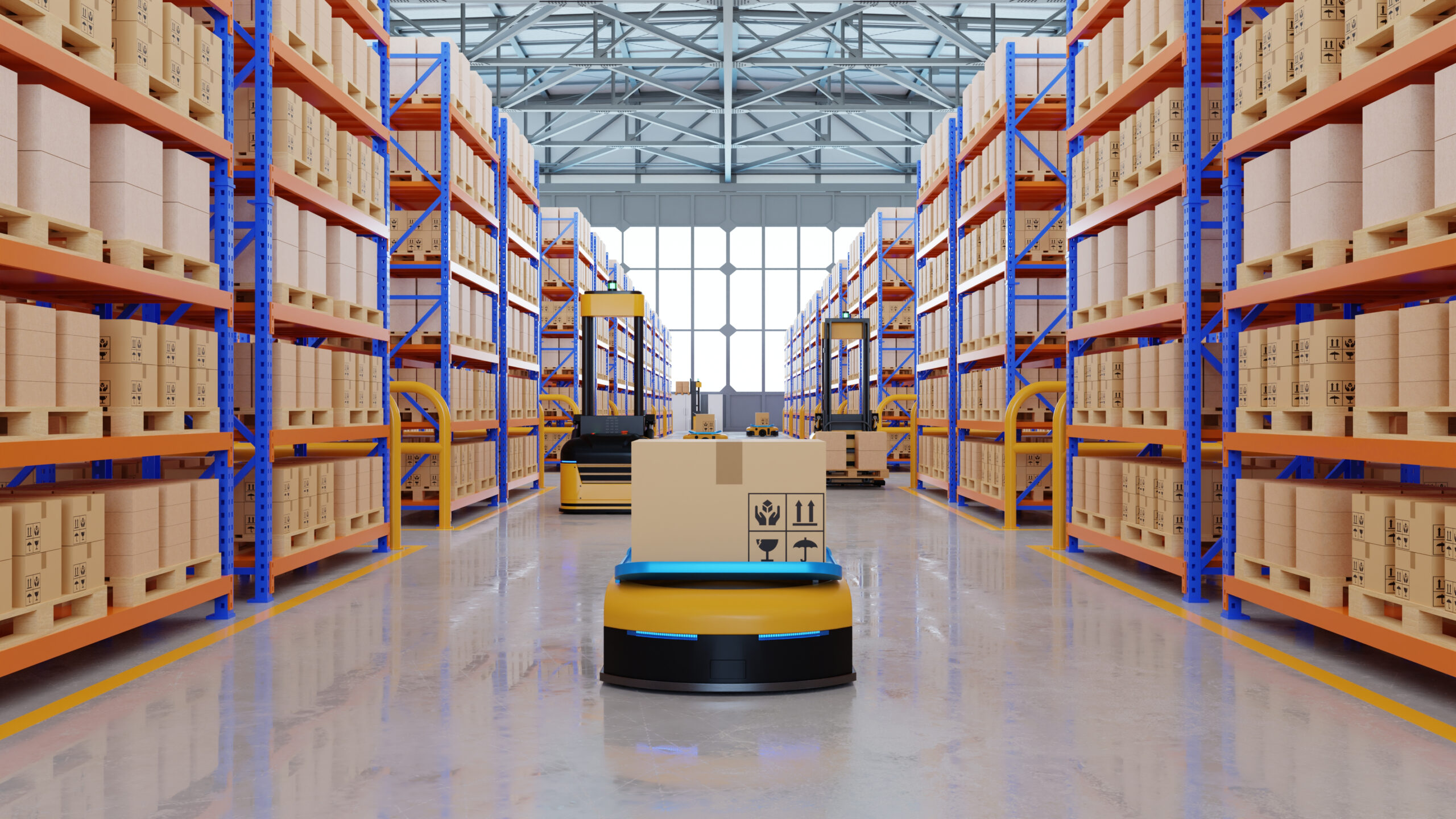
Modernising a live automated warehouse is a more difficult engineering task than installing new equipment in an empty building. Conveyor replacement, crane refurbishment, control integration, commissioning, and safety validation all have to be coordinated around ongoing work. Automated high-bay storage depends on precise coordination between cranes, conveyors, pallets, sensors, controls, and warehouse software, leaving little room for unmanaged change.
Many industrial warehouses and production logistics sites are now operating automated systems installed years ago, often around control technology, mechanical components, and software that remain functional but are approaching lifecycle limits. Full replacement can be expensive and disruptive, particularly where the warehouse is embedded in daily production. Retrofit work offers a way to improve performance and availability without forcing a full operational reset.
The wider warehouse automation market is moving into the same lifecycle challenge. Automation investment has grown around labour availability, throughput, accuracy, and space efficiency, but those systems now need structured maintenance, software upgrades, spare parts strategies, safety updates, and performance improvements. The first wave of automation adoption is becoming a long-term asset management responsibility.
Automation momentum is not confined to greenfield facilities, as seen in India’s fast-moving warehouse automation market. Mature European sites face a different version of the same pressure: extracting more throughput, reliability, and control from buildings and systems already carrying live operations.
Retrofit projects are likely to become more common because industrial land, planning constraints, capital discipline, and sustainability targets all favour better use of existing assets. Extending the life of an automated system can avoid the cost and disruption of relocation, reduce embodied carbon compared with a full rebuild, and help companies keep strategic sites close to production, labour, suppliers, or transport links.
Uptime remains the commercial test. A modernised conveyor or crane system can improve availability, reduce maintenance downtime, and lower the risk of critical component failure. In high-bay environments, small failures can have large consequences because stock may become physically inaccessible if the automated handling layer is down. Reliability is therefore part of the service promise, not only a maintenance measure.
Software and control upgrades can be just as important as mechanical replacement. Older automated systems can be difficult to connect with modern warehouse management, analytics, predictive maintenance, and energy monitoring tools. Retrofit work gives operators the opportunity to improve data capture, diagnostics, and integration, allowing maintenance teams to act earlier and managers to understand performance with greater precision.
Energy efficiency adds another incentive. Conveyors, stacker cranes, drives, controls, and charging systems have all improved over time. Modern components can reduce energy use and support better operating control, especially where systems are tuned to current duty cycles rather than original design assumptions.
Gebhardt’s project at Zschimmer & Schwarz reflects the next phase of warehouse automation. Competitive advantage will not come only from new automated facilities; it will also come from upgrading the systems already embedded in production and distribution networks without stopping the operations they support.