IN Brief:
- Hapag-Lloyd has completed its acquisition of a 25% stake in APM Terminals Maasvlakte II following unconditional antitrust approval.
- APM Terminals retains majority ownership and operational control of the Rotterdam facility.
- The terminal's expansion includes 1,000 metres of additional deep-sea berth, four rail tracks, and further automated handling equipment.
Hapag-Lloyd has completed its acquisition of a 25% stake in APM Terminals Maasvlakte II in Rotterdam, securing a minority ownership position in one of Europe’s major automated container terminals. The transaction follows unconditional antitrust approval and strengthens the carrier’s access to infrastructure supporting its international shipping network.
The investment was originally agreed in August 2026 and has now completed through Hanseatic Global Terminals (HGT), the terminal and infrastructure business within the Hapag-Lloyd Group. Financial terms have not been disclosed. APM Terminals, part of A.P. Moller–Maersk, retains the remaining 75% ownership interest and continues to operate the facility.
Maasvlakte II is a major European hub for the Gemini Cooperation, the container shipping network jointly operated by Hapag-Lloyd and Maersk. Its position within that network connects deep-sea shipping services with the cargo handling and inland transport arrangements required to move containers between Rotterdam and markets across Europe.
The completed acquisition gives Hapag-Lloyd a long-term investment in the terminal, although minority ownership should be distinguished from operational control. APM Terminals remains responsible for the day-to-day handling of containers, management of terminal equipment, and provision of services to customers using the facility.
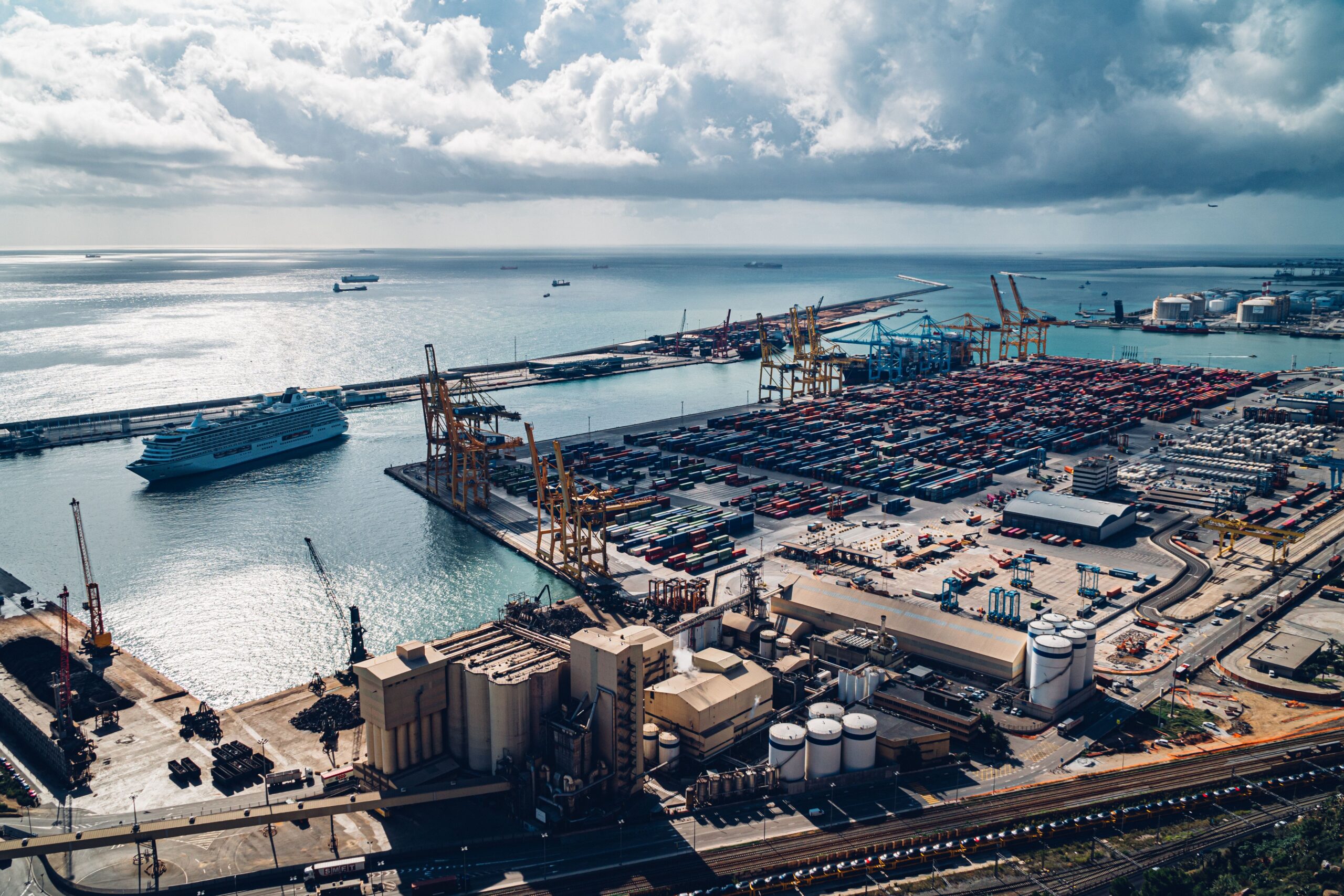
Maasvlakte II has been operational since 2015 and incorporates automated systems for handling and transporting containers within the terminal. Its infrastructure connects deep-sea berths with storage yards and inland freight services, including rail, road, and barge movements. These processes must be coordinated around the arrival and departure of vessels and the availability of containers for onward transport.
The terminal is undergoing a substantial expansion intended to increase annual handling capacity towards approximately 5.4 million twenty-foot equivalent units (TEU). The programme includes 1,000 metres of additional deep-sea berth, bringing the total berth length to approximately 2,000 metres, together with additional storage yard infrastructure.
Berth capacity determines how much waterfront space can be allocated to vessel operations, but the number of containers handled also depends on crane productivity, equipment availability, and the movement of units between the quay and storage areas. Expanding the quay without corresponding landside capacity would leave constraints elsewhere in the handling process.
Additional automated terminal tractors are therefore included in the development programme, alongside further automated handling equipment. The tractors will support container movements between operating areas within the terminal, coordinated with quay cranes and yard equipment through the facility’s control systems.
Automated transport requires accurate information about container location, equipment availability, and the sequence of movements needed to support vessel operations. A container discharged from a ship must be transferred to a suitable storage position, while export units must be retrieved and delivered to the quay in the order required for loading.
Changes in vessel schedules or the number of containers exchanged during a port call can alter those requirements. The ability to accommodate higher throughput therefore depends on the combined performance of the terminal’s waterfront infrastructure, automated vehicles, storage equipment, and operating software.
Rail infrastructure forms another part of the expansion. Four additional tracks are planned to increase the terminal’s capacity for handling container trains serving inland destinations. Rail movements provide a connection between Rotterdam and freight terminals further into Europe, complementing the road and inland waterway services available through the port.
The expansion works are temporarily affecting the existing rail interface. APM Terminals has reduced available rail capacity during construction and operational testing, with restrictions currently expected to continue until the end of June 2027. The additional tracks form part of the future configuration, rather than capacity already available to rail operators.
Completion of the ownership transaction does not change those construction restrictions. Hapag-Lloyd’s new shareholding establishes a financial interest in the terminal’s development, while the operator must continue handling existing cargo and commissioning new infrastructure in stages.
The terminal’s role in the Gemini Cooperation gives both shipping companies a commercial interest in its performance. Vessel networks depend on cargo being loaded and discharged within scheduled port calls, while onward connections must be available for containers moving between the maritime network and inland distribution facilities.
Reliable terminal handling can support the operation of those services, but the completed acquisition does not establish a measurable improvement in berth productivity, container dwell time, or shipping schedule reliability. Such outcomes will depend on operational performance and the eventual commissioning of the expanded facilities.
Dheeraj Bhatia, chief technology and information officer at Hapag-Lloyd and chief executive of Hanseatic Global Terminals, said the companies would support Maasvlakte II’s development following completion of the transaction.
Harold Kunst, managing director of APM Terminals Maasvlakte II, also confirmed that the terminal would continue operating for its existing customer base while the expansion proceeds. APM Terminals’ majority ownership and operating responsibilities remain unchanged.
Hanseatic Global Terminals was established in 2023 to manage Hapag-Lloyd’s terminal investments. Its portfolio includes interests in marine terminals across Europe, the Americas, India, and North Africa, giving the carrier exposure to infrastructure beyond its own container vessel operations.
The Rotterdam investment adds an established automated facility to that portfolio. Rather than developing a new terminal from the outset, Hapag-Lloyd has acquired a minority position in an operating business undergoing an expansion programme.
The acquisition is complete, while the physical development remains in progress. Future milestones include the commissioning of additional berth and yard infrastructure, the introduction of new automated equipment, and the development of the expanded rail facilities. The planned 5.4 million TEU capacity will become relevant once the infrastructure required to support it is operational.