IN Brief:
- A reported 92% of pharma professionals say supply chain risk has increased over the past two years, putting fresh pressure on cold chain reliability.
- Integrated platforms combining IoT tracking, predictive modelling, geofencing, and thermal analytics are becoming key differentiators for providers.
- Reusable packaging, carbon footprint tools, and consolidated service models are expected to shape pharmaceutical cold chain logistics over the next five years.
Pharmaceutical cold chain logistics has become more exposed since the pandemic, with regulatory scrutiny, climate disruption, and capacity pressure increasing the cost of poor visibility.
We speak with Paul DellaVilla, Director of Digital Solutions & Services at Cold Chain Technologies, about why pharma customers are looking beyond container specifications and asking providers to demonstrate stronger data capability, real-time shipment oversight, sustainability credentials, and service-led risk management.
How is the pharmaceutical cold chain market evolving post-pandemic, particularly regarding regulatory scrutiny and shipment risk?
According to a recent industry survey, 92% of pharma professionals feel that supply chain risk has increased in the past two years.
This surge in perceived risk stems from a mix of persistent challenges: capacity bottlenecks, regulatory uncertainty and intensifying climate-related disruptions.
As a result, providers are now expected to collaborate with customers, share insights and co-develop smart solutions to navigate regulatory hurdles, capacity constraints or urgent delivery windows.
It’s also likely that this heightened sense of risk post-pandemic has accelerated the adoption of digital technology. The real-time view and management of shipments as well as predictive analysis provides a sense of security and assurance, even in times of instability.
What role are predictive analytics, IoT asset tracking, and integrated platforms now playing in differentiating providers beyond container compliance?
The digitisation of cold chain operations is a game changer in terms of compliance, optimisation and real-time visibility. The use of a smart logistics platform offers companies in the cold chain environment the ability to continuously improve, as well as predicting and mitigating potential challenges.
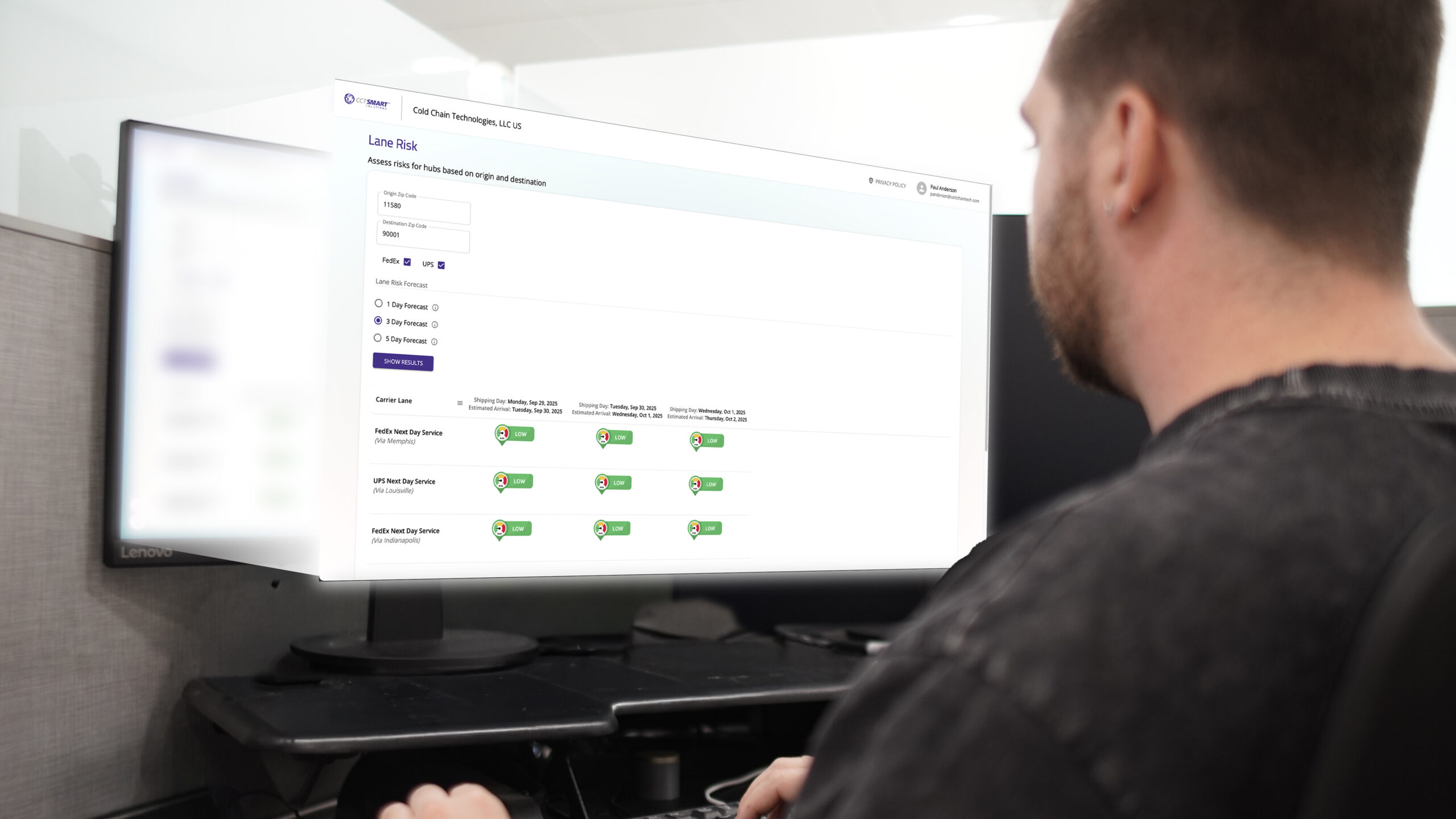
For that reason, we’re seeing data and digital capability become a major decision-making factor for customers. For CCT, centralisation has been a core differentiator. While more and more providers offer some form of digital support, our Smart Solutions platform puts asset tracking such as cellular data loggers (IoT), real time thermal modelling and geofencing technology in one place for complete visibility. Within the same dashboard is predictive modelling and our smart selection engine, along with a whole host of analytics, which means users can see their entire shipping operation in-real time and long term without having to switch between portals.
We know from customer feedback that this integration and centralisation is a significant contributor to why they choose us as a provider.
How do service-led approaches (like Smart Solutions) improve reliability and risk management compared with traditional compliance-driven models?
Service-led approaches go beyond traditional compliance by offering the opportunity to assess the likelihood of risk in advance, to plan how to navigate those risks, and to use data modelling to make smarter decisions long term.
Our Smart Solutions platform allows users to collate data from every shipment, analyse route performance, track regular deviations and monitor thermal behaviour within one dashboard. This offers immediate and long-term risk management benefits. In an immediate sense, the real-time visibility of a shipment means that developing risks can be flagged and resolved before excursions occur. From a longer-term perspective, the centralisation of shipment data allows for the identification of patterns of risk or inefficiencies, allowing for data-driven operational decision making.
The use of our simulation capability provides another layer of advanced risk management, using real-world data to predict the potential challenges of each route. Plotting a shipment throughout it’s journey, including elements like time on tarmac, unplug time and likely ambient temperatures at different stages of transport, means customers can plan for risk and mitigate against it at the very earliest stage.
With this service-led approach, companies can reduce waste, lower costs, improve reliability and – most importantly – protect product integrity from manufacturer to patient.
To what extent are eco-conscious packaging and resource efficiency becoming a differentiator in temperature-controlled logistics?
We have certainly seen an increase in customers prioritising sustainability when it comes to temperature-controlled packaging solutions, particularly in the uptake of our multi-use and reusable containers, such as the KTEvolution and EcoFlex.
Unlike single-use options, multi-use and reusable solutions are designed for durability, with the most robust often lasting over 15 years. At the end of life, many parts of these containers can be reused – and where this isn’t possible, there are often measures in place to ensure not a single part of the container ends up in landfill. This longevity and end of life planning significantly reduces packaging waste and lowers the carbon footprint of transportation.
There are, of course, still applications where multi-use and reusable options are not feasible, but for these, there are now sustainable single use options to mitigate wastage.
Digital tools such as carbon footprint calculators are able to assess the emissions associated with specific shipments, taking into account variables like container type, PCM temperatures, transportation modes, and payload weights. Life Cycle Assessments (LCAs) can add a further level of detail, providing an overview of the overall environmental impact of the products specified within the supply chain, and therefore informing choices such as which containers are used.
How are pharmaceutical companies assessing providers? Are they prioritising container specs, or broader service and data capabilities?
There are always a multitude of factors involved in choosing a packaging provider, and it’s difficult to choose just one. However, the service offering, both in terms of digital provision and real-world infrastructure is undoubtedly a significant priority for pharmaceutical companies.
Digital tools and the benefits provided by the real-time monitoring, predictive tools and data modelling offered by integrated platforms are in high demand. Given that the use of these tools can provide financial benefits in the form of product protection and operational efficiencies, as well as enhanced visibility and traceability, it is likely that the emphasis put on digital capability is here to stay.
However, whilst digital solutions can provide major advantages, there is still considerable emphasis put on human expertise and physical infrastructure. Our support structures, for example, help manage challenges such as rerouting critical shipments or troubleshooting temperature excursions, and that sense of partnership can be a major determining factor for customers. Equally, having access to an infrastructure which is able to provide regional support and stock availability globally is important to our customers, as it gives them a sense of security and supports them to meet specific regulatory requirements by region.
Where is cold chain logistics heading in the next five years — greater consolidation among providers, or more specialised service differentiation?
Consolidation. From a digital point of view, consolidating providers means centralisation of data, which means greater ability to build a full picture of operational efficiency and increased accuracy when it comes to predictive modelling. The use of multiple providers means information is siloed and therefore less useful, reducing the potential benefits of digital all together.
What’s more, the security and trust that comes from a single source relationship is crucial, especially for those shipping high value product. The most advanced cold chain container providers invest in highly specialised technical advisory teams capable of offering neutral, context-driven guidance around packaging selection, risk management, regulatory compliance and thermal strategy – all in the best interests of the customer. Allowing these teams oversight of all shipments offers support to manufacturers throughout the solution lifecycle, from planning and procurement to operations and post-shipment analysis.