IN Brief:
- Renault’s Villeroy operation uses 167 robots, 67,000 bins, and 14 picking stations.
- Order-processing time has fallen from 120 minutes to 15 minutes.
- The automated perimeter can exceed 4,130 order lines per hour with 14 operators.
Renault Group has reduced spare-parts order-processing time from 120 minutes to 15 minutes through an Exotec Skypod installation at its Villeroy logistics operation in France.
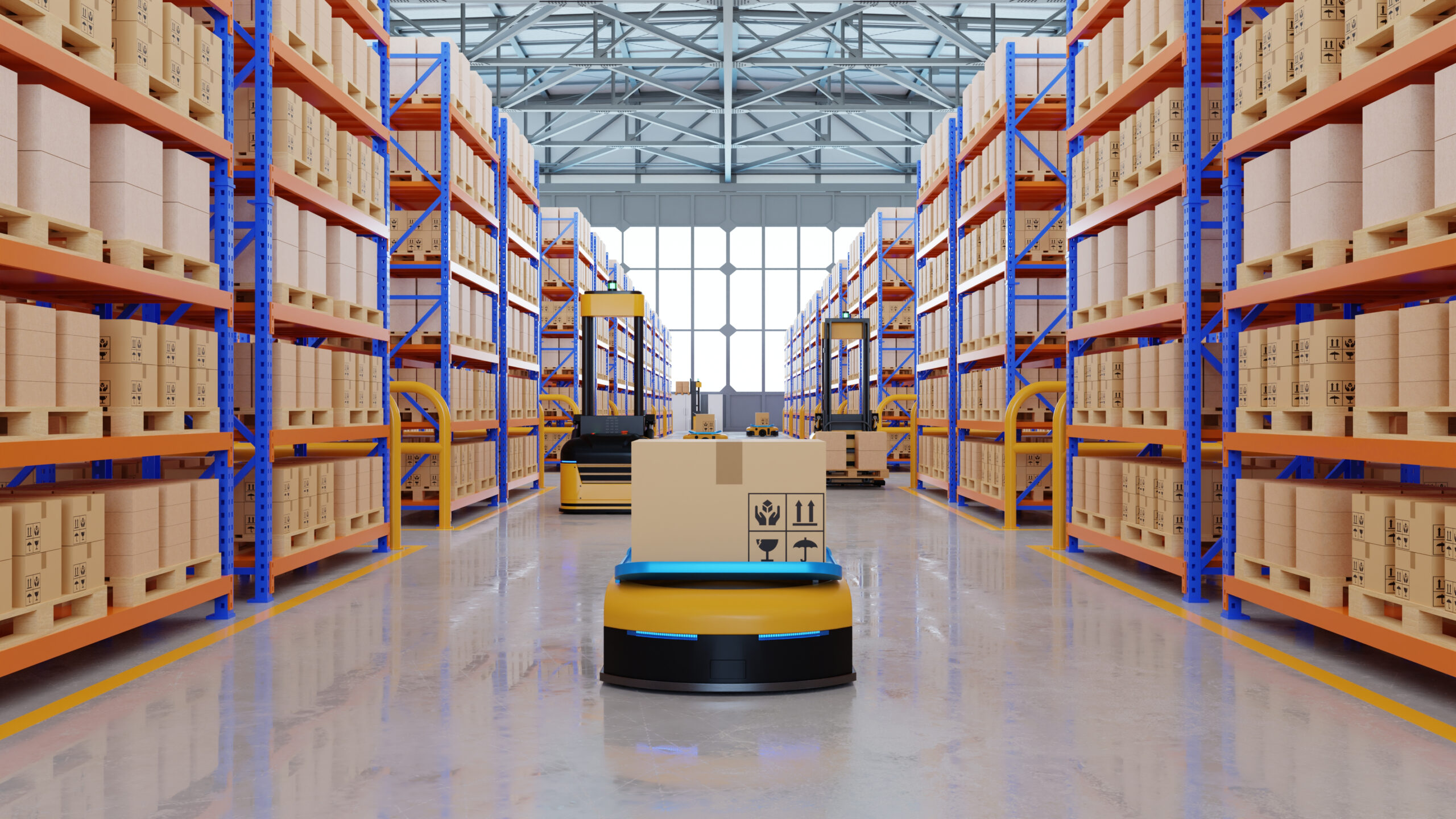
The system contains 167 robots, 67,000 storage bins, 14 picking stations, and two replenishment stations within a 3,480m² footprint. Its 10.8m-high structure can hold more than 1.6 million individual items while supporting a handling rate above 4,130 order lines per hour.
Renault is targeting approximately 20,000 order lines each day through the automated area. Fourteen operators can work across the picking stations at the stated hourly rate, with robots retrieving bins and presenting them at controlled workstations rather than requiring staff to walk through conventional shelving.
The Skypod grid sits within a wider process containing automated carton forming and closing, packing-list and RFID-label printing, wrapping equipment, and 30 ergonomic handling devices. A waste line removes discarded packaging from the work area, limiting unnecessary movement around the stations.
Villeroy has become Renault’s principal French spare-parts distribution centre. France represents approximately 37% of the group’s aftersales parts activity, while the previous warehouse structure was organised largely by part type and lacked a single dedicated operation capable of consolidating the country’s main flows.
Automotive aftersales inventory presents a different challenge from production supply. Demand extends across components of widely varying size, value, age, and order frequency, including parts for current models and vehicles that left production many years earlier.
A low-volume component may remain untouched for months and then become urgently required to return a vehicle to service. Removing slow-moving inventory can reduce space and working capital, but it can also lengthen repair times and weaken dealer support when the part has no readily available substitute.
High-density automated storage allows more of that long tail to remain accessible without allocating permanent manual pick faces to every item. Frequently requested bins are handled more often, while slower stock can remain deeper within the structure until a robot retrieves it.
Reducing order processing from two hours to 15 minutes also widens the available despatch window. A lengthy internal pick-and-pack cycle consumes much of the time available for same-day or overnight transport, whereas a shorter process gives the operation more scope to accept urgent orders closer to carrier departure.
The stated throughput still depends on the activities surrounding the grid. Goods must be received accurately, replenishment must keep pace, cartons need to reach the correct station, and completed orders have to move into packing and despatch without creating another queue.
Automation can shift congestion rather than remove it when one process accelerates while adjacent stages remain under-capacity. Labour planning, workstation balance, carton supply, transport cut-offs, and exception handling therefore have to develop alongside robot capacity.
Similar goods-to-person systems are being adopted across multi-client logistics. DSV has installed around 100 Skypod robots at Venlo, where the technology supports several retail brands together with automated carton handling and returns activity.
Both installations illustrate the modular appeal of mobile robotics. Additional robots, stations, or storage can be introduced as volumes change, avoiding some of the fixed routing and lengthy reconfiguration associated with highly bespoke conveyor systems.
That flexibility still relies on disciplined inventory data. A robot can retrieve the location assigned by the system, but it cannot resolve an unidentified quantity error, an incorrectly received item, or a mismatch between the physical contents of a bin and the master record.
Higher automated speed increases the value of accurate data and the operational cost of poor control. An error that once affected a single manual pick can move rapidly into packing, transport, dealer inventory, and a customer repair before it is identified.
Workforce requirements also change rather than disappear. Operators move away from long walking routes towards workstation picking, replenishment, equipment supervision, exception handling, and maintenance support, while ergonomic design becomes more important as faster presentation rates concentrate repetitive activity at fixed positions.
Aftersales logistics will grow more complex as manufacturers support combustion, hybrid, battery-electric, electronic, and software-dependent vehicle systems simultaneously. The parts range broadens before older categories decline, placing more pressure on identification, storage density, availability, and technical traceability.
Renault’s Villeroy operation gives that expanding range a faster and denser fulfilment platform. The enduring measure will be service availability and order accuracy rather than robot speed alone, particularly when urgent, low-volume parts have to move from deep inventory to a workshop within a narrow overnight window.