IN Brief:
- UPS has agreed to acquire Smartways, with completion expected in the first half of 2027 subject to approvals.
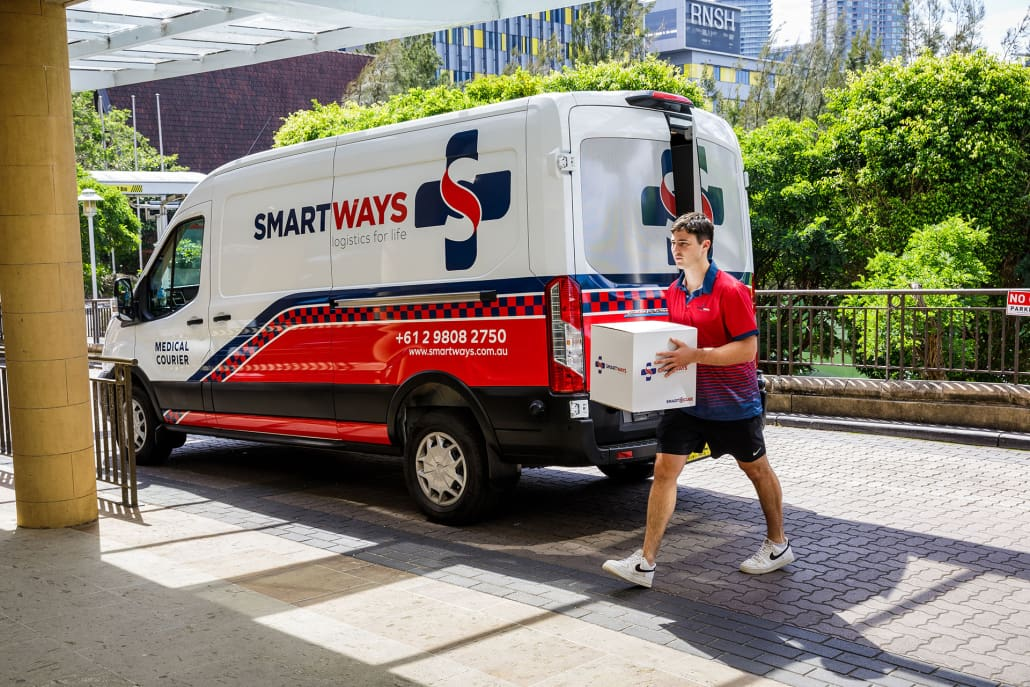
- Smartways operates a specialist healthcare network with more than 350 drivers and urgent air and road services.
- The acquisition would connect regional clinical and medical-device deliveries with UPS Healthcare’s wider network.
UPS has agreed to acquire Smartways Logistics, a specialist healthcare transport provider operating in Australia and New Zealand. The proposed transaction would extend UPS Healthcare’s regional capability for urgent medical shipments, clinical trials, medical devices, life sciences, and radiopharmaceuticals. The acquisition is expected to close in the first half of 2027, subject to customary regulatory reviews and approvals, and the companies have not disclosed its value.
Smartways runs a dedicated healthcare delivery network with more than 350 drivers. Its services include next-flight-out movements, same-day ground transport, overnight deliveries, reverse logistics, and third-party logistics. Those options are designed around shipments where the required delivery time, custody arrangements, or handling conditions differ from standard parcel transport. UPS intends to combine the network with its existing healthcare logistics infrastructure once the acquisition is completed.
Hospital and laboratory consignments place different demands on the network depending on the product and its destination. Diagnostic material may have to arrive within a prescribed testing window, while a replacement medical device component can be required for a scheduled procedure or equipment repair. Radiopharmaceutical shipments introduce time sensitivity because radioactivity decreases with time, although the appropriate controls and permitted journey depend on the individual product.
A next-flight-out movement relies on the earliest suitable available air connection, followed by ground collection and delivery on either side of the flight. Where distance allows, an urgent road service can avoid an air transfer altogether. In both cases the route must remain compatible with shipment instructions, packaging, custody records, and receiving-site availability; a shorter flight wait is not equivalent to guaranteed final delivery.
UPS already provides healthcare distribution, cold chain packaging and shipping, inventory management, and specialist logistics services. It describes a global estate exceeding 21 million square feet of healthcare distribution space compliant with relevant current good manufacturing practice and good distribution practice requirements. Such facilities serve a different function from urgent courier movements, but coordinated storage and transport can reduce the number of disconnected handovers between a manufacturer, a distribution centre, and a receiving clinical site.
Some pharmaceutical and biological products need qualified packaging or temperature-controlled transport, whereas many medical devices have different security, environmental, or handling requirements. Carriers must follow the conditions specified for the actual product, with suitable monitoring and exception procedures where required. UPS has not stated that every Smartways consignment or vehicle operates under the same temperature regime, so the acquisition should not be treated as the purchase of a uniformly refrigerated network.
A delayed flight or failed handover can leave clinical consignments unusable even if their storage conditions have been maintained. Tracking therefore needs to show custody changes and exceptions in time for a replacement movement or other corrective action. UPS identifies its visibility technology and global quality system among its healthcare capabilities, but the systems and procedures needed to join them with Smartways have not yet been specified.
Smartways also provides reverse logistics, which can involve the return of reusable equipment, devices requiring inspection, or materials moving back through an agreed supply chain. Returns are not necessarily the reverse of outbound distribution: collection authorisations, packaging conditions, location records, and receiving procedures may differ. The planned transaction would therefore bring UPS a set of local healthcare services extending beyond rapid point-to-point delivery.
UPS’s wider Asia-Pacific investments include the international air hub at Clark in the Philippines and healthcare distribution infrastructure. The Clark hub expansion adds international freight handling, while the Smartways deal targets time-critical transport closer to clinical destinations. Linking those functions would require coordinated flight arrivals, domestic dispatch, custody arrangements, and exception handling, rather than an assumption that two networks automatically operate as one.
UPS reported healthcare revenue of $3 billion in the third quarter of 2026, its third consecutive quarter at that level. The figure covers the company’s wider healthcare activities; it is not Smartways revenue and cannot be used to estimate the purchase consideration. UPS has disclosed neither expected savings nor a budget for integrating Smartways’ regional operations, and no revised workforce figure is available.
Smartways will remain a separate business until the transaction closes and required approvals are secured. UPS has not provided a price, an integration budget, or a timetable for combining dispatch systems and customer services. Regulatory clearance and the expected first-half 2027 completion therefore precede any verified change to the network available to healthcare customers.