IN Brief:
- WSP’s Zenzic-commissioned report recommends broader deployment of connected and automated mobility in UK ports.
- Existing terminals must manage autonomous and manual vehicle movements within the same operations.
- The September Teesport–Westwell award is prior procurement context, not proof of completed deployment.
WSP has called for a broader rollout of connected and automated mobility at British ports, arguing that existing research and pilot projects need to translate into permanent systems that support freight movement and terminal productivity. In a report commissioned by Zenzic and announced on 20 October, the consultancy identifies opportunities for automated horizontal transport, integrated terminal management and software-assisted coordination across ports. The report’s central emphasis is deployment in established facilities, where autonomous vehicles would often need to operate alongside manually driven equipment and existing handling processes.
The report, titled Barriers and Opportunities for Automation in UK Ports, compares Britain’s current automation progress with larger-scale deployments in parts of Asia and Northern Europe. The organisations identify strengths in UK engineering, artificial intelligence, robotics and software development, alongside experience of modernising established facilities. Those capabilities do not by themselves produce a terminal-wide service: operators still have to combine vehicle control, handling equipment, operational data and safety management in a commercially workable process. WSP and Zenzic call for closer coordination among port owners, government and technology suppliers.
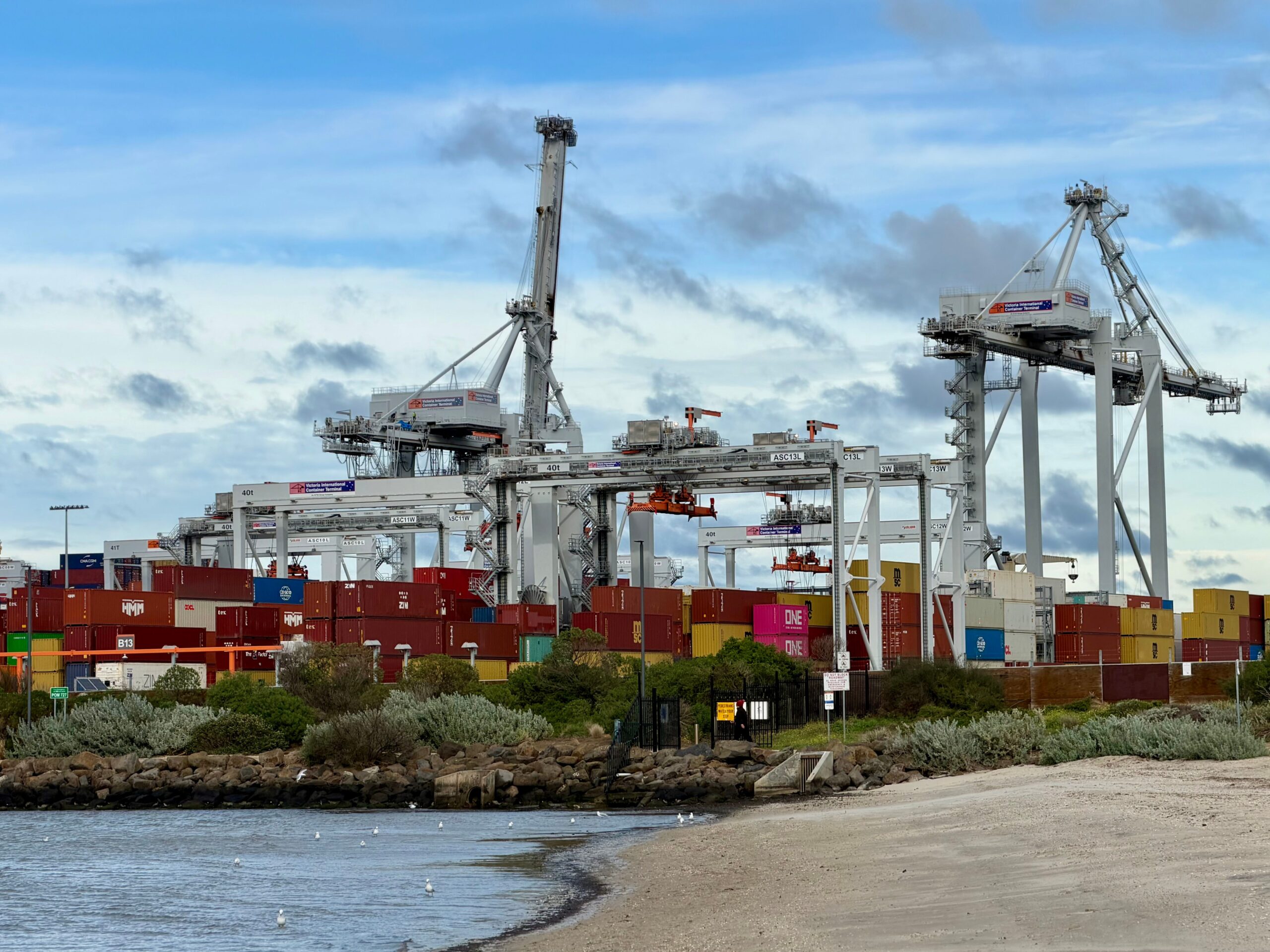
Horizontal container transport is one of the practical applications under discussion. At a conventional terminal, a container discharged by a quay crane is moved towards a yard or stack by a tractor or other handling vehicle and later collected for another operation. Replacing part of that movement with electric autonomous terminal tractors creates a requirement to exchange work instructions with the terminal operating system, allocate routes, coordinate crane handovers and handle unexpected obstacles. A vehicle may be capable of following its route in controlled conditions, yet its contribution to throughput depends on the whole sequence of loading, movement, parking and handover being synchronised.
PD Teesport’s earlier Westwell contract provides an example of autonomous horizontal container transport being procured for an existing terminal. The September 2026 award covers electric autonomous terminal tractors and an associated automation system for Teesport Container Terminal 2. The published procurement notice lists a contract value of €4.44m including VAT; contemporary reporting described it as approximately US$5.1m. The five-year arrangement has extension and additional-equipment options. The award does not demonstrate that the vehicles have completed commissioning or achieved particular changes in terminal productivity.
The UK examples cited by WSP and Zenzic cover different operating functions at the Port of Tyne, Felixstowe, Teesside Freeport and Belfast Harbour. The Port of Tyne’s P-CAL work tested an autonomous terminal tractor with terminal and crane operations in a defined live area. The Teesside digital trade testbed addresses information exchange, while Belfast’s autonomous passenger shuttle works to a different vehicle and passenger safety case. Each application offers experience in a particular technology or interface that port operators would need to adapt to their own freight layouts and work patterns.
Brownfield terminals must accommodate autonomous vehicles within layouts already occupied by manual tractors, forklifts, cranes and pedestrians. Vehicle routes can cross crane transfer points, pedestrian access and temporary work areas that are frequently changed during commercial operations. Mixed-mode deployment therefore requires mapped operating zones, reliable obstacle detection, defined priority at crossings, safe stopping behaviour and procedures for handing control to a human when a route becomes unavailable. Dedicated corridors can simplify early deployment, while wider coverage needs traffic rules and communication arrangements that work during ordinary and exceptional shifts.
The terminal operating system manages container identities, ship and yard moves and equipment assignments, while the autonomous vehicle controller carries out the transport instructions. The two must exchange current location, job and equipment status so that a tractor is not dispatched to an occupied handover point or sent along a route temporarily closed to manual traffic. WSP recommends integrated terminal systems and AI-supported applications to coordinate those decisions. The operational aim is dependable handovers between quay, yard and landside activity under site-specific safety procedures.
Zenzic supports the UK connected and automated mobility sector and has previously backed port and logistics trials through industry and government programmes. Its April account of the Port of Tyne P-CAL project described successful live-environment testing while identifying further work needed to examine multiple vehicles operating around people and commercial activity. That distinction supports the new report’s focus on scaling carefully rather than assuming that technical feasibility in a pilot is the same as readiness for sustained fleet operations. The UK’s potential strength in retrofitting existing facilities will only be demonstrated through repeatable safety cases, integration methods and commercial operating results.
WSP director Sam Boyd Williams says British ports can use local engineering, software and connected-mobility expertise to turn pilot experience into permanent operations, especially through retrofits to established facilities. Zenzic programme director Mark Cracknell calls for industry and government cooperation to support that transition. Their proposals include further targeted pilots, integrated operating systems and knowledge transfer between ports and adjacent technology sectors. Deployment will require agreement on ownership of equipment, systems integration and responsibility for safety throughout the operating day.
A permanent autonomous fleet will also need charging infrastructure, spare equipment, maintenance support and trained operating staff arranged around vessel and yard schedules. Phased commissioning can then test throughput and equipment availability while parts of the terminal continue handling freight conventionally. The 20 October material provides no quantified nationwide productivity gain or committed rollout timetable. WSP and Zenzic advocate progressing from local trials to sustained deployment as each port establishes the engineering, workforce and commercial arrangements for its own operating environment.